Coking propensity of turbine engine oils
The pace of engine development over the last 70 years has required engines to run hotter and last longer. This is where the engine oils play such an important role. Today’s oil does not only lubricate the bearings and gears but also acts as a coolant to remove excess heat from the system. This can put an immense stress on the lubricant, which can result in oxidative or thermal degradation of the oil and, ultimately, coke formation.
Enquiries
Key Takeaways
- High temperatures and pressures in modern engines cause standard oils to degrade, creating coking deposits that harm components and increase maintenance costs.
- AeroShell Turbine Oil 560, a high thermal stability oil, when tested against 3 competitor standard oils using the Hot Liquid Process Simulator, showed significantly lower coking, reducing deposits and enhancing reliability.
- With improved thermal stability and reduced coking, turbine engine oils can extend engine life, reduce maintenance and provide stable performance in demanding engine conditions.
Evolution of turbine engine oils: from mineral to synthetic
In the early 1930s, the first jet engines ran on mineral turbine oils. It soon became clear, however, that the high temperatures generated in these new turbine engines caused the mineral oils to degrade and form coke deposits, so the search was on for replacements. During the late 1950s, this led to the development of the first synthetic turbine oils, which were 3 centi-stoke oils. As with the mineral oils, these 3 centi-stoke synthetic oils also started to reach the limits of their performance. The 1960s saw the development of a new generation of synthetic oils which had a natural viscosity of 5 centi-stoke at 100°C together with excellent thermal stability. The development of these ‘second generation’ oils was driven by the needs of the US Navy which published MIL-L-23699 as the controlling specification. This was quickly adopted by the engine manufacturers for their new generation civil turbofan engines.
Advancements in engine performance and the evolution of high thermal stability
Since the early 1980s considerable advances have taken place in engine performance in terms of improved fuel consumption, higher operating temperatures and higher pressures. These together with changing maintenance practices resulted in increased severity in lubricant operating conditions. Such changes put stress on the engine oil and as a result the original ‘second generation’ oils became less suitable for use in modern aircraft engines. This ultimately led to the need to develop an oil with high thermal stability (HTS). HTS oil, which has better thermal stability, is now generally known as a ‘third generation’ oil.
Gas turbine design is still advancing with major advances being witnessed in the use of exotic high temperature alloys and materials. This is being driven by operators requiring improved specific fuel consumption and reduced operating costs. Now in use, hotter running, high-efficiency engines, with greater shaft speeds are expected to stay on the wing well in excess of 25,000 hours. The heat produced by these engines has to go somewhere and so today’s oils tend to act more as a coolant than a lubricant.
Moreover, they are expected to operate through normal topup servicing, without a requirement for an oil change in service. Excessive heat can cause oxidative or thermal degradation of the oil, which can result in coke deposition in bearing chambers, oil feed pipes, vent pipes and scavenge pipes. SAE AS5780A specification was issued in the late 2000s for qualifying turbine engine oils for commercial aviation, to meet the demands of the latest generation of high-performance turbine engines. Oil suppliers have had to keep pace with engine developments by formulating new oils to meet the ever-increasing demands of the gas turbine engine. The cost of development of new oils is high due to lengthy development and approval processes conducted with the engine manufacturers. However, this is necessary to ensure the safe running and integrity of engines. The high development cost of these oils has seen a reduction in the number of manufacturers of these products from around 20 in the heyday of the 1970s to only a handful now.
The evolution of turbine engine oil that blends base oil with additives to give an effective oil package that helps in preventing coking and being elastomer friendly are already present in the market. Similar to synthetic base oil replacing mineral base oil 60 to 70 years ago, the advances in engine development in the last two decades could mean that early generation of standard engine oil is reaching the end of their effective life.
Evaluating oil coking propensity using the HLPS test
In a Hot Liquid Process Simulator (HLPS) test rig (shown below), it simulates the oil feed tube environment in an aircraft engine and is a required SAE AS5780 test. The test evaluates the coking propensity of an oil, and the deposits is assessed by the weight of the coke formed.
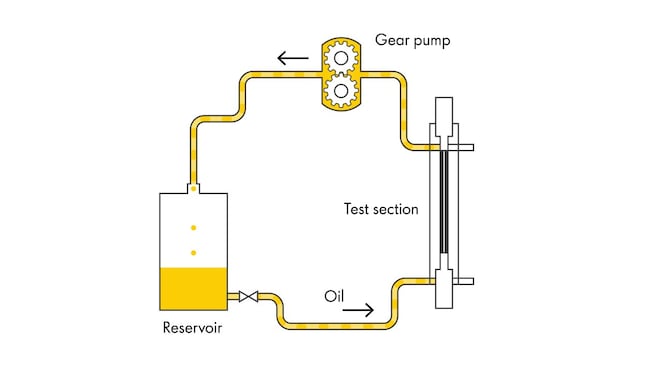
Standard test conditions
| Oil flow | 1 ml/min |
| Heater tube | 375˚C |
| Oil volume | 100 mls |
| Reservoir T | 150˚C |
| Pressure | 200 psi |
| Test duration | 20 hours |
Using the HLPS, Shell tested AeroShell Turbine Oil 560 (ASTO560) against 3 competitor standard oils, and the results show a clear advantage of HTS oil vs standard oil:
| Product tested | Coking deposit mass (mg) |
|---|---|
| AeroShell Turbine Oil 560 | 0.21 |
| Competitor 1 | 0.54 |
| Competitor 2 | 0.69 |
| Competitor 3 | 0.48 |
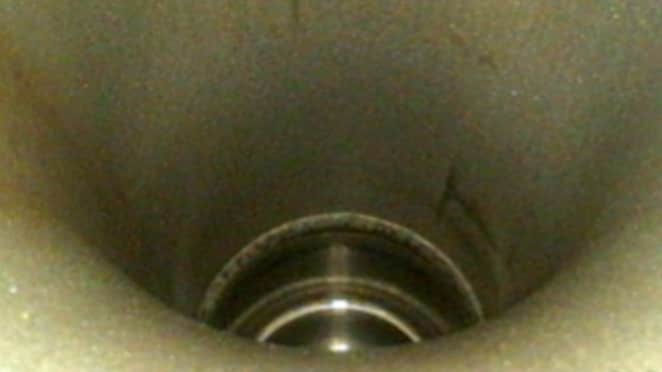
Borescope inspection revealed negligible levels of carbon deposits in the oil scavenge tube of an engine that ran with ASTO560:
Other articles
Aviation Greases | What are Aviation Greases?
Engine Break In | Aircraft Engine Break In Procedure
Elastomer compatibility in turbine engine oils
Explore by product category

Quick links
Disclaimer
Disclaimer
Cautionary Note
The companies in which Shell plc directly and indirectly owns investments are separate legal entities. In this content “Shell”, “Shell Group” and “Group” are sometimes used for convenience to reference Shell plc and its subsidiaries in general. Likewise, the words “we”, “us” and “our” are also used to refer to Shell plc and its subsidiaries in general or to those who work for them. These terms are also used where no useful purpose is served by identifying the particular entity or entities. ‘‘Subsidiaries’’, “Shell subsidiaries” and “Shell companies” as used in this content refer to entities over which Shell plc either directly or indirectly has control. The terms “joint venture”, “joint operations”, “joint arrangements”, and “associates” may also be used to refer to a commercial arrangement in which Shell has a direct or indirect ownership interest with one or more parties. The term “Shell interest” is used for convenience to indicate the direct and/or indirect ownership interest held by Shell in an entity or unincorporated joint arrangement, after exclusion of all third-party interest.
Forward-Looking statements
This content contains forward-looking statements (within the meaning of the U.S. Private Securities Litigation Reform Act of 1995) concerning the financial condition, results of operations and businesses of Shell. All statements other than statements of historical fact are, or may be deemed to be, forward-looking statements. Forward-looking statements are statements of future expectations that are based on management’s current expectations and assumptions, including (without limitation) those concerning Shell’s strategy and operating plans, macroeconomic conditions, future energy demand, supply and product mix, commodity prices, demand for Shell’s products, production results and reserve estimates, development, execution and management of projects, energy transition and climate change, management of safety and environmental risks, costs, cash capital expenditures, technology advancements, legislative, judicial, fiscal and regulatory developments, regional conflicts and trading conditions, and involve known and unknown risks and uncertainties that could cause actual results, performance or events to differ materially from those expressed or implied in these statements. Forward-looking statements include, among other things, statements concerning the potential exposure of Shell to market risks and statements expressing management’s expectations, beliefs, estimates, forecasts, projections and assumptions. These forward-looking statements are identified by their use of terms and phrases such as “aim”; “ambition”; ‘‘anticipate’’; “aspire”, “aspiration”, ‘‘believe’’; “commit”; “commitment”; ‘‘could’’; “desire”; ‘‘estimate’’; ‘‘expect’’; ‘‘goals’’; ‘‘intend’’; ‘‘may’’; “milestones”; ‘‘objectives’’; ‘‘outlook’’; ‘‘plan’’; ‘‘probably’’; ‘‘project’’; ‘‘risks’’; “schedule”; ‘‘seek’’; ‘‘should’’; ‘‘target’’; “vision”; ‘‘will’’; “would” and similar terms and phrases. There are a number of factors that could affect the future operations of Shell and could cause those results to differ materially from those expressed in the forward-looking statements included in this content, including (without limitation): (a) price fluctuations in crude oil and natural gas; (b) changes in demand for Shell’s products; (c) currency fluctuations; (d) drilling and production results; (e) reserves estimates; (f) loss of market share and industry competition; (g) environmental and physical risks, including climate change; (h) risks associated with the identification of suitable potential acquisition properties and targets, and successful negotiation and completion of such transactions; (i) the risk of doing business in developing countries and countries subject to international sanctions; (j) legislative, judicial, fiscal and regulatory developments including tariffs and regulatory measures addressing climate change; (k) economic and financial market conditions in various countries and regions; (l) political risks, including the risks of expropriation and renegotiation of the terms of contracts with governmental entities, delays or advancements in the approval of projects and delays in the reimbursement for shared costs; (m) risks associated with the impact of pandemics, regional conflicts, such as the Russia-Ukraine war and the conflict in the Middle East, and a significant cyber security, data privacy or IT incident; (n) the pace of the energy transition; and (o) changes in trading conditions. No assurance is provided that future dividend payments will match or exceed previous dividend payments. All forward-looking statements contained in this content are expressly qualified in their entirety by the cautionary statements contained or referred to in this section. Readers should not place undue reliance on forward-looking statements. Additional risk factors that may affect future results are contained in Shell plc’s Form 20-F for the year ended December 31, 2025 (available at www.shell.com/investors/news-and-filings/sec-filings.html and www.sec.gov). These risk factors also expressly qualify all forward-looking statements contained in this content and should be considered by the reader. Each forward-looking statement speaks only as of the date of the publication mentioned in this website. Neither Shell plc nor any of its subsidiaries undertake any obligation to publicly update or revise any forward-looking statement as a result of new information, future events or other information. In light of these risks, results could differ materially from those stated, implied or inferred from the forward-looking statements contained in this content.
Shell’s net carbon intensity and net-zero emissions target
In this content we may refer to Shell’s “net carbon intensity” (NCI), which includes Shell’s carbon emissions from the production of our energy products, our suppliers’ carbon emissions in supplying energy for that production and our customers’ carbon emissions associated with their use of the energy products we sell. Shell’s NCI also includes the emissions associated with the production and use of energy products produced by others which Shell purchases for resale. Shell only controls its own emissions. The use of the terms Shell’s “net carbon intensity” or NCI is for convenience only and not intended to suggest these emissions are those of Shell plc or its subsidiaries.
Shell’s operating plan and outlook are forecasted for a three-year period and ten-year period, respectively, and are updated every year. They reflect the current economic environment and what we can reasonably expect to see over the next three and ten years. Accordingly, the outlook reflects our combined Scope 1 and 2 target, NCI target and our oil products ambition over the next ten years. However, Shell’s operating plan and outlook cannot reflect our 2050 net-zero emissions target, as this target is outside our planning period. Such future operating plans and outlooks could include changes to our portfolio, efficiency improvements and the use of carbon capture and storage and carbon credits. In the future, as society moves towards net-zero emissions, we expect Shell’s operating plans and outlooks to reflect this movement. However, if society is not net zero in 2050, as of today, there would be significant risk that Shell may not meet this target.
The information provided above regarding Shell’s NCI and net zero emissions target are not intended, nor should they be construed as introducing, suggesting or making any claim, target or representation thereof other than what is included in the content.
Forward-Looking non-GAAP measures
This content may contain certain forward-looking non-GAAP measures such as free cash flow and underlying operating expenses. We are unable to provide a reconciliation of these forward-looking non-GAAP measures to the most comparable GAAP financial measures because certain information needed to reconcile those non-GAAP measures to the most comparable GAAP financial measures is dependent on future events some of which are outside the control of Shell, such as oil and gas prices, interest rates and exchange rates. Moreover, estimating such GAAP measures with the required precision necessary to provide a meaningful reconciliation is extremely difficult and could not be accomplished without unreasonable effort. Non-GAAP measures in respect of future periods which cannot be reconciled to the most comparable GAAP financial measure are calculated in a manner which is consistent with the accounting policies applied in Shell plc’s consolidated financial statements. These forward-looking non-GAAP measures are provided to assist readers in understanding management’s use and expectations of such measures and may not be appropriate for other purposes.
The contents of websites referred to in this content do not form part of this content.
We may have used certain terms, such as resources, in this content that the United States Securities and Exchange Commission (SEC) strictly prohibits us from including in our filings with the SEC. Investors are urged to consider closely the disclosure in our Form 20-F, File No 1-32575, available on the SEC website www.sec.gov.