The First Win
Before the world titles, podiums, and records, there was a single victory. Explore the race that became a defining moment in one of motorsport’s longest-standing and most successful collaborations. Discover the story behind Shell and Scuderia Ferrari’s first F1 win together, and their enduring passion for performance and innovation.
A lot has changed since Scuderia Ferrari celebrated its first Formula 1 victory on 14 July 1951, with Shell as its partner.
Seventy-five years ago, there were effectively no fuel regulations. Teams were blending alcohol, aviation gasoline, and hazardous industrial chemicals like nitrobenzene to push supercharged V12 engines to their limit. Fuel efficiency was sacrificed at the altar of extracting raw horsepower.
“It was a free space,” explains Valeria Loreti, Principal Scientist for Motorsports at Shell. “No rules. No limitations. Maximum performance.”
Today, things are different. Shell operates state-of-the-art trackside laboratories, analysing and improving fuels and lubricants in a highly regulated environment focused on sustainability, efficiency, and safety. During the 2025 season, more than 50,000 data points were shared with Scuderia Ferrari HP engineers to help the team make strategic decisions to drive performance. Developing an advanced sustainable race fuel formulation can take years and involves millions of digital simulations, which would have seemed like science fiction in the 1950s.
Where there were leather goggles and faces covered in fly splatters, there are now carbon fibre helmets and Halo safety brackets. Unregulated fuel mixes have made way for precision-engineered fluids like Shell V-Power Race Fuel and Shell Helix Ultra Lubricant. Each year, more than 100 Shell technical specialists log over 38,000 man-hours studying how molecules interact and combust to release energy into evolving power units, which have increasingly become more electrified.
Racing into history books
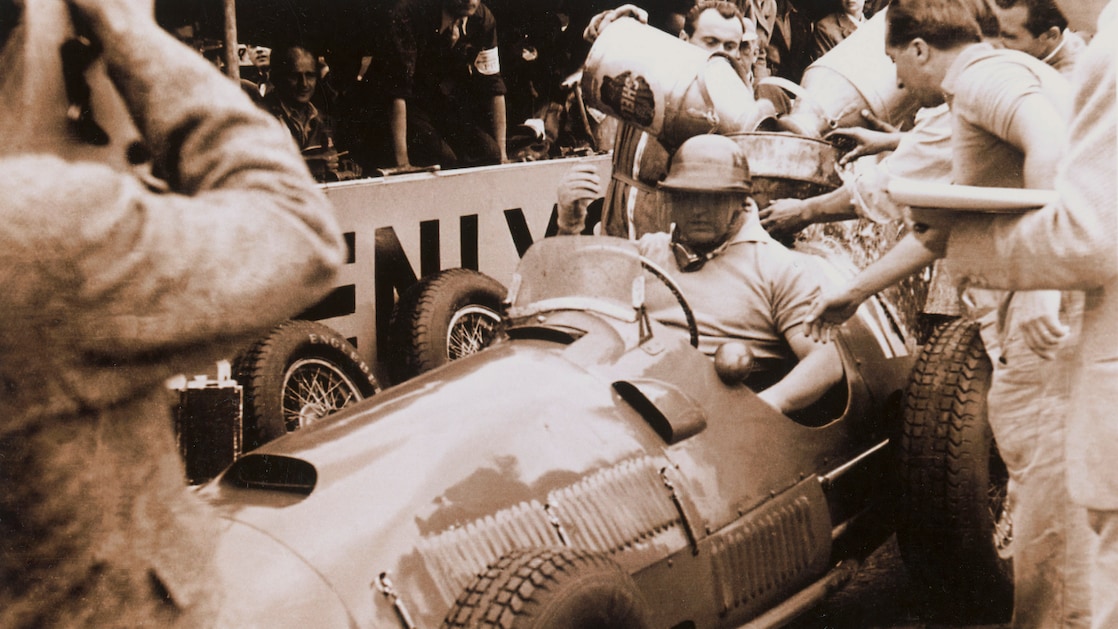
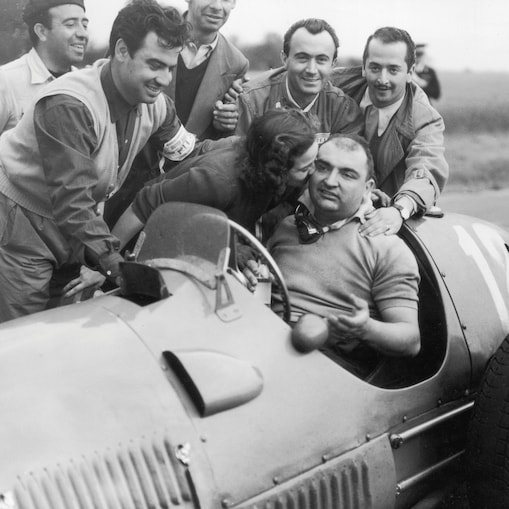
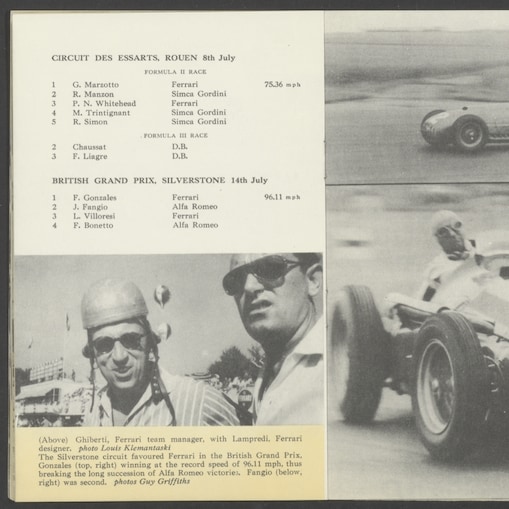
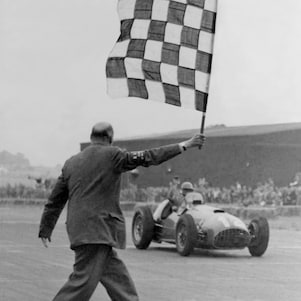
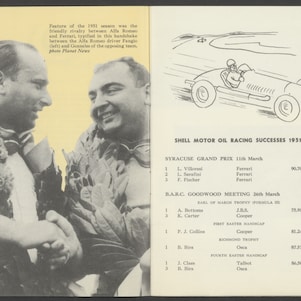
But battery packs and biofuel blends were decades away when José Froilán González, Alberto Ascari, and Luigi Villoresi climbed into their Ferrari 375 F1s at the Silverstone racetrack in mid-July 1951. The F1 World Championship was in its second season and the Alfa Romeos seemed unbeatable.
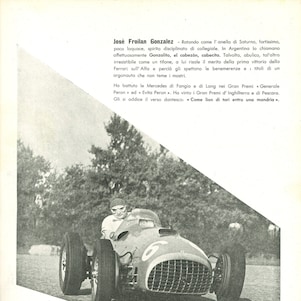
Scuderia Ferrari team leader, Ascari, never finished the race. But over the course of 90 thrilling laps, González – who had just signed to drive for Scuderia Ferrari – raced into the history books, his elbows sticking out the cockpit as he crossed the chequered flag. The Argentinian they called “Pampas Bull” (for his aggressive driving style) managed to convert efficiency into victory – making the most of his car’s aspirated engine, which consumed less fuel and enabled him to pit just once during the race. Villoresi crossed the finish line in third.
Enzo Ferrari would later write that he “cried with happiness” as he watched that race.
The years that followed saw Ascari set a Ferrari record that stands to this day: In his Shell-powered 500 F2 he delivered 14 victories and back-to-back World Championships across the 1952 and 1953 seasons – the only Italian driver to ever win two F1 world titles.
A shared passion
Shell and Scuderia Ferrari continued to innovate and evolve, adapting to new rules and enduring highs and lows. González and Ascari were followed by greats like Kimi Räikkönen and Michael Schumacher. Today, Lewis Hamilton and Charles Leclerc carry the hopes of the Tifosi, as Shell and Scuderia Ferrari HP deepen one of the longest-standing and most successful collaborations in motorsport.
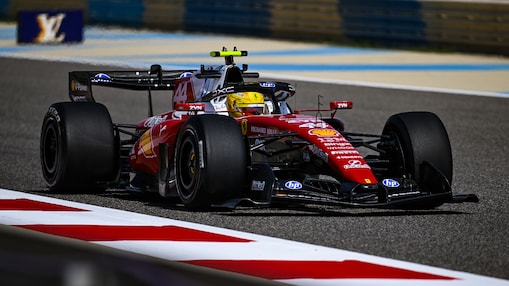
Together, the partners have achieved 12 Driver’s Championships, 10 Constructor’s Championships, 192 wins, and nearly 700 podiums. Among the most memorable moments were Leclerc’s long-awaited 2024 home victory in Monaco and his triumph in front of Ferrari’s home crowd at Monza in 2019. The team’s latest win in Barcelona on 14 June 2026 saw Hamilton celebrate his first victory wearing Ferrari red.
Hamilton’s SF-26 race car looks nothing like González’s 375 F1. To win the Barcelona-Catalunya Grand Prix, the seven-time F1 World Champion had to strategically manage battery charge. And the drop-in 2026 Shell V‑Power Race Fuel solution powering his car contains just 1% fossil additives – the rest derived from advanced sustainable feedstocks.
“Regulation changes and more restrictions make us, as scientists, face new challenges. It shuffles the rules of the game and makes it more interesting,” says Loreti, referring to the landmark 2026 regulation changes. “That’s when you have to explore possibilities that nobody has used before.”
Beyond the chequered flag
But as much as times have changed, two truths remain.
Shell and Scuderia Ferrari HP continue to share a relentless passion for performance and victory.
And the lessons learned on the track continue to influence the fuels and lubricants trusted by drivers on roads around the world.
Seventy-five years on from that iconic first win, technologies have evolved, the rules have changed, and F1 has entered a new era. But the pursuit of performance – and the belief that innovation on the track can benefit drivers everywhere – remains at the heart of Shell’s partnership with Scuderia Ferrari HP.