Rosmari-Marjoram: bringing new gas to Asia
November 17, 2026
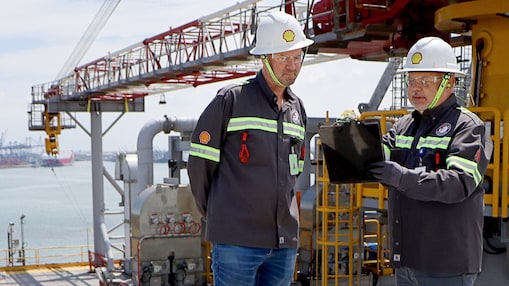
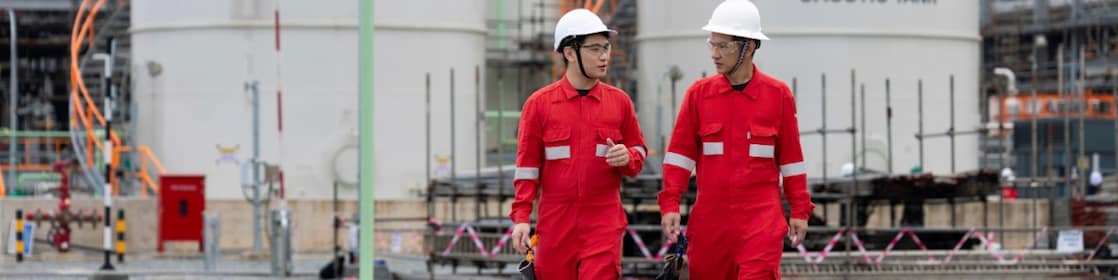
As global energy demand continues to rise, Shell is unlocking a major source of natural gas in deep waters off the coast of Malaysia. Discover how Shell engineers – including two generations of the same family – have worked with partners to bring the Rosmari-Marjoram project to life, helping supply vital energy to customers across Asia.
At a glance
- Rosmari-Marjoram is a Shell natural gas project around 220 kilometres (137 miles) off the coast of Sarawak in Malaysia.
- The project is expected to produce 800 million standard cubic feet of gas a day – enough to meet the daily average gas demand of 5 million people – and help provide new supplies to customers across Asia.
- Renewable energy will power most of the project’s offshore and onshore facilities, including the Rosmari-Marjoram deep-water platform which is designed to operate without a permanent crew.
A big day for energy security in Asia
Read the transcript
Read the transcript
Title: The big day
Duration: 06:49 minutes
Description:
This video provides information on the Rosmari-Marjoram project in Malaysia. It features Shell employees providing personal anecdotes and facts on the project.
[zipper sound effect]
[Text displays]
The big day.
[Background music plays]
Up-tempo dramatic music plays.
Video footage
A Shell worker gets into a red jumpsuit and brown boots. He then speaks as he stands in a locker room.
Siew Teck
Today is a big day. The Rosmari-Marjoram gas project here in Malaysia is about to go live...
[Background music plays]
Up-tempo dramatic music plays.
Video footage
A skyscraper-filled city in Malaysia, a busy intersection and an office building with workers visible through the windows.
Siew Teck
...helping to strengthen energy security. It'll provide a major new source of gas for Asia.
Video footage
A Shell worker with a hard hat at a gas facility.
Siew Teck
And for me, it's personal.
[Text displays]
Siew Teck.
Siew Teck
As I've only been working for Shell for the past nine months.
Video footage
Snapshot photographs of Siew in his Shell uniform.
Siew Teck
And Dad's pretty excited, too. Right, Dad?
[Text displays]
Chung Kion.
Chung Kion
Absolutely.
Siew Teck
Dad works for Shell, too, and he's got over 20 years under his belt.
Video footage
Siew puts his hand on Chung's arm. Then, photographs appear of Chung standing on an offshore rig and sitting inside a helicopter. Two more photos appear of Chung sitting in an office and on a set of facility stairs.
Chung Kion
True. Over 20 years, but this one still feels pretty special.
Siew Teck
Yeah! And now we get to be a part of it together.
Chung Kion
Right! Let's go.
[Background music plays]
Up-tempo music plays.
Animated sequence
A map of Malaysia with areas of Kuala Lumpur and Bintulu highlighted in yellow. An icon for the new gas fields sits in the sea.
Siew Teck
The Rosmari and Marjoram gas fields lie 220 kilometres off the coast of the Malaysian state of Sarawak, with the onshore gas plant located just next to my hometown of Bintulu.
Animated sequence
An icon for the onshore gas plant appears on land by Bintulu.
[Background music plays]
Up-tempo music plays.
Video footage
Siew and Chung walk through the onshore gas plant. The sprawling plant houses a network of long pipelines and large gas tankers.
Siew Teck
Welcome to the Rosmari-Marjoram gas project.
[Background music plays]
Up-tempo music plays.
Siew Teck
This is the brand-new onshore gas plant. It's huge. It covers an area of over 100 football pitches.
Video footage with animated sequence
100 football pitches appear over the top of a bird’s-eye view of the gas plant.
Siew Teck
And I'm only just getting my head around how this all works.
Video footage
Photographs of Siew and Chung walking and posing in the gas plant.
[Background music plays]
Fast-tempo music plays.
Video footage
The facility is full of large industrial piping, fans and structures.
Siew Teck
This place is an extraordinary engineering achievement. The plant is capable of handling 800 million cubic feet of gas a day.
Video footage
Siew and Chung walk together through the facility.
Siew Teck
That's a lot of gas! Right, Dad?
Chung Kion
That is a huge amount of gas. It's enough to meet the average gas demand of five million people.
Video footage
A lively city with cars travelling on highways, lit-up skyscrapers and a burning gas burner as food is cooked in a wok.
Siew Teck
Of course, this project started long before I arrived on the scene.
Video footage
Archival footage of a ship and equipment being used at the offshore gas field. Photographs of Siew and his family in 2014 appear.
Siew Teck
The Rosmari and Marjoram gas fields were first discovered in 2014. I was around 12 years old back then, just thinking about what I wanted to do as a career.
[Background music plays]
Slow-tempo dramatic music plays.
Video footage
A time-lapse of the building site turning into the onshore gas plant as the years tick up from 2022 to 2026.
Siew Teck
It's taken almost four years to build this mega-plant, working in partnership with Malaysia's national energy company, PETRONAS.
Video footage
A gigantic LNG carrier ship.
Siew Teck
And now here I am, working as a Production Engineer, helping to bring it online and supporting energy security.
[Background music plays]
Slow-tempo dramatic music plays.
[Text displays]
Siti Sulaiman. Malaysia Country Chair and Senior VP Upstream Malaysia, Shell.
Video footage
An interview with Siti. A gas transport ship sails in the sea.
Siti Sulaiman
When gas gets liquefied as LNG, it can be transported easily to where it's needed.
[Text displays]
Massimo Di Odoardo. Vice President, Gas and LNG Research, Wood Mackenzie.
Video footage
An interview with Massimo. A sea of many transport ships near a dock. A huge ship docks at a gas facility.
Massimo Di Odoardo
Over the last 10 years, we've seen the pandemic, we've seen conflicts, and all of this has really meant disruption of supply. This has put substantial pressure on Asian markets. So, energy security has become the priority.
Siti Sulaiman
As the energy demand across Asia continues to grow, reliable supply matters.
Animated sequence
On a map, a dotted red arrow comes from the onshore gas facility and points toward many different countries in the region.
Siti Sulaiman
Rosmari-Marjoram adds a significant amount of gas resource close to customers across the region.
Massimo Di Odoardo
A new supply in Asia couldn't have come at a better time.
Video footage
Large gas transport ships sailing and docking.
Massimo Di Odoardo
Adding a new supply is not only going to help Asian markets achieve more affordability, but crucially, it's going to help support demand in other markets, particularly in Europe.
Siew Teck
You can see now why I'm excited to be a part of this project.
Video footage
Siew walks by the gates to the onshore gas facility.
Siew Teck
As an engineer, I feel like I can make a difference. But how does all this work?
Animated sequence
An animated representation of the sea and pipes connected to the gas sources. Yellow gas travels up the pipes and into an offshore platform.
Siew Teck
The gas starts its journey over 200 kilometres offshore, where it is pumped from beneath the seabed up to an unmanned platform.
[Text displays]
Alan Chan. Project Director, Rosmari-Marjoram gas project, Shell.
Video footage
An interview with Alan. The offshore platform standing in the sea.
Alan Chan
The offshore platform runs on renewable energy. It's solar-powered.
Siew Teck
There are also backup diesel generators available when needed.
Animated sequence
Yellow gas travels through a pipe along the ocean floor and up into the onshore gas plant.
Siew Teck
The gas now travels from offshore through one of the longest gas pipelines of its kind in the world, before it ends up here, at the onshore gas plant, to be processed and made ready for use.
Video footage
A Shell worker looks at the gas plant from an office window. Then, a series of electrical pylons situated across a green landscape. A hydroelectric plant sits at the foot of a dam.
Alan Chan
Our onshore gas plant draws power from Sarawak's local electrical grid which is mainly hydroelectric.
[Background music plays]
Up-tempo music plays.
Video footage
A powerful stream of water runs through the hydroelectric plant.
Siew Teck
By using this power and renewable energy certificates, it helps keep operational emissions down. And to tell us how the onshore gas plant works...
[Background music plays]
Up-tempo music plays.
Video footage
Siew pats his dad on the back in a recreation room.
Siew Teck
...I need Dad. Remind us again how long you've been with Shell.
Chung Kion
More than 20 years!
Siew Teck
Hoo! And you think he knows everything there is to know about how we process gas. Do you, Dad?
Chung Kion
Test me.
Animated sequence
A cut-out picture of Chung and a glint on the edge of his glasses.
[ding]
Video footage
Siew and Chung stand together in an office.
Siew Teck
Okay, first up – the gas coming from offshore is what's known as "sour gas," correct?
Video footage
Different angles of the large onshore gas plant with steam flowing from a chimney.
Chung Kion
Yes. It's called "sour gas" because it contains hydrogen sulphide. We can't just send it direct to the customer. We need to purify it.
Video footage with animated sequence
Pipes carry sour gas into large rectangular slug catchers.
Siew Teck
As an engineer, this is the bit I can explain.
Video footage with animated sequence
More pipes carry yellow waste products out of the slug catchers. The sour gas then continues through pipes and into a large, rounded silo called a mercury removal unit. The waste product is then carried out through more pipes.
Siew Teck
First, in what's called a slug catcher, water and hydrocarbon liquids are separated from the sour gas. Next, we run the sour gas through the mercury removal unit to ensure the gas is mercury-free. Any captured mercury is disposed of safely.
Video footage with animated sequence
The sour gas is then transported through more pipes and into a large structure with another silo called the acid gas removal unit. Sweet natural gas then comes out of a pipe at the top of the silo.
Siew Teck
Finally, the "sour" hydrogen sulphide is removed in the Acid gas removal unit, with the resulting gas called "sweet" natural gas. The sulphur produced from this process is exported and used in various applications, including fertiliser production. Back to you, Dad.
Video footage
Fertiliser is used on a field of crops. Siew and his dad continue to speak in the office.
Chung Kion
Once the gas has been processed, it will be piped to the nearby PETRONAS LNG complex, where the gas will be liquefied and sent to wherever it's needed in Asia.
Video footage
The PETRONAS LNG complex sits by the shore. Large silos sit in the complex and pipes run to transport ships at the water.
[Background music plays]
Up-tempo dramatic music plays.
Video footage
Big, sprawling cities with skyscrapers and bridges. Then, Shell employees work in a laboratory with chemicals and computer systems.
Siew Teck
For me, as a young engineer, seeing what it takes to bring a project like this online is pretty incredible.
Video footage
Engineers work in a control room with many monitors displaying tables and graphs.
Siew Teck
We've taken a technically challenging offshore resource, then engineered and designed a facility to deliver gas using state-of-the-art design.
[Background music plays]
Mid-tempo dramatic music plays.
Video footage
The entranceway of Bintulu onshore gas plant with the Shell logo above the glass doorways. Siew and Chung leave the building.
Siew Teck
It feels pretty great to be part of something new.
Video footage
At Siew and Chung's house with family photos on the walls, the gas burner is turned on and cabbage is cooked in a pan. Siew and Chung sit at the dinner table with food in front of them.
Siew Teck
And I'm proud to be following in Dad's footsteps.
[chopping sound effect]
Siew Teck
Now, that was a fun day, and I learnt so much more about Rosmari-Marjoram, thanks to you, Dad.
Chung Kion
About how the plant works?
Siew Teck
I also learnt a thing or two about Shell's engineering expertise and how they get challenging projects like this built.
[Background music plays]
Slow-tempo dramatic music plays.
Video footage
The onshore gas plant at night with lighting throughout the site.
Siti Sulaiman
Gas will play a critical role in the resilient energy system, and it helps grow economies and energy security across the region.
Video footage
Robotic arms move metal components as an engineer observes. An employee works in an office at night.
[Background music plays]
Slow-tempo dramatic music plays.
Video footage
The sun rises above a city's skyscrapers. Back at the dinner table with Siew and his family. Photographs appear of Siew and Chung smiling and posing at the gas plant.
Siew Teck
I may only be nine months into my Shell career, but I've already been lucky enough to be part of something pretty special, and getting to do it alongside Dad makes it even better. And it feels good to be building something for the future, providing reliable energy across Asia for years to come.
Video footage
Siew, his mother and Chung all begin to eat at the table.
[Background music plays]
Slow-tempo dramatic music plays.
[Audio]
Shell brand mnemonic played on keys.
[Text displays]
© Shell International Ltd 2026
Animated sequence
The small red and yellow Pecten transitions in to display at frame-centre against the white background, with text displaying below it and along the lower edge of the frame.
Massimo Di Odoardo, Vice President Gas and LNG Research, Wood Mackenzie“New supply in Asia could not have come at a better time.”
800 million
standard cubic feet of gas a day – enough to meet the daily average gas demand of around 5 million people*.
*Based on average gas consumption across Malaysia.
240
solar panels provide most of the electricity needed to run the Rosmari-Marjoram platform, with diesel generators used as backup.
207
kilometres (129 miles) of pipeline carry gas from the Rosmari-Marjoram platform to the onshore processing facility in Bintulu. That is about the distance between Amsterdam and Brussels.
Frequently asked questions about the Rosmari-Marjoram project
What is the Rosmari-Marjoram project and where is it located?
What is the Rosmari-Marjoram project and where is it located?
Rosmari and Marjoram are two deep-water gas fields around 220 kilometres (137 miles) off the coast of Bintulu in Sarawak, Malaysia. Gas from both fields is produced through a single offshore platform, designed to operate without a permanent crew on board. Together, the fields are expected to produce up to 800 million standard cubic feet of gas a day.
Shell operates Rosmari-Marjoram, with a 71% interest.The other partners are PETRONAS Carigali Sdn. Bhd., INPEX Malaysia E&P 2E Sdn. Bhd. and SEARAH (Malaysia) Sdn. Bhd. (formerly known as Seara Energy Sdn. Bhd.)
What is sour gas and why does it matter?
What is sour gas and why does it matter?
Sour gas, which is produced at Rosmari-Marjoram, contains higher levels of hydrogen sulphide than sweet natural gas. Because hydrogen sulphide is highly corrosive, it must be removed before the gas can be used. At Rosmari-Marjoram, this happens at the new onshore processing plant in Bintulu, where the hydrogen sulphide is converted into sulphur and used in various applications, including in fertiliser production.
As production from some of Malaysia’s older fields declines, sour gas from newer fields is becoming increasingly important. Developing resources such as Rosmari-Marjoram can help provide new gas supplies to help meet the needs of Malaysia and its liquefied natural gas (LNG) industry.
Where does the gas from Rosmari-Marjoram go and how will it reach customers?
Where does the gas from Rosmari-Marjoram go and how will it reach customers?
After processing at the onshore plant in Bintulu, gas from Rosmari-Marjoram is transported to the nearby PETRONAS LNG complex, where it is turned into a liquid for shipment to customers across Asia.
LNG offers a lower-carbon alternative to coal in power generation and industry [A], and to diesel and fuel oil in heavy-duty transport and shipping. According to the Shell LNG Outlook 2026, demand for LNG is expected to grow by about 65% by 2050.
[A] According to the International Energy Agency (IEA), LNG results in about 25% fewer life-cycle greenhouse gas emissions than coal across energy uses. For electricity generation, LNG has around 40% lower life-cycle emissions than coal on average globally. The IEA estimates that around 99% of LNG consumed in 2025 had lower life-cycle emissions than coal.
What role does renewable power play in the Rosmari-Marjoram project?
What role does renewable power play in the Rosmari-Marjoram project?
The Rosmari-Marjoram offshore platform is powered by 240 solar panels, with diesel generators providing backup when needed. The onshore gas processing plant in Bintulu draws power from Sarawak’s electricity grid, which is mainly hydroelectric.
How does Rosmari-Marjoram fit into Shell’s Upstream portfolio?
How does Rosmari-Marjoram fit into Shell’s Upstream portfolio?
Shell drilled Malaysia’s first oil well in 1910 and has been producing gas offshore of Malaysia since 1982. The Rosmari-Marjoram project builds on that experience, adding a new source of natural gas to Shell’s Upstream portfolio. It also contributes to Shell’s aim to grow oil and gas production by 4% per year from 2025 to 2030.
Why is new oil and gas production still needed today?
Why is new oil and gas production still needed today?
Shell believes in a balanced energy transition, one that maintains secure energy supplies while accelerating the transition to affordable, low-carbon solutions. The role of oil and gas will be critical to the energy system for decades to come. Our investments are needed to maintain oil and gas supplies as conventional oil and gas fields are declining by between 5.6% and 6.8% a year, according to the International Energy Agency, faster than reductions in demand.
Cautionary note
Cautionary note
The companies in which Shell plc directly and indirectly owns investments are separate legal entities. In this content “Shell”, “Shell Group” and “Group” are sometimes used for convenience to reference Shell plc and its subsidiaries in general. Likewise, the words “we”, “us” and “our” are also used to refer to Shell plc and its subsidiaries in general or to those who work for them. These terms are also used where no useful purpose is served by identifying the particular entity or entities. ‘‘Subsidiaries’’, “Shell subsidiaries” and “Shell companies” as used in this content refer to entities over which Shell plc either directly or indirectly has control. The terms “joint venture”, “joint operations”, “joint arrangements”, and “associates” may also be used to refer to a commercial arrangement in which Shell has a direct or indirect ownership interest with one or more parties. The term “Shell interest” is used for convenience to indicate the direct and/or indirect ownership interest held by Shell in an entity or unincorporated joint arrangement, after exclusion of all third-party interest.
Forward-Looking statements
This content contains forward-looking statements (within the meaning of the U.S. Private Securities Litigation Reform Act of 1995) concerning the financial condition, results of operations and businesses of Shell. All statements other than statements of historical fact are, or may be deemed to be, forward-looking statements. Forward-looking statements are statements of future expectations that are based on management’s current expectations and assumptions, including (without limitation) those concerning Shell’s strategy and operating plans, macroeconomic conditions, future energy demand, supply and product mix, commodity prices, demand for Shell’s products, production results and reserve estimates, development, execution and management of projects, energy transition and climate change, management of safety and environmental risks, costs, cash capital expenditures, technology advancements, legislative, judicial, fiscal and regulatory developments, regional conflicts and trading conditions, and involve known and unknown risks and uncertainties that could cause actual results, performance or events to differ materially from those expressed or implied in these statements. Forward-looking statements include, among other things, statements concerning the potential exposure of Shell to market risks and statements expressing management’s expectations, beliefs, estimates, forecasts, projections and assumptions. These forward-looking statements are identified by their use of terms and phrases such as “aim”; “ambition”; ‘‘anticipate’’; “aspire”, “aspiration”, ‘‘believe’’; “commit”; “commitment”; ‘‘could’’; “desire”; ‘‘estimate’’; ‘‘expect’’; ‘‘goals’’; ‘‘intend’’; ‘‘may’’; “milestones”; ‘‘objectives’’; ‘‘outlook’’; ‘‘plan’’; ‘‘probably’’; ‘‘project’’; ‘‘risks’’; “schedule”; ‘‘seek’’; ‘‘should’’; ‘‘target’’; “vision”; ‘‘will’’; “would” and similar terms and phrases. There are a number of factors that could affect the future operations of Shell and could cause those results to differ materially from those expressed in the forward-looking statements included in this content, including (without limitation): (a) price fluctuations in crude oil and natural gas; (b) changes in demand for Shell’s products; (c) currency fluctuations; (d) drilling and production results; (e) reserves estimates; (f) loss of market share and industry competition; (g) environmental and physical risks, including climate change; (h) risks associated with the identification of suitable potential acquisition properties and targets, and successful negotiation and completion of such transactions; (i) the risk of doing business in developing countries and countries subject to international sanctions; (j) legislative, judicial, fiscal and regulatory developments including tariffs and regulatory measures addressing climate change; (k) economic and financial market conditions in various countries and regions; (l) political risks, including the risks of expropriation and renegotiation of the terms of contracts with governmental entities, delays or advancements in the approval of projects and delays in the reimbursement for shared costs; (m) risks associated with the impact of pandemics, regional conflicts, such as the Russia-Ukraine war and the conflict in the Middle East, and a significant cyber security, data privacy or IT incident; (n) the pace of the energy transition; and (o) changes in trading conditions. No assurance is provided that future dividend payments will match or exceed previous dividend payments. All forward-looking statements contained in this content are expressly qualified in their entirety by the cautionary statements contained or referred to in this section. Readers should not place undue reliance on forward-looking statements. Additional risk factors that may affect future results are contained in Shell plc’s Form 20-F for the year ended December 31, 2025 (available at www.shell.com/investors/news-and-filings/sec-filings.html and www.sec.gov). These risk factors also expressly qualify all forward-looking statements contained in this content and should be considered by the reader. Each forward-looking statement speaks only as of the date of this content. Neither Shell plc nor any of its subsidiaries undertake any obligation to publicly update or revise any forward-looking statement as a result of new information, future events or other information. In light of these risks, results could differ materially from those stated, implied or inferred from the forward-looking statements contained in this content.
Shell’s net carbon intensity and net-zero emissions target
In this content we may refer to Shell’s “net carbon intensity” (NCI), which includes Shell’s carbon emissions from the production of our energy products, our suppliers’ carbon emissions in supplying energy for that production and our customers’ carbon emissions associated with their use of the energy products we sell. Shell’s NCI also includes the emissions associated with the production and use of energy products produced by others which Shell purchases for resale. Shell only controls its own emissions. The use of the terms Shell’s “net carbon intensity” or NCI is for convenience only and not intended to suggest these emissions are those of Shell plc or its subsidiaries.
Shell’s operating plan and outlook are forecasted for a three-year period and ten-year period, respectively, and are updated every year. They reflect the current economic environment and what we can reasonably expect to see over the next three and ten years. Accordingly, the outlook reflects our combined Scope 1 and 2 target, NCI target and our oil products ambition over the next ten years. However, Shell’s operating plan and outlook cannot reflect our 2050 net-zero emissions target, as this target is outside our planning period. Such future operating plans and outlooks could include changes to our portfolio, efficiency improvements and the use of carbon capture and storage and carbon credits. In the future, as society moves towards net-zero emissions, we expect Shell’s operating plans and outlooks to reflect this movement. However, if society is not net zero in 2050, as of today, there would be significant risk that Shell may not meet this target.
The information provided above regarding Shell’s NCI and net zero emissions target are not intended, nor should they be construed as introducing, suggesting or making any claim, target or representation thereof other than what is included in the content.
Forward-Looking non-GAAP measures
This content may contain certain forward-looking non-GAAP measures such as free cash flow and underlying operating expenses. We are unable to provide a reconciliation of these forward-looking non-GAAP measures to the most comparable GAAP financial measures because certain information needed to reconcile those non-GAAP measures to the most comparable GAAP financial measures is dependent on future events some of which are outside the control of Shell, such as oil and gas prices, interest rates and exchange rates. Moreover, estimating such GAAP measures with the required precision necessary to provide a meaningful reconciliation is extremely difficult and could not be accomplished without unreasonable effort. Non-GAAP measures in respect of future periods which cannot be reconciled to the most comparable GAAP financial measure are calculated in a manner which is consistent with the accounting policies applied in Shell plc’s consolidated financial statements. These forward-looking non-GAAP measures are provided to assist readers in understanding management’s use and expectations of such measures and may not be appropriate for other purposes.
The contents of websites referred to in this content do not form part of this content.
We may have used certain terms, such as resources, in this content that the United States Securities and Exchange Commission (SEC) strictly prohibits us from including in our filings with the SEC. Investors are urged to consider closely the disclosure in our Form 20-F, File No 1-32575, available on the SEC website www.sec.gov.