Shell LNG Outlook 2026
Global demand for liquefied natural gas (LNG) is expected to increase by around 65% by 2050, to nearly 700 million tonnes a year.
Severe disruption to shipping through the Strait of Hormuz has shut in around one fifth of the world’s monthly LNG supply since the Middle East conflict started, adversely affecting some countries in Asia.
The ramp up of new liquefaction facilities in North America and lower Asian imports of LNG have partially offset the reduced supply from the Middle East. As a result, total LNG trade in 2026 could be similar to last year.
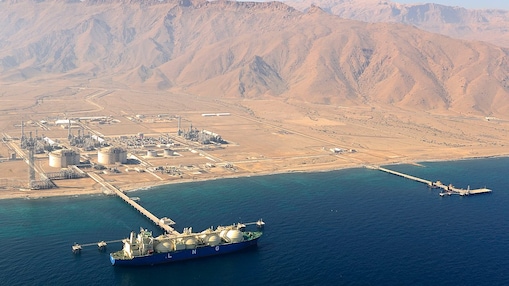
Shell LNG Outlook 2026 presentation
Join Cederic Cremers, President Integrated Gas, and Tom Summers, EVP Shell LNG Marketing & Trading, as they discuss the 2026 Outlook.
Explore the Shell LNG Outlook 2026



Frequently Asked Questions
What is the Shell LNG Outlook?
What is the Shell LNG Outlook?
The Shell LNG Outlook is an annual report produced by Shell which focuses on the key trends in the global liquefied natural gas (LNG) market over the previous year and highlights key trends that are shaping the future market. The report is now in its tenth year.
Why is LNG important?
Why is LNG important?
Many people in need of energy are located far from gas fields, making pipelines too impractical or costly to build. To get around this problem, natural gas can be cooled, shrinking its volume for easier, safer storage and shipping overseas. This cooled natural gas is LNG.
What proportion of natural gas demand is met by LNG?
What proportion of natural gas demand is met by LNG?
In 2025, around 13% of global natural gas demand was met through LNG supply.
How is Shell involved in LNG?
How is Shell involved in LNG?
Shell is one of the leading LNG suppliers globally, being involved in every stage of the value chain. We have a major interest in two regasification plants - Hazira in India and Dragon in the UK – and long-term access to capacity in several others in Europe, the Middle East and North America. Our trading operation buys and sells LNG to and from Shell, its partners and third parties.
Shell is also one of the world’s largest LNG shipping operators, managing and operating more than 18 carriers and with 65 on time-charter. Combined, these LNG carriers comprise around 10% of the global LNG shipping fleet.
What is the key takeaway from the LNG Outlook 2026?
What is the key takeaway from the LNG Outlook 2026?
Of note, total LNG trade during 2026 was expected to increase significantly in 2026. However, severe disruption to shipping through the Strait of Hormuz has shut in around one fifth of the world’s monthly LNG supply since the conflict started, pushing up prices on the spot market and adversely affecting some countries in Asia.
However the LNG market has shown resilience and the ramp up of new liquefaction facilities in North America, improved performance at existing plants and lower Asian imports of LNG have partially offset the reduced supply from the Middle East.
As a result, total LNG trade in 2026 could be similar to last year if shipping through the Strait of Hormuz returns to normal this summer, before returning to growth in 2027.
How much LNG was traded globally in 2025?
How much LNG was traded globally in 2025?
In total, around 422 million tonnes of LNG was traded globally during 2025, an increase of around 21 million tonnes from the previous year.
Which was the largest export country?
Which was the largest export country?
The USA remained the largest exporter and is set to nearly double its exports by 2030.
Is there sufficient LNG supply to meet the demand?
Is there sufficient LNG supply to meet the demand?
During the course of 2025 more LNG supplies came on to the market, easing the previously tight supply. The disruption to shipping through the Strait of Hormuz once again tightened the market. However, around 180 million tonnes of new LNG supply a year is set to come online by 2030.