How Shell helped bring Scuderia Ferrari’s F2002 back to Monza
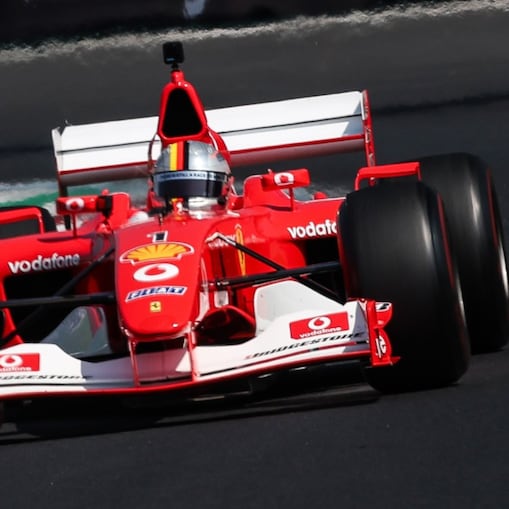
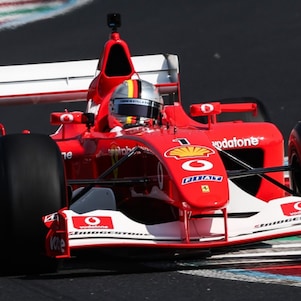
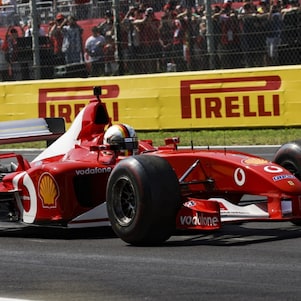
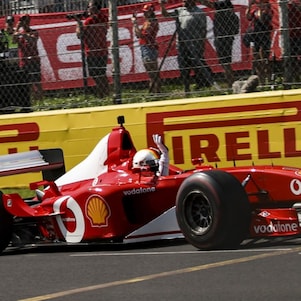
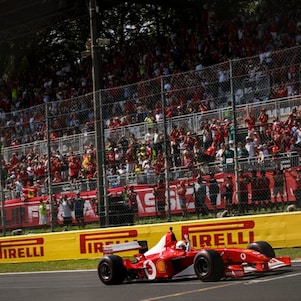
On Sunday at Monza, Shell helped bring Ferrari’s F2002 back to the track as Sebastian Vettel drives the car associated with Michael Schumacher’s legacy, linking one of Formula 1’s most celebrated chapters with a modern fuel development challenge.
As Scuderia Ferrari HP’s home race, the Italian Grand Prix is always special. The 2026 race carried added significance, marking 30 years since Michael Schumacher’s first Italian Grand Prix victory for Scuderia Ferrari in 1996 and 20 years since his last win at the circuit in 2006. During that period, Schumacher helped define one of the most remarkable eras in the team’s history, including five consecutive Drivers’ World Championships and 71 Grand Prix victories for Scuderia Ferrari.
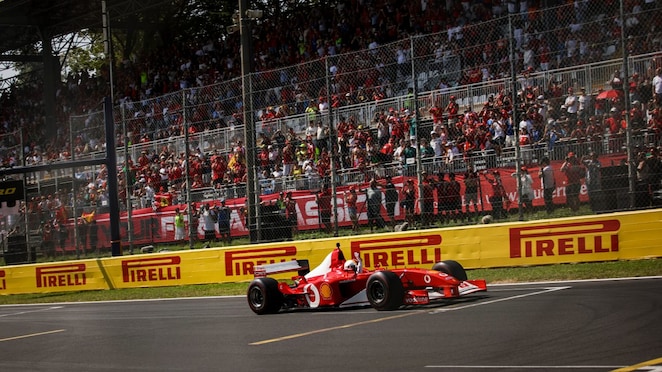
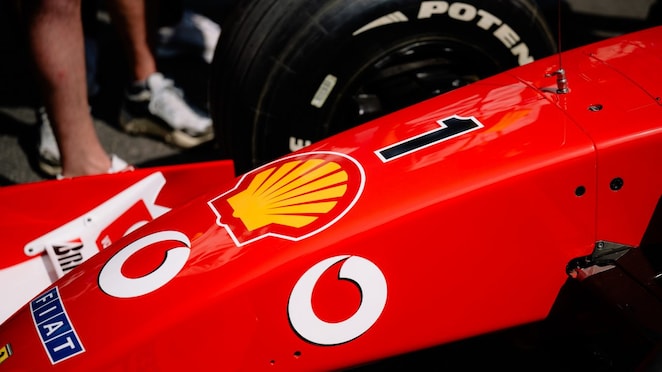
Scuderia Ferrari HP team celebrated Michael’s legacy at Monza with another world champion, Sebastian Vettel, taking to the track in one of the most acclaimed Ferrari F1 cars. Vettel raced for six seasons with Scuderia Ferrari, with Shell as Innovation Partner to the team, and grew up idolising Schumacher before becoming a Ferrari driver himself. On Sunday 6 September, he drove the F2002 for three laps of the Temple of Speed shortly before the Grand Prix.
But this piece of Ferrari history didn’t return to the track on the same fuel technology it raced with more than two decades ago. Shell powered Vettel’s lap in the F2002 with a fuel made using Advanced Sustainable components – fuel molecules produced from renewable feedstocks such as bio-waste and agricultural residues. The challenge for Shell scientists was clear: could the latest fuel technology power an engine designed more than two decades ago?
A modern fuel for a historic power unit
In contemporary F1, fuel is usually designed for performance and efficiency. For the F2002 project, the goal wasn’t to make the historic car faster, but to formulate a modern fuel that behaves like the fuel its power unit was originally designed to use.
The brief was therefore to retain a molecular composition similar to the fuels of that period while incorporating molecules derived from renewable feedstocks. That meant matching key characteristics such as combustion behaviour, material compatibility and performance response without modifying the power unit. It required a combination of early-2000s compatibility and current race-fuel expertise.
The striking part wasn’t simply that the scientists created the fuel – it was that they did so in four days. This is a very different timeline to the creation of the fuel for this season’s cars. The 2026 Shell V-Power Race Fuel took four years of dedicated development, including more than two million fuel simulations.
“The challenge was to develop a modern formulation that would behave in the way its power unit was designed to expect,” says Valeria Loreti, Principal Scientist for Motorsports at Shell. “Being able to do that in just four days reflects the depth of knowledge we have built through our work with Scuderia Ferrari HP.”
Shell scientists in Hamburg developed the bespoke fuel so quickly because they were able to draw on the capabilities they had already created through the wider 2026 programme. Essentially, the innovation behind today’s and tomorrow’s fuel also helped meet this unique brief for the Scuderia Ferrari HP team. The successful formulation enabled them to deploy the fuel without modifying the power unit of the F2002 car.
One way to describe the achievement is that Shell’s scientists were not trying to recreate the past, but to make a modern formulation work within the technical boundaries of a historic engine.
The partnership behind the performance
Most F1 fans know that championships aren’t won by drivers alone. Success is the result of an entire ecosystem of engineers, data analysts, manufacturing specialists and multiple technical partners. Shell has a dedicated team of scientists and developers working alongside Scuderia Ferrari HP engineers, with more than 110 Shell technical staff contributing over 38,000 hours annually to its F1 programme.
It’s a relationship that dates back to the very foundation of Scuderia Ferrari in 1929, when Shell was already a technical partner. The partnership continued into Formula 1, with Ferrari entering the World Championship in 1950 and the first shared Formula 1 victory coming at the 1951 British Grand Prix.
Today, Shell scientists and Scuderia Ferrari HP engineers collaborate across Shell laboratories in Hamburg and Ferrari facilities in Maranello, combining modelling with experimental engine testing and creating bespoke fuel and lubricant formulations. At race weekends, Shell scientists operate from a mobile laboratory at every Grand Prix.
Such an established relationship means Shell has an in-depth understanding of Ferrari’s engines – both past and present. That understanding helped Shell respond quickly to the F2002 brief, while supporting the team’s continuing pursuit of performance in a new era of Formula 1. The same long-term technical collaboration also provides the foundation for work across fuels and lubricants as the sport evolves.
From Formula 1 to the road
The innovation developed in the high-octane environment of Formula 1 has relevance that extends beyond the racetrack. Shell uses insights from elite motorsport R&D to evolve Shell V-Power and Shell Helix Ultra. That doesn’t necessarily mean we’ll all be fuelling our cars with the same formulations used at Monza. Instead, pushing fuels and lubricants to their limits in Formula 1 helps Shell deepen its understanding of how they perform. It’s knowledge that can help inform the development of products designed to support engine cleanliness, protection and efficiency for customers on the road.
That expertise could become increasingly valuable in a future where Shell believes a mosaic of fuels, including advanced biofuels, will be needed to help reduce carbon emissions from road transport.
Past, present and future at Monza
Sebastian Vettel’s three-lap drive around Monza was brief compared with the Grand Prix that follows. But it represented far more than its distance suggests. Thirty years on from Schumacher’s first Italian Grand Prix victory with Scuderia Ferrari, the return of the F2002 to the Temple of Speed connected his enduring legacy with technology shaping its future.
It also illustrated how the partnership between Shell and Scuderia Ferrari HP continues to evolve. The demands of the sport will continue to change – as will the expectations of everyday drivers on the road. And as Formula 1 enters a new era, the knowledge built through more than 75 years of collaboration will continue to shape the next chapter of the Innovation Partnership.