Mars: three decades of deep-water production
May 12, 2026
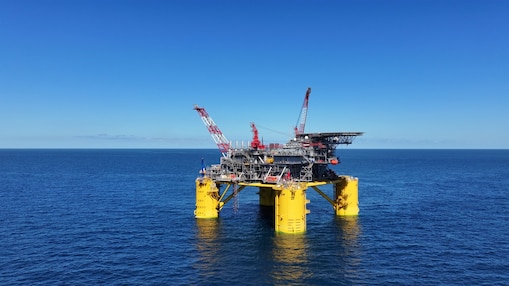
Since 1996, Shell’s Mars platform in the Gulf of America has safely and reliably helped deliver the secure energy the world needs. As it marks one billion barrels of oil produced — double what was originally expected — one long-time engineer reflects on Mars’ pioneering past, life aboard the platform, and nurturing the next generation of ‘Martians’.
At a glance
- Mars is a Shell-operated oil and gas platform in the Gulf of America and one of Shell’s longest-running deep-water assets. It started production in 1996.
- In February 2026, Mars delivered its billionth barrel of oil, the first single platform to do this in the Gulf of America. Mars is expected to continue producing for another 15 years.
- The short film and information below explore how Shell’s people and innovation have enabled Mars to continue to safely and reliably operate — and evolve — over time.
- In the Gulf of America, Shell is the largest producing leaseholder with 10 production hubs, making the region a heartland for Shell’s strategically important deep-water operations.
The people — and innovations — behind the Mars milestone
Read the transcript
Read the transcript
Title: Mars: the people and innovations behind a Shell deep-water milestone
Duration: 5:49 minutes
Description: We’re taken aboard the Mars Platform via helicopter where Bill, the Operations Supervisor, takes us for a tour, telling us about his start on the Mars Platform. He also tells us a bit of the history of the Mars Platform and shows us some of the day to day operations. He gives us a look into some of the damage that was caused to the platform by Hurricane Katrina in 2005. He’s joined by Shania, a wells engineer, who talks about getting to learn from the 30 years’ worth of knowledge and experience that can be found among the crew of the Mars Platform and just how incredible it is, the amount of manpower that goes into being able to turn on a light bulb at home.
[Background music plays]
Upbeat music plays.
Derek, Mars OIM
Good morning, Mars.
Mars Crew
Good morning.
Derek, Mars OIM
So, I was just informed by the control room that we, as a team, have just produced our one billionth barrel. Congratulations everybody! Y’all did it!
[Text displays]
Mars platform,
Gulf of America 06:30 am
Video footage
Drone footage pans from left to right, showing the Mars platform all lit up early in the morning as white text appears at the top, frame-left. Subtitles appear along the lower frame and continue throughout the video, accompanying speaker dialogue. Vertical mobile phone footage appears of a morning meeting, with Derek addressing the crew. The footage alternates between showing Derek as he speaks, and the crew sitting around the room, filmed from various angles. It returns to show Derek as he congratulates the crew, before ending with footage of the crew standing up, cheering, clapping, and shaking hands with each other.
[Text displays]
Since 1996, the Shell-operated Mars platform has provided a secure supply of energy for the world.
Video footage
We have drone footage of the Mars platform all lit up in the early morning, taken from a distance. White text appears across the centre of the screen over the footage.
[Text displays]
It is the first platform in the Gulf of America to produce 1 billion barrels of oil.
Video footage
Drone footage of the Mars platform all lit up in the early morning, taken closer and panning slowly from right to left as white text appears across the centre of the screen over the footage.
Bill
I took my first flight out here in 1998. So, 28 years ago, a much younger version of myself. I had never been on anything like this. Mars is a pioneering platform.
[Text displays]
Bill
Operation Supervisor, Mars platform
Video footage
Video footage shows an airfield with a yellow helicopter flying in towards the camera, it switches to show the underside of the helicopter as it flies overhead. We then switch to Bill, sitting in an office, talking to the camera. GFX showing his name and job title appears frame-right. We switch to close-up footage of Bill in the helicopter, looking out of the window at the Mars platform in the distance. Footage filmed from the window of the helicopter shows the Mars platform down below as they fly around it.
Bill
It was truly a groundbreaking piece of engineering. It changed what was possible in deep-water.
Video footage
Footage showing Bill looking out of the helicopter window at the Mars platform as they approach for landing. White text appears along the bottom, frame-left. Footage filmed from deck shows the helicopter approaching the helipad for landing before switching to a shot of Bill exiting the helicopter, saluting and nodding to crew members in greeting. Footage filmed from bird’s-eye view, looking down at the helipad, showing people exiting the helicopter.
Bill
It’s been a long journey, 1 billion barrels of production. It’s an incredible, incredible milestone.
Video footage
Footage shows Bill and Shania collecting their bags as they leave the helipad with Bill giving one of the crew members a fist-bump as he walks past the camera. Switches to footage of Bill sitting in an office, talking to the camera.
[Text displays]
Mars is a US resource based more than 200 kilometers South of New Orleans and sits in 900 metres of water.
Video footage
Drone footage shows the ocean as it flies forward before the Mars platform comes into view. White text appears across the centre of the screen over the footage.
Bill
When Mars first started out here, as far as you could see, there was nothing around us.
Video footage
Footage of Bill sitting in an office as he talks to the camera. Scene switches to show sped up drone footage, panning from left to right, of the Mars platform before slowing to normal speed.
Bill
It opened the door to even deeper exploration, unlocking secure energy safely and efficiently
Video footage
We have a variety of clips showing Bill around the Mars platform. First we have a side view shot of him climbing up a set of stairs, followed by him walking towards the camera as he looks around the platform, switching to footage from behind, following him as he shakes a crew member’s hand in passing, ending with the camera panning around him from side view to behind him as he stands, looking out over the Mars basin.
Bill
So this is our control room. This is basically the operation centre of the platform.
How y’all doing, fellas? What’s going on Mario?
The technical boundaries we pushed helped pave the way for the entire deep-water industry.
Video footage
Camera follows closely behind Bill as he walks into the control room, greeting the crew members sitting at the desk. Old aerial photographs appear on screen, one after the other with a clicking sound FX, three of them, showing the Mars platform when it had first been built from various angles.
Bill
Open the lower zone to fully open.
Control Room Operator
Okay, lower zone is at 100% open.
Video footage
Footage shows Bill close-up as he looks over his glasses at what’s on screen before switching to a slightly wider angle shot showing a side view of both Bill and the operator as they look at the screen.
Bill
In 1989, when the reservoir below us was first discovered, it turned out to be one of the largest US oil finds in decades.
Video footage
Footage shows a close-up of a man’s hand on a computer mouse. Footage switches to show close-up of the side profile of a man’s head as he focuses on what’s on screen. Footage then switches to a member of the crew at work on the platform, before switching to a close-up of a man’s hand pushing down a lever, and switches again to footage of two crew members filmed from behind as they guide a piece of equipment. Ending with a shot filmed from the top of a flight of stairs, showing a crew member walking down the stairs.
Bill
Now we have Olympus right here, Vito and Ursa over here as well. We’ve created an entire community of production platforms.
Video footage
Footage of Bill as he stands on the platform with Olympus in the background behind him as he points out Olympus, Vito, and Ursa. As he names Vito and Ursa, footage switches to show drone footage of each of them, one after the other. Footage switches back to Bill as he stands on the platform, talking to the camera.
Bill
To know that Mars helped grow that and make that happen, it’s just an incredible sense of pride.
Video footage
Drone footage of the Mars platform, panning left to right. Switches over to footage of Bill sitting in an office, talking to the camera.
[Text displays]
Shell is the largest producing leaseholder in the Gulf, with ten platforms that never sleep.
Video footage
Drone footage showing the Mars platform in the distance. White text appears across the centre of the screen over the footage.
Bill
Mars operates 24 seven, 365 days a year. This is absolutely a second home for us.
This floor here, living accommodations, bedrooms all up and down the hall. This is the Mars gym. I’m in here every now and then, but not as much as the other guys [laughs].
Video footage
Drone footage shows the Mars platform all lit up at night before switching to a closer shot of the Mars platform at night, panning right to left, showing Olympus, Vito and Ursa all lit up in the background. Footage switches to show Bill talking to the camera in an office before changing to following him down a corridor as he takes us on a tour of the living quarters. Footage switches to a close up, panning over a sign for the quarters and a printed out sign with a stop symbol and Night Workers Sleeping written on it next to it. We switch back to following behind Bill as he enters the gym. Close-up footage of a rack of dumbbells before switching back to Bill standing by the door, talking to the camera, before he turns to leave.
Bill
On average, around 150 crew members are based out here on Mars.
Video footage
A variety of clips showing crew at work is shown. Starting with footage of three crew members, shot at an upward angle, showing them busy with ratchet straps. It then switches over to a side view shot of another crew member at work. And then footage of kitchen crew preparing food is shown.
Bill
The people make the place. We all work together as one big team.
Good to be back. Good to see y’all.
Crew member
Good to see you.
Bill
We have movie nights, we do bingo. A lot of activities take place out here.
Crew members
066.
Bingo!
Video footage
Footage pans over crew members sitting at a table as they give a thumbs up to the camera. Footage switches to following Bill as he greets and shakes hands with crew members sitting at computers, before switching to Bill showing us the movie room. Footage switches to show crew with their Bingo cards, before switching to show the crew member running the Bingo game sitting at the table as he pulls a number to be called. Footage changes to show the crew members at their tables as one calls out Bingo and waves his hands in the air.
Bill
We affectionately refer to each other as Martians. Once a Martian, always a Martian.
We all protect each other. We look out for each other and support each other.
Video footage
A crew member faces the camera holding a green t-shirt up in front of himself as he smiles at the camera. Footage of Bill sitting in the office, talking to the camera. Angle changes to a close-up of him, before switching to a shot of him as he walks out of a room, fist bumping a crew member sitting on the couch by the door. Footage switches back to Bill in the office, talking to the camera.
[Background music plays]
A gentle, almost sad piece of music plays.
[Text displays]
In 2005, Hurricane Katrina swept through the Gulf. One of the most destructive hurricanes in US history.
Mars was evacuated before 280kph winds and 20 metre waves hit the platform.
Video footage
Drone footage of the Mars Platform, panning from left to right, as white text appears centre screen over the footage. Footage switches to more drone footage, this time looking straight down at the waves, as the next line of white text appears centre screen over the footage.
Bill
We weren’t sure that Mars was going to be recoverable. We didn’t know if this platform would ever produce again.
It was over a million man hours of construction activities that put this thing back together. I can remember that milestone.
That’s just a big example of how we don’t give up, you know. In this deep-water industry, Shell as an organisation, we will not give up.
Video footage
Footage filmed over Bill’s shoulder, looking at a laptop screen showing old photographs of hurricane damage to the Mars platform. Camera shifts to face Bill, Randall and another crew member as they sit on the one side of the table, all looking at the laptop in front of Bill. It switches back to looking over Bill’s shoulder as he taps the keyboard to switch to the next photograph. Footage shows Bill sitting in an office, talking to the camera. An archived photo of the hurricane damage to the Mars platform appears on screen before switching back to showing Bill, Randall and crew member sitting at the table, looking at the laptop. Changes back to footage filmed over Bill’s shoulder focusing on the laptop screen. Two more archived photographs appear on screen, one after the other, showing the hurricane damage to the platform. Footage switches to show Bill in the office, talking to the camera. Drone footage of Bill standing on the helipad as the drone flies backwards, zooming out. Footage switches back to Bill in the office, talking to the camera.
[Background music plays]
Music changes to an upbeat tune, featuring drums and guitar.
[Text displays]
Originally it was thought Mars could recover around 500 million barrels of oil.
Discoveries, innovation and ingenuity has now brought production to 1 billion barrels.
Video footage
Drone footage slowly moves forward towards the Mars platform shown in the distance as the first lines of white text appear along the top of the frame, followed by the next line towards the bottom of the frame.
Bill
We talk about Mars being a pioneer, but we continue to maximise and find new production.
When we first arrived out here, all the wells were directly below us.
Since that time, we’ve drilled wells miles away. We have those now flowing back into Mars production.
The technology and some of the things that we’re doing here at Mars are actually helping neighbouring platforms.
We’re always exploring and looking for new ways to increase that production.
Video footage
Footage shot at an upward angle showing equipment coming down. Footage changes to show a crew member filmed close-up from behind as he looks up at something. Footage switches again to show two crew members guiding a pipe as it comes down and tightening it into place. Footage changes to show Bill in an office, talking to the camera. Switches to footage filmed looking down at the well pipes in the water. Footage returns to Bill sitting in the office, talking to the camera. It then switches to show Bill walking towards the camera while looking around at the equipment. It switches to a close-up shot, panning left to right, of a label saying Water Flood Turbine. Footage changes back to Billy sitting in an office as he talks to the camera. We then have a few quick clips showing a close-up of an equipment dial, then to a side view, close-up of a crew member’s hand on a lever as he operates the machinery, and the angle changes to slightly behind him showing his view of equipment through the window. We then have a clip of the machinery releasing a pipe, which then switches to a shot filmed from behind of two crew members as they look up at something.
[Text displays]
Three decades of excellence is carried forward by the next generation.
Video footage
Drone footage of the Mars platform, panning around from right to left. Then switches to drone footage filmed from further away, slowly zooming in closer to the platform.
Bill
Probably my favourite part of the job is mentoring our young professionals.
But then we got the flow line…
It’s really important that we make sure that we pass on everything we’ve learned because they are the future.
Video footage
Footage shows Bill and Shania standing next to each other, bodies facing the camera, but heads turned looking towards each other, as Bill talks to her.
Shania
Everyone was just so willing to share what they know. Almost 30 years of operational excellence and safety. That’s a pretty big legacy to try to keep going with. It’s exciting. It’s also quite challenging.
Video footage
Footage shows Shania sitting in the office, facing the camera as she speaks to it. Footage then switches to show Shania and Bill on the platform, as they both look at the large clipboard that Bill’s holding, camera moves closer, zooming in on them slightly.
Bill
We rely on their input just as much as we rely on each other’s input in everything that we do.
Video footage
Footage shows Bill sitting in front of the camera in an office, as he talks to the camera. Footage switches to a bird’s-eye view, looking down on Bill and Shania walking along a catwalk over the water.
Shania
Because of learnings and experiences from people on this platform it’s the reason why we can keep improving on future platforms. That’s why we have the Vito’s and the Sparta’s now.
Video footage
Footage of Shania, standing on deck as she talks to the camera. Footage switches to show Shania walking towards the camera. It then switches to show close-up side-on footage of Shania sitting in an office as she talks to someone off to the left behind the camera.
[Background music plays]
An adaptation of the Sound of Shell plays, featuring guitar.
Bill
Evening times are really special when you’re looking out toward the west, toward Olympus. You never get tired of seeing that.
Video footage
Drone footage shows Olympus in the distance as the sun starts to set over the Gulf. Switches to head on footage of Bill and Shania standing on the deck, watching the sunset. Camera pans right to left, slowly circling around Bill and Shania before coming back to the front.
Shania
You don’t typically think about all the work that goes into turning on a light bulb at home. Here you see the kind of manpower it takes. It’s pretty heroic.
Video footage
Footage shows Shania sitting in the office, talking to the camera. Switches to drone footage of the Mars platform at dusk with the lights on before switching back to footage of Shania in the office, talking to the camera.
Bill
It’s just a great sense of pride to be part of the energy past and energy into the future.
There’s just so many people, offshore and onshore, that played a major role in getting to this milestone.
We’ve produced a billion barrels and we’re not done yet.
Video footage
Drone footage of the Mars platform at sunset with all the lights on. Footage switches to show Bill sitting in the office, talking to the camera. Footage changes to show Bill and Shania, filmed from behind, as they stand on the platform looking out towards Olympus. Camera slowly zooms in on them. Footage switches back to Bill in the office as he talks to the camera, before returning to the shot filmed from behind Bill and Shania, as the camera slowly moves in until it ends between them with everything out of focus. This final shot transitions out of frame in the shape of a contracting Pecten, gradually giving way to a clean white background.
[Audio]
Shell brand mnemonic played on keys.
[Text displays]
© Shell International Limited 2026
[Animated sequence]
The small iconic red-and-yellow Pecten transitions in, positioning itself at the centre of the frame against a white background. Text appears across the lower part of the frame.
Bill Lott, Operation Supervisor, Mars platform"It is just a great sense of pride to be part of the energy past and energy into the future. We have produced a billion barrels and we are not done yet."
1 billion
barrels of oil equivalent produced as of February 2026.
896
metres (2,940 feet): the depth below sea level of Mars’ reservoir — which is more than the height of the world’s tallest building, the Burj Khalifa in Dubai.
150
people live and work on Mars, with the platform operating day in, day out, all year long.
Frequently asked questions about Mars and Shell’s deep-water operations
What is the Mars platform and where is it located?
What is the Mars platform and where is it located?
Mars is a Shell-operated deep-water oil and gas platform located in the Gulf of America, more than 200 kilometres (130 miles) south of New Orleans. The platform has operated since 1996.
What is the significance of Mars reaching 1 billion barrels of oil produced?
What is the significance of Mars reaching 1 billion barrels of oil produced?
Mars is the first single platform to produce one billion barrels of oil in the Gulf of America. When it began operating — with its wells drilled directly beneath the platform — Mars was originally expected to produce around 500 million barrels of oil. New discoveries and continued innovation have enabled it to double that output.
Today, wells drilled miles from Mars are tied back into production, helping to safely and reliably deliver more secure energy. Its billion barrels mark another milestone for a platform that has continuously pushed the technical boundaries of offshore operations, helping pave the way for the entire deep-water industry.
How does Mars fit into Shell’s deep-water portfolio?
How does Mars fit into Shell’s deep-water portfolio?
Mars is one of 10 production hubs that Shell operates in the Gulf of America. An eleventh — Sparta — is currently under construction and scheduled to start operations in 2028.
Shell’s deep-water experience in the region stretches back five decades. In 1978, Shell’s Cognac platform marked a groundbreaking achievement as the first to produce oil in waters exceeding 300 metres (1,000 feet) in depth.
Today, as a leading producing leaseholder in the Gulf of America, we are leveraging our significant geological and technical expertise to deliver energy profitably and at lower costs, while reducing emissions.
The Gulf of America is our major Upstream production area in the USA. It is also a heartland for our wider deep-water operations, which include interests in Brazil — where Shell is the second-largest oil and gas producer — and Nigeria.
What does “deep water” mean in terms of oil and gas production?
What does “deep water” mean in terms of oil and gas production?
Deep-water drilling involves extracting oil and natural gas from beneath the ocean floor at significant depths, typically greater than 200 metres (around 656 feet).
This process requires specialised equipment and techniques to safely and efficiently navigate the challenging conditions of deep-water environments.
How is Shell decarbonising its deep-water operations?
How is Shell decarbonising its deep-water operations?
Shell is proactively managing the greenhouse gas intensity of our deep-water operations through innovative project designs, efficient operations, and strategic handling of late-life assets. In the Gulf of America, Shell’s production is among the lowest greenhouse gas (GHG) intensity in the world for producing oil.1
1 The reference to our Gulf of America production being among the lowest GHG intensity in the world is a comparison among other oil and gas producing members of the International Association of Oil & Gas Producers.
Why is new oil and gas production still needed today?
Why is new oil and gas production still needed today?
The role of oil and gas will be critical to the energy system for decades to come.
Shell believes continued investment in oil and gas will be needed to ensure a balanced energy transition. Our investments are needed to maintain oil and gas supplies as existing fields naturally decline at a rate of 4-5% a year, faster than reductions in demand.
Cautionary note
Cautionary note
The companies in which Shell plc directly and indirectly owns investments are separate legal entities. In this content “Shell”, “Shell Group” and “Group” are sometimes used for convenience to reference Shell plc and its subsidiaries in general. Likewise, the words “we”, “us” and “our” are also used to refer to Shell plc and its subsidiaries in general or to those who work for them. These terms are also used where no useful purpose is served by identifying the particular entity or entities. ‘‘Subsidiaries’’, “Shell subsidiaries” and “Shell companies” as used in this content refer to entities over which Shell plc either directly or indirectly has control. The terms “joint venture”, “joint operations”, “joint arrangements”, and “associates” may also be used to refer to a commercial arrangement in which Shell has a direct or indirect ownership interest with one or more parties. The term “Shell interest” is used for convenience to indicate the direct and/or indirect ownership interest held by Shell in an entity or unincorporated joint arrangement, after exclusion of all third-party interest.
Forward-Looking statements
This content contains forward-looking statements (within the meaning of the U.S. Private Securities Litigation Reform Act of 1995) concerning the financial condition, results of operations and businesses of Shell. All statements other than statements of historical fact are, or may be deemed to be, forward-looking statements. Forward-looking statements are statements of future expectations that are based on management’s current expectations and assumptions and involve known and unknown risks and uncertainties that could cause actual results, performance or events to differ materially from those expressed or implied in these statements. Forward-looking statements include, among other things, statements concerning the potential exposure of Shell to market risks and statements expressing management’s expectations, beliefs, estimates, forecasts, projections and assumptions. These forward-looking statements are identified by their use of terms and phrases such as “aim”; “ambition”; ‘‘anticipate’’; “aspire”, “aspiration”, ‘‘believe’’; “commit”; “commitment”; ‘‘could’’; “desire”; ‘‘estimate’’; ‘‘expect’’; ‘‘goals’’; ‘‘intend’’; ‘‘may’’; “milestones”; ‘‘objectives’’; ‘‘outlook’’; ‘‘plan’’; ‘‘probably’’; ‘‘project’’; ‘‘risks’’; “schedule”; ‘‘seek’’; ‘‘should’’; ‘‘target’’; “vision”; ‘‘will’’; “would” and similar terms and phrases. There are a number of factors that could affect the future operations of Shell and could cause those results to differ materially from those expressed in the forward-looking statements included in this content, including (without limitation): (a) price fluctuations in crude oil and natural gas; (b) changes in demand for Shell’s products; (c) currency fluctuations; (d) drilling and production results; (e) reserves estimates; (f) loss of market share and industry competition; (g) environmental and physical risks, including climate change; (h) risks associated with the identification of suitable potential acquisition properties and targets, and successful negotiation and completion of such transactions; (i) the risk of doing business in developing countries and countries subject to international sanctions; (j) legislative, judicial, fiscal and regulatory developments including tariffs and regulatory measures addressing climate change; (k) economic and financial market conditions in various countries and regions; (l) political risks, including the risks of expropriation and renegotiation of the terms of contracts with governmental entities, delays or advancements in the approval of projects and delays in the reimbursement for shared costs; (m) risks associated with the impact of pandemics, regional conflicts, such as the Russia-Ukraine war and the conflict in the Middle East, and a significant cyber security, data privacy or IT incident; (n) the pace of the energy transition; and (o) changes in trading conditions. No assurance is provided that future dividend payments will match or exceed previous dividend payments. All forward-looking statements contained in this content are expressly qualified in their entirety by the cautionary statements contained or referred to in this section. Readers should not place undue reliance on forward-looking statements. Additional risk factors that may affect future results are contained in Shell plc’s Form 20-F for the year ended December 31, 2025 (available at www.shell.com/investors/news-and-filings/sec-filings.html and www.sec.gov). These risk factors also expressly qualify all forward-looking statements contained in this content and should be considered by the reader. Each forward-looking statement speaks only as of the date of this content, May 12,2026. Neither Shell plc nor any of its subsidiaries undertake any obligation to publicly update or revise any forward-looking statement as a result of new information, future events or other information. In light of these risks, results could differ materially from those stated, implied or inferred from the forward-looking statements contained in this content.
Shell’s net carbon intensity
Also, in this content we may refer to Shell’s “net carbon intensity” (NCI), which includes Shell’s carbon emissions from the production of our energy products, our suppliers’ carbon emissions in supplying energy for that production and our customers’ carbon emissions associated with their use of the energy products we sell. Shell’s NCI also includes the emissions associated with the production and use of energy products produced by others which Shell purchases for resale. Shell only controls its own emissions. The use of the terms Shell’s “net carbon intensity” or NCI is for convenience only and not intended to suggest these emissions are those of Shell plc or its subsidiaries.
Shell’s net-zero emissions target
Shell’s operating plan and outlook are forecasted for a three-year period and ten-year period, respectively, and are updated every year. They reflect the current economic environment and what we can reasonably expect to see over the next three and ten years. Accordingly, the outlook reflects our combined Scope 1 and 2 target, NCI target and our oil products ambition over the next ten years. However, Shell’s operating plan and outlook cannot reflect our 2050 net-zero emissions target, as this target is outside our planning period. Such future operating plans and outlooks could include changes to our portfolio, efficiency improvements and the use of carbon capture and storage and carbon credits. In the future, as society moves towards net-zero emissions, we expect Shell’s operating plans and outlooks to reflect this movement. However, if society is not net zero in 2050, as of today, there would be significant risk that Shell may not meet this target.
Forward-Looking non-GAAP measures
This content may contain certain forward-looking non-GAAP measures such as free cash flow and underlying operating expenses. We are unable to provide a reconciliation of these forward-looking non-GAAP measures to the most comparable GAAP financial measures because certain information needed to reconcile those non-GAAP measures to the most comparable GAAP financial measures is dependent on future events some of which are outside the control of Shell, such as oil and gas prices, interest rates and exchange rates. Moreover, estimating such GAAP measures with the required precision necessary to provide a meaningful reconciliation is extremely difficult and could not be accomplished without unreasonable effort. Non-GAAP measures in respect of future periods which cannot be reconciled to the most comparable GAAP financial measure are calculated in a manner which is consistent with the accounting policies applied in Shell plc’s consolidated financial statements.
The contents of websites referred to in this content do not form part of this content.
We may have used certain terms, such as resources, in this content that the United States Securities and Exchange Commission (SEC) strictly prohibits us from including in our filings with the SEC. Investors are urged to consider closely the disclosure in our Form 20-F, File No 1-32575, available on the SEC website www.sec.gov.