
Dynamic Protection Plus Technology
Shell Rimula synthetic1 oils developed with cutting edge Dynamic Protection Plus Technology. These engine oils are designed to protect your engine. It’s engine oil that works as hard as you.
We know how tough the roads can be. That’s why the range of Shell Rimula synthetic1 oils with Dynamic Protection Plus continue to provide the excellent performance your engine needs, for long-lasting protection across a variety of road and weather conditions.
Shell scientists developed the range of Shell Rimula synthetic oils1 with Dynamic Protection Plus. Dynamic Protection Plus Technology is a combination of synthetic base oil technology and our Adaptive Additive Technology. For example Shell Rimula R6 LME delivers up to 51% better engine wear protection2
What is Shell Rimula with Dynamic Protection Plus Technology?
Shell Rimula synthetic1 oils with Dynamic Protection Plus combine synthetic base oil technology and our Adaptive Additive Technology to create our top tier, heavy-duty diesel engine oils.
Why it’s good for your truck or fleet
Shell Rimula heavy-duty diesel engine oils have the synthetic ranges1 to combine these technologies, delivering increased benefits3 for your engine while maintaining durability in the harshest conditions.
The benefits of using Shell Rimula synthetic oils1 with Dynamic Protection Plus Technology vary per product. For Shell Rimula R6 LME, these include:
Dynamic Protection Plus technology explained
Read the transcript
Read the transcript
Title: ShellRimulaDPP Animation Prores- 040416
Duration: 2:41 minutes
Description:
Introducing Shell Rimula synthetic oils with Dynamic Protection Plus technology, to provide long oil and engine life, extended oil drain intervals, reduced fuel and maintenance costs, all-weather protection, resulting in lower total cost of ownership.
[Background music plays]
Rhythmic, synthesised instrumental music.
[Graphic]
Dynamic Protection Plus logo centred on a white screen.
[Narrator]
Introducing Dynamic Protection Plus technology.
[Text displays]
Dynamic Protection Plus
[Animated sequence]
Animated low angle view, panning upwards, of a diesel truck approaching on a highway through a haze of swirling sand, against the background of a brown desert landscape.
The background turns grey as the same scene is depicted by night and in driving rain, which finally turns to snow, with the landscape covered in a blanket of white.
Zoom to a high angle view of the truck’s engine in situ.
[Narrator]
At Shell, we know just how tough the roads can be. Harsh weather and long driving hours can have an impact on your engine’s performance. Today’s heavy-duty diesel engines need exceptional engine oils to keep them running at maximum efficiency.
[Text displays]
Heavy duty diesel engine
[Animated sequence]
Zoom to a closer view of the pumping pistons, and a further zoom to a close-up of the oil-filled pistons as they pump in slow motion, and text appears frame-right.
[Narrator]
That’s why Shell scientists have developed Shell Rimula synthetic oils with Dynamic Protection Plus technology.
[Text displays]
Shell Rimula
Dynamic Protection Plus
The synthetic oils of Shell Rimula are products in the Shell Rimula R5, R6 and Ultra range, except Shell Rimula R5 LM and Shell Rimula R6 ME.
[Animated sequence]
Zoom into the fluid itself, as text appears in the centre of the golden background which is criss-crossed with white lines.
Zoom out to show the white lines linking white circular molecules, as text appears lower frame-left, alongside a large molecule.
Zoom out through the same sequence of oil filled pistons to an external view of the pumping pistons, to an external view of the engine, as successive text appears to the right of this last image.
[Narrator]
This unique formulation combines Shell PurePlus technology and Adaptive Additive technology to provide outstanding engine protection that helps to lower total cost of ownership.
[Text displays]
Shell PurePlus Technology
Adaptive Additive Technology
Outstanding engine protection
Helps to lower total cost of ownership
[Animated sequence]
Slight zoom to a translucent view of the engine and the pumping pistons as text is superimposed across the image.
[Narrator]
Let us have a look at the formulation of Dynamic Protection Plus technology.
[Text displays]
Shell PurePlus technology + Adaptive Additive technology = Dynamic Protection Plus
[Animated sequence]
Fluid funnels down from top of frame into a branching golden molecular sequence, to the left of which text appears.
Cut to a close-up view of a denser and expanding golden molecular structure against a black background, with text appearing frame-left of the animation.
[Narrator]
Shell PurePlus technology produces clean and crystal clear base oil.
[Text displays]
Shell PurePlus technology
Clean and crystal clear base oil
[Animated sequence]
Zoom to low angle close-up of the pumping pistons, panning across the length of them and zooming up around the engine and out to a high angle wide-shot of the engine in operation. Successive text displays frame-left of the animation.
[Narrator]
By utilizing reduced viscosity oils, less energy is required to pump the oil around the engine, resulting in increased fuel efficiency and reduced costs. Adaptive Additive technology, on the other hand, adapts physically and chemically when required to provide protection.
[Text displays]
Adaptive Additive technology
Adapts physically and chemically
Specific products within the Shell Rimula Ultra, R6 and R5 range can deliver fuel economy benefits compared to industry standard 10W-40 or 15W-40. Benefits and/or savings may vary, depending on, for example, vehicle type, the application, the operating conditions, the current products being used, the condition of the equipment and the maintenance practices.
[Animated sequence]
Zoom to close-up of the rocker arms action against the camshaft as the pistons pump below, zooming into a graphic showing a gold line running horizontally across the screen, separating the surface above from the surface below. The line is filled with a double layer of white molecules. Text displays top of frame-left.
A white line diagonally splits the screen, frame-left still containing the previously described image, while frame-right contains a similar image, but with a very thin, ragged line across the middle. Text displays top of frame-left and top of frame-right.
[Narrator]
This is how Dynamic Protection Plus technology works. Anti-wear chemistry provides extra protection against friction in high-stress areas, extending your engine’s lifespan.
[Text displays]
Wear control / No wear control
Valid for synthetic products of Rimula, for example Shell Rimula Ultra delivers up to 56% better engine wear protection compared with the new, more stringent MB 228.51 limit, as measured in the MB OM 646 LA engine test.
[Animated sequence]
Zoom out to a slow motion view of the pumping pistons and the combustion process, acid depicted in white above the piston.
Zoom into the oil again, white molecules visible against the golden background. Small acid molecules descend into a large white molecule in the foreground and disappear as they are neutralised. Text displays at the top of frame-left.
Zoom out to the pumping pistons again, acid corrosion dissipating above the pistons.
Zoom to pumping motion of the connecting rods below. A white line diagonally splits the screen over the same image, with the part of the connecting rods to the left of the line appearing to be clean while the parts to the right appear corroded. Text displays top of frame-left and top of frame-right.
[Narrator]
During the combustion process, acids are produced which can end up in the engine oil. Performance additives neutralize these acids and prevent them from reaching vital engine parts. By preventing metal corrosion, unplanned downtime can be minimized.
[Text displays]
Acid control / No acid control
[Animated sequence]
Pan down and around to zoom in on a low angle view of the tank below the engine, zooming into the fluid within the tank to show white additive molecules collecting around dark-coloured sludge particles.
A white line diagonally splits the screen, frame-left still containing the previously described image, while frame-right shows the sludge particles descending to collect and form a mass at the bottom of the tank. Text displays top of frame-left and top of frame-right.
[Narrator]
Additives target carbon particles to prevent sludge formation which helps extend oil drain intervals.
[Text displays]
Sludge control / No sludge control
Compared to industry standard 15W-40 oils. Proven to deliver 150,000 km oil drain intervals. Exact oil drain intervals will depend on vehicle type and application.
[Animated sequence]
Zoom out of the tank and pan up to the pistons, again zooming to a close-up of the piston crown, and depicting a line of golden fluid running vertically between two pistons, black deposits visible on the surface of the slowly pumping piston. The black deposits are targeted by white molecules within the fluid and dissipated. Text displays top of frame-left, and a red circle rings one of the white molecules, with text displaying to the right of this graphic.
[Narrator]
Detergent molecules help prevent build-up of deposits around the piston crown, resulting in a cleaner, more efficient engine and reducing maintenance costs.
[Text displays]
Piston deposit control
Detergent particle
Compared to industry standard 10W-40 oils. Exact benefits and/or savings may vary, depending on, for example, vehicle type, the application, the operating conditions, the current products being used, the condition of the equipment and the maintenance practices.
[Graphic]
Zoom out to a quick view of the engine parts, zooming out again to a white screen displaying the Dynamic Protection Plus logo and text, after which successive text displays against the white background.
[Narrator]
Dynamic Protection Plus technology was designed to provide long oil and engine life, extended oil drain intervals, reduced fuel and maintenance costs, all-weather protection, resulting in lower total cost of ownership.
[Text displays]
Dynamic Protection Plus
Long oil and engine life
Extended oil drain intervals
Compared to industry standard 15W-40 oils. Proven to deliver 150,000 km oil drain intervals. Exact oil drain intervals will depend on vehicle type and application.
Reduced fuel and maintenance costs
Compared to industry standard 10W-40 oils. Exact benefits and/or savings may vary, depending on, for example, vehicle type, the application, the operating conditions, the current products being used, the condition of the equipment and the maintenance practices.
All weather protection
Lower total cost of ownership
[Graphic]
Zoom out to graphic of three Shell Rimula products against the white background. Text displays below this graphic.
[Narrator]
Shell Rimula with Dynamic Protection Plus technology, the engine oil that works as hard as you.
[Text displays]
Shell Rimula
The engine oil that works as hard as you
[Audio]
Shell jingle
[Graphic]
Shell logo
[Text displays]
Shell International 2016 ©
Benefits
Increased fuel savings

Increased fuel savings
Low viscosity could help to improve fuel consumption and the overall maintenance costs to your business.3 Utilising low viscosity oils means reduced fuel consumption because it reduces the energy lost in day to day applications.
Better protection

Better protection against engine wear
Less engine wear and increased durability is vital to avoid any unplanned downtime so you can get the most out of your engine and extend its life span. The anti-wear booster developed by Shell scientists provides better protection against friction in highly stressed areas of the engine.2
Longer oil drain intervals

Longer oil drain intervals
The formulation for Shell Rimula R6 LME delivers outstanding durability for extended oil drain intervals.4 Longer oil drain intervals could mean less vehicle downtime for you, keeping you and your equipment on the road for longer.
Cleaner pistons

Cleaner pistons
Cleaner pistons12 mean a smoother, more efficient engine. Shell Rimula R6 LME include advanced additives which give protection against deposits for extended oil-drain intervals4 and potentially delivering maintenance savings for you.3
Equipment compatibility

Emissions equipment compatibility
Efficiently running your engine means effectively managing the wellbeing of your business. After treatment devices such as Diesel Particulate Filters trap potentially harmful soot and ash combustion by-products before they can be released to the environment. Blocked filters increase fuel consumption, so the low-ash additive system in is designed to actively reduce filter blocking.5
Which products have Dynamic Protection Plus Technology?
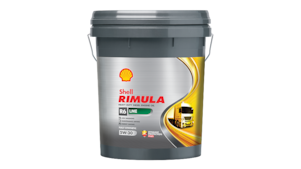
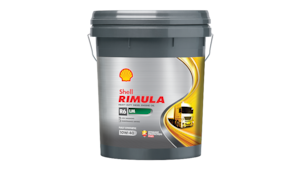
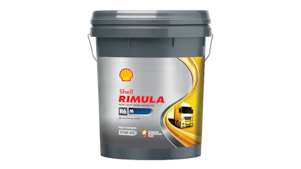
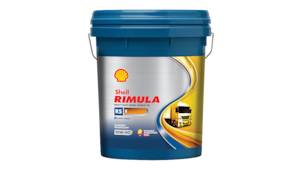
The Shell Rimula R5 and R6 range use Dynamic Protection Plus Technology1, which could provide real fuel savings3 that can help lower your operation cost and provide protections that can help to reduce maintenance costs.
Disclaimer:
- The synthetic oils of Shell Rimula are products in the Shell Rimula R5 and R6 range, except Shell Rimula R6 ME and Shell Rimula R5 LM.
- Up to 51% better engine wear protection compared to revised more stringent MB 228.51 limit, as measured in s MB OM 646 LA engine tests.
- Compared to industry standard 10W-40 oils. Exact benefits and/or savings may vary, depending on, for example, vehicle type, the application, the operating conditions, the current products being used, the condition of the equipment and the maintenance practices.
- Dependent on vehicle type and application.
- Unique low-ash additive system designed to perform with diesel particulate filters (DPF).
- Compared with the Volvo VDS-4 limit, as measured in the Mack T12 300 h engine test.
- Compared with the revised more stringent MB 228.51 limit, as measured in the MB OM 646 LA engine test.
- Demonstrated against the MB limit for cam wear in OM 646 LA engine test.
- Compared to the API CI-4 limit as measured in the caterpillar 1k engine test.
- Compared with API CH-4/ACEA E3 competitor oils (PDSC oxidation test)
- Compared with SAE 15W-40 oils.
- Up to 45% better piston cleanliness compared to the, revised more stringent MB 228.51 limit, as measured in MB OM 501 LA engine tests.
- Compared to industry standard 15W-40 oils. Exact benefits and/or savings may vary, depending on, for example, vehicle type, the application, the operating conditions, the current products being used, the condition of the equipment and the maintenance practices.
Shell rimula products



Cautionary note
Cautionary note
The companies in which Shell plc directly and indirectly owns investments are separate legal entities. In this content “Shell”, “Shell Group” and “Group” are sometimes used for convenience to reference Shell plc and its subsidiaries in general. Likewise, the words “we”, “us” and “our” are also used to refer to Shell plc and its subsidiaries in general or to those who work for them. These terms are also used where no useful purpose is served by identifying the particular entity or entities. ‘‘Subsidiaries’’, “Shell subsidiaries” and “Shell companies” as used in this content refer to entities over which Shell plc either directly or indirectly has control. The terms “joint venture”, “joint operations”, “joint arrangements”, and “associates” may also be used to refer to a commercial arrangement in which Shell has a direct or indirect ownership interest with one or more parties. The term “Shell interest” is used for convenience to indicate the direct and/or indirect ownership interest held by Shell in an entity or unincorporated joint arrangement, after exclusion of all third-party interest.
Forward-Looking statements
This content contains forward-looking statements (within the meaning of the U.S. Private Securities Litigation Reform Act of 1995) concerning the financial condition, results of operations and businesses of Shell. All statements other than statements of historical fact are, or may be deemed to be, forward-looking statements. Forward-looking statements are statements of future expectations that are based on management’s current expectations and assumptions and involve known and unknown risks and uncertainties that could cause actual results, performance or events to differ materially from those expressed or implied in these statements. Forward-looking statements include, among other things, statements concerning the potential exposure of Shell to market risks and statements expressing management’s expectations, beliefs, estimates, forecasts, projections and assumptions. These forward-looking statements are identified by their use of terms and phrases such as “aim”; “ambition”; ‘‘anticipate’’; “aspire”, “aspiration”, ‘‘believe’’; “commit”; “commitment”; ‘‘could’’; “desire”; ‘‘estimate’’; ‘‘expect’’; ‘‘goals’’; ‘‘intend’’; ‘‘may’’; “milestones”; ‘‘objectives’’; ‘‘outlook’’; ‘‘plan’’; ‘‘probably’’; ‘‘project’’; ‘‘risks’’; “schedule”; ‘‘seek’’; ‘‘should’’; ‘‘target’’; “vision”; ‘‘will’’; “would” and similar terms and phrases. There are a number of factors that could affect the future operations of Shell and could cause those results to differ materially from those expressed in the forward-looking statements included in this content, including (without limitation): (a) price fluctuations in crude oil and natural gas; (b) changes in demand for Shell’s products; (c) currency fluctuations; (d) drilling and production results; (e) reserves estimates; (f) loss of market share and industry competition; (g) environmental and physical risks, including climate change; (h) risks associated with the identification of suitable potential acquisition properties and targets, and successful negotiation and completion of such transactions; (i) the risk of doing business in developing countries and countries subject to international sanctions; (j) legislative, judicial, fiscal and regulatory developments including tariffs and regulatory measures addressing climate change; (k) economic and financial market conditions in various countries and regions; (l) political risks, including the risks of expropriation and renegotiation of the terms of contracts with governmental entities, delays or advancements in the approval of projects and delays in the reimbursement for shared costs; (m) risks associated with the impact of pandemics, regional conflicts, such as the Russia-Ukraine war and the conflict in the Middle East, and a significant cyber security, data privacy or IT incident; (n) the pace of the energy transition; and (o) changes in trading conditions. No assurance is provided that future dividend payments will match or exceed previous dividend payments. All forward-looking statements contained in this content are expressly qualified in their entirety by the cautionary statements contained or referred to in this section. Readers should not place undue reliance on forward-looking statements. Additional risk factors that may affect future results are contained in Shell plc’s Form 20-F for the year ended December 31, 2025 (available at www.shell.com/investors/news-and-filings/sec-filings.html and www.sec.gov). These risk factors also expressly qualify all forward-looking statements contained in this content and should be considered by the reader. Each forward-looking statement speaks only as of the date of this content. Neither Shell plc nor any of its subsidiaries undertake any obligation to publicly update or revise any forward-looking statement as a result of new information, future events or other information. In light of these risks, results could differ materially from those stated, implied or inferred from the forward-looking statements contained in this content.
Shell’s net carbon intensity
Also, in this content we may refer to Shell’s “net carbon intensity” (NCI), which includes Shell’s carbon emissions from the production of our energy products, our suppliers’ carbon emissions in supplying energy for that production and our customers’ carbon emissions associated with their use of the energy products we sell. Shell’s NCI also includes the emissions associated with the production and use of energy products produced by others which Shell purchases for resale. Shell only controls its own emissions. The use of the terms Shell’s “net carbon intensity” or NCI is for convenience only and not intended to suggest these emissions are those of Shell plc or its subsidiaries.
Forward-Looking non-GAAP measures
This content may contain certain forward-looking non-GAAP measures such as free cash flow and underlying operating expenses. We are unable to provide a reconciliation of these forward-looking non-GAAP measures to the most comparable GAAP financial measures because certain information needed to reconcile those non-GAAP measures to the most comparable GAAP financial measures is dependent on future events some of which are outside the control of Shell, such as oil and gas prices, interest rates and exchange rates. Moreover, estimating such GAAP measures with the required precision necessary to provide a meaningful reconciliation is extremely difficult and could not be accomplished without unreasonable effort. Non-GAAP measures in respect of future periods which cannot be reconciled to the most comparable GAAP financial measure are calculated in a manner which is consistent with the accounting policies applied in Shell plc’s consolidated financial statements.
The contents of websites referred to in this content do not form part of this content.
We may have used certain terms, such as resources, in this content that the United States Securities and Exchange Commission (SEC) strictly prohibits us from including in our filings with the SEC. Investors are urged to consider closely the disclosure in our Form 20-F, File No 1-32575, available on the SEC website www.sec.gov.