People Powering Progress: Marieke Verhoeven on why trust is essential to scaling sustainable aviation fuel (SAF)
From a two-decade career at Shell to shaping the future of aviation decarbonisation, Marieke shares what drives her and how she is helping to build trust and credibility in book and claim, turning ambition into impact.
Marieke Verhoeven, Senior Manager for Decarbonisation Solutions at Shell Aviation, has spent more than 23 years navigating roles across corporate, operations and climate strategy. From supporting assets in Australia and Canada – where she and her family relocated for nearly a decade – to helping shape Shell’s net-zero strategy, her career has been defined by steady, pragmatic progress.
In her current position, Marieke plays a central role in shaping the evolution of Avelia – Shell Aviation’s blockchain-powered book and claim platform.
Across the aviation sector, a shift is underway: companies are moving beyond target-setting to focus on data accuracy, disclosure and implementation – building the systems needed to track and report emissions reductions.
This, Marieke explains, reflects a broader shift whereby society and stakeholders increasingly expect greater accountability and traceable progress on decarbonisation.
What has kept you curious and motivated over the years?
It has been quite a journey. During one of my internships at Shell early on, I realised two things: it’s a fascinating world, and, with everything that we know – change is required. The combination of curiosity and the urge to improve things has kept me going. What really attracted me was working across different sites in Shell and understanding how things function in practice. I’m quite an action-oriented person, so being close to operations has kept me grounded. Above all, my personal driver is about turning ideas into real world progress to catalyse change: numbers matter, but impact matters even more.
Marieke Verhoeven, Senior Manager for Decarbonisation Solutions at Shell Aviation“Over the years, my own North Star has remained pretty much the same: helping to create a safer workplace and a better world for my daughters and for everyone growing up in it for decades to come.”
How have your experiences across corporate and operational roles influenced the work you do today?
Through my various roles, I was able to support different assets and learn from multiple cultures across Shell. For example, working in HSSE (Health, Safety, Security and Environment) taught me how people behave and how organisations make decisions under pressure. It also taught me how to initiate actual culture change – not just through policies and procedures.
The responsibility to ensure everyone goes home safe has always been crucial to me. Every site has its own challenges, and I love helping teams strengthen their safety culture and learn from one another.
How did you transition into the energy space?
In my last HSSE role, I became fascinated with understanding how we can reduce harm not just inside our walls – but what can we do for the planet as a whole. I also wanted to understand how the theory of change works in practice. After 15 years at Shell, I developed an interest in evaluating our impact on the world and shaping our climate strategy more directly.
When I became Principal Carbon Strategy Advisor seven years ago, Shell had just set its target to become a net-zero company by 2050. I worked on our net-carbon intensity metric, developing and maturing the processes for data collection, calculations, internal and external assurance, and disclosure. I also led our climate disclosures across annual sustainability reports and major benchmarks such as the CDP – a global environmental disclosure platform.
What does your day-to-day look like?
Everything I do currently is related to Avelia, Shell Aviation’s blockchain-powered book and claim platform. By using the book and claim model, Avelia helps aviation customers access the climate benefits of SAF even if they’re flying from places where it’s not physically available yet. This makes progress possible today rather than waiting for supply to catch up. Separating the physical fuel from its environmental benefit also avoids unnecessary transport and supports investment in SAF production and infrastructure.
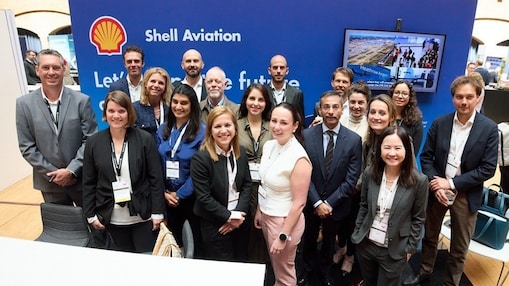
There are three main areas I focus on. The first one is around technical carbon rules and requirements. I led the publication of the Avelia Rulebook in September 2025, which brought clarity and consistency around key terminology, registry requirements, book and claim principles, auditing processes and carbon accounting.
Second is assurance – ensuring volumes and data are externally verified and trustworthy. Independent assurance provider LRQA verifies the total amount of SAF injected into the existing aviation fuelling network and the resulting emissions reductions, following the ISO 14064-3 approach. This assurance element is critical, as book and claim is still relatively nascent.
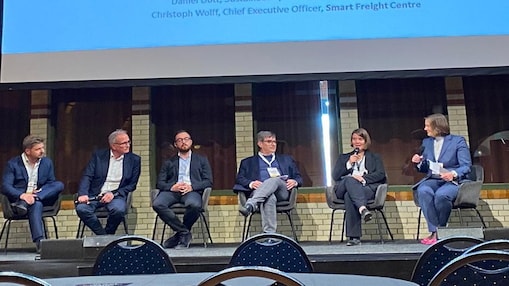
The third element is advocacy: building alignment across the aviation ecosystem is essential. For the past three years, I’ve sat on the governing board of the Book and Claim Community, which includes more than 300 organisations, with the Smart Freight Centre and the Roundtable on Sustainable Biomaterials as secretariat.
What do you enjoy most about your current role?
What energises me most is that my role connects a wide range of stakeholders, both inside and outside Shell. It calls for bridge-building, technical depth and a pragmatic mindset – all of which play to my strengths.
I also thrive in uncertainty, as it encourages creativity and problem-solving, and creates space to demonstrate what’s already possible while helping to shape what comes next. Customers tend to ask detailed, often challenging questions, which push us to continuously improve our products and processes.
What are some of the toughest challenges you have faced as part of your role?
Internally, it is always important to balance transparency with commercial viability. Externally, the biggest challenge has been about gaining broader trust from the industry for book and claim to be recognised as a credible mechanism.
A standardised, well-regulated model is essential to enable the wider adoption of book and claim as a valid market-based measure under the Greenhouse Gas Protocol and the Science Based Targets initiative (SBTi). This is important as it enables customers to report their progress with confidence, and account for their contribution to aviation decarbonisation accurately.
How do you build credibility in a space and also push progress forward?
Decarbonising the aviation sector presents big challenges: SAF is more expensive than jet fuel. Supply is concentrated, and demand is scattered. Book and claim can really help, but only if people trust it – so establishing that trust has been core to what I do. It’s about making a constant assessment of risk versus benefit, and how far we can go in publicising information while protecting confidentiality.
The publication of the Avelia Rulebook in 2025 was a major step in that direction, as it provides consistency around the data leveraged by Avelia. This is a fundamental component for cleaner energy solutions like SAF to be accepted by market players.
Many still underestimate how critical trusted data is. Without consistent, verifiable numbers, virtually nothing can scale: no confidence – no investment, and no impact. As accounting principles become aligned and registries like Avelia mature, book and claim can become a recognised mechanism across all transport modes beyond aviation, which helps to scale lower-carbon solutions.
Alongside the Avelia Rulebook, we have established a public retirement registry, where every SAF transaction is now recorded with traceable documentation and associated emissions reductions, while still giving customers control over what they choose to disclose.

Unlocking the potential of SAF with book and claim in air freight
Presented by MIT Technology Review and Avelia, experts discuss how SAF and the book and claim chain of custody model can help companies address their life cycle GHG emissions from air freight.
Marieke Verhoeven, Senior Manager for Decarbonisation Solutions at Shell Aviation“Implementing these changes with the team from the ideation stage, through to ensuring that all data points are traceable and auditable, is what makes my job satisfying – even when there is some sweat along the way!”
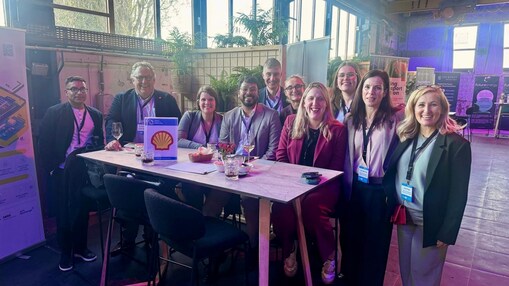
How do you help customers navigate the aviation decarbonisation process?
Every customer is different, but the first part is about listening. Sustainability is never just technical: companies face regulatory pressures and have budget limits, which means decisions need to be defensible at board level. My role is to translate technical sustainability data into information that customers can digest more easily.
Customers want to know all the details: where does the feedstock come from? What is the emissions intensity? What are the incentives? Our exchanges with them ultimately lead to the adoption of changes, simplifications and improvements for Avelia.
For example, based on customer feedback, Avelia has evolved into an industry solution with multilateral governance, independent data hosting and broader SAF supplier choice.1 Today we are proud to count Moeve as the first external SAF supplier to join the Avelia book and claim platform. The new Avelia Multilateral Governance Committee will provide independent oversight and ensure alignment with emerging standards. These are meaningful steps that strengthen both trust and industry participation.
What sort of culture do you strive to foster within your team?
When a multidisciplinary team shares a clear common purpose, you can get through almost any challenge. The same is true for external stakeholders: shared goals make collaboration and persistence easier. That is the team culture I try to build, aiming to collectively shape the book and claim space.
How do you align your professional goals with your day-to-day life?
For me, sustainability starts with everyday habits.
Caring for the environment was intrinsic to me from a very early stage. When I was in elementary school, I collected used batteries from the other kids at school and dropped them off at the council disposal yard.
Later, through my environmental science studies, I learned how complex nature and the energy system are, and how harmful chemicals can be to both people and the environment.
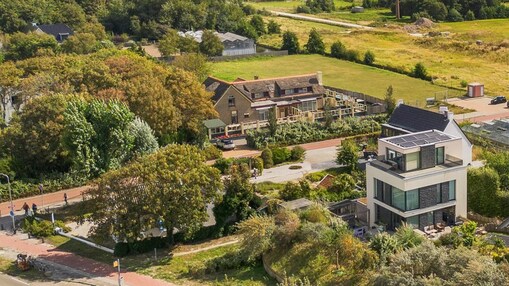
Today, my family and I live in an energy-efficient house that we designed ourselves. It has high insulation, solar panels, triple glazing and a heat pump. We also have an underground 3000-litre rainwater tank – which is quite large – for the garden. We drive an EV, and I cycle 15 km to work, which I really enjoy. My husband collects food waste and has a machine that turns food scraps into compost… We do our part!
What gives you energy and optimism about the next chapter of aviation decarbonisation?
As of 31 December 2025, Avelia had injected over 64 million gallons of SAF into the global fuel network.2 Seeing those tangible outcomes keeps me energised.
Broadly, I see a global rise in the role of the ‘ESG controller’. The time of target-setting is over: it’s now time to implement. We are moving away from ‘flashy presentations’ towards spreadsheets to focus on data and verification. Financial reporting took time to mature, and so will ESG reporting.
Personally, I find it rewarding to collaborate with customers, business leaders and technical SMEs on this journey. It is something I’m deeply passionate about, and how various stakeholders collaborate and connect will be critical.
Date of publication: June, 2026

Aviation
As our world becomes increasingly connected, people, communities and businesses look to aviation for opportunities that were unimaginable just a few decades ago.
Sources
1 Avelia Solutions. “Evolution of Avelia to an Industry Solution”. July 10, 2025.
2 Avelia Solutions. “Sustainable Aviation Solutions | Avelia”. n.d.