Scaling carbon capture and storage: from policy support to commercial deployment
Ross Brown, Global Policy Lead for CCS at Shell, discusses global carbon capture and storage (CCS) policies, lessons from Northern Lights and why scaling CCS requires both government support and global cooperation.
Today, carbon capture and storage (CCS) is recognised as one of the pathways for decarbonising sectors where alternatives currently remain limited. But moving from early demonstration projects to global infrastructure requires more than technical readiness: it depends on the right combination of policy frameworks, incentives and collaboration between governments, industry and customers.
Ross Brown, Global Policy Lead for CCS at Shell, has spent much of his career exploring how policy, industry and technology intersect in the global energy transition. With a dynamic background that spans international law, public affairs and carbon management, he brings both a technical and policy perspective to a complex question facing heavy industry and government today: how to scale CCS and develop commercially viable commercial models.
In this interview, Ross reflects on how different regions are approaching CCS policy, what lessons projects like Northern Lights offer for other markets, and why building the right conditions for emitters may ultimately determine whether CCS can move from ambition to large-scale deployment.

The role of policy in scaling CCS
How do policy frameworks differ across regions, and what role can governments play in helping low-carbon technologies move from innovation to large-scale deployment?
Governments play a crucial role in helping low-carbon technologies move from innovation to large-scale deployment, particularly by shaping the market conditions needed to bridge what is often called the “missing middle.” Creating early demand, providing long-term policy certainty and enabling infrastructure are all key to helping technologies like CCS scale.
Given that market structures, resource endowments and political priorities differ across regions, policy frameworks understandably take different forms. These approaches reflect local circumstances rather than a single “right” approach.
In Europe, there is a relatively integrated policy landscape, with a combination of carbon pricing through the EU Emissions Trading System (ETS), binding climate targets, sector-specific regulation such as Fit for 55, and industrial support through initiatives like the Green Deal Industrial Plan. Together, these measures provide a coordinated framework for low-carbon investment.
In North America, the approach is more decentralised, combining federal and state or provincial policies. Measures such as the Inflation Reduction Act and the Bipartisan Infrastructure Law focus on tax credits, grants and loan support to incentivise deployment, while Canada also complements this with a national carbon pricing system.
Across APAC, policy frameworks are more diverse, reflecting different stages of economic development and transition pathways. Countries such as Japan, South Korea, Singapore and China have developed increasingly sophisticated approaches, often linked to broader industrial strategies and long-term planning. While policy tools vary, there is strong emphasis in many cases on coordination, infrastructure development and strategic sector support.
Across all regions, the common thread is the important role of governments in enabling early markets and reducing risk, particularly for technologies like CCS where upfront investment is high. By aligning policy tools with local market conditions, governments can help accelerate the transition from innovation to widespread deployment.
Stepping back, many low-carbon technologies are still stuck in what’s often called the “missing middle” – the space between innovation and large-scale uptake. That’s where governments have an important role to play in creating early demand. This is particularly relevant for CCS, where such support is crucial to help markets get off the ground.
Where does CCs fit in the wider decarbonisation landscape, and what arguments supports it as an important solution as opposed to a ‘nice to have’?
CCS is one part of the wider decarbonisation agenda. A range of technologies and measures need to be developed and scaled in parallel, but CCS – particularly in the European context – can support industrial competitiveness, bolstering the ability of heavy industries to meet market demand and achieve sustainable profitability. This is important because it enables them to continue operating while reducing emissions, rather than facing decline or relocation.
Most future energy scenarios indicate that some fossil fuel use may continue for a period of time, particularly where alternatives remain limited. Organisations such as the International Energy Agency (IEA) and the Intergovernmental Panel on Climate Change (IPCC) have identified carbon capture and storage (CCS) as one of the technologies that may contribute to pathways aimed at reducing emissions.

In many cases it is still cheaper to emit carbon than to capture and store it. What policy tools can help close that cost gap?
Think of CCS policy instruments as a toolbox.
Different countries use different combinations depending on their context. In the United States, tax credits have played a major role in underpinning CCS deployment, partly reflecting the relative ease with which that type of instrument has historically achieved bipartisan approval.
In Europe, we see a broader mix of tools: carbon pricing to incentivise decarbonisation, grants funded through carbon market revenues to support early infrastructure, and mechanisms such as contracts for difference – which support low-carbon projects by guaranteeing a stable price – to bridge the gap between the carbon price and the cost of CCS.
Ross Brown, Global Policy Lead for CCS at Shell“There is no single dominant instrument globally – countries tend to use different policy tools depending on their national context.”
How can policymakers support CCS adoption without putting heavy industry at a competitive disadvantage?
One important mechanism for that is the Carbon Border Adjustment Mechanism (CBAM). In theory, CBAM levels the playing field by reflecting internal carbon pricing externally and helping to ensure that industries operating under carbon pricing regimes are not disadvantaged relative to imports.
It may also encourage CCS adoption beyond the regions where such policies originate.
Lessons from Northern Lights: the path to scale
Northern Lights is seen as a successful example of policy enabling CCS. What made that project possible, in your view?
Norway, where Northern Lights is based, has two key advantages: significant CO₂ storage capacity and a clear political commitment to adopting CCS.
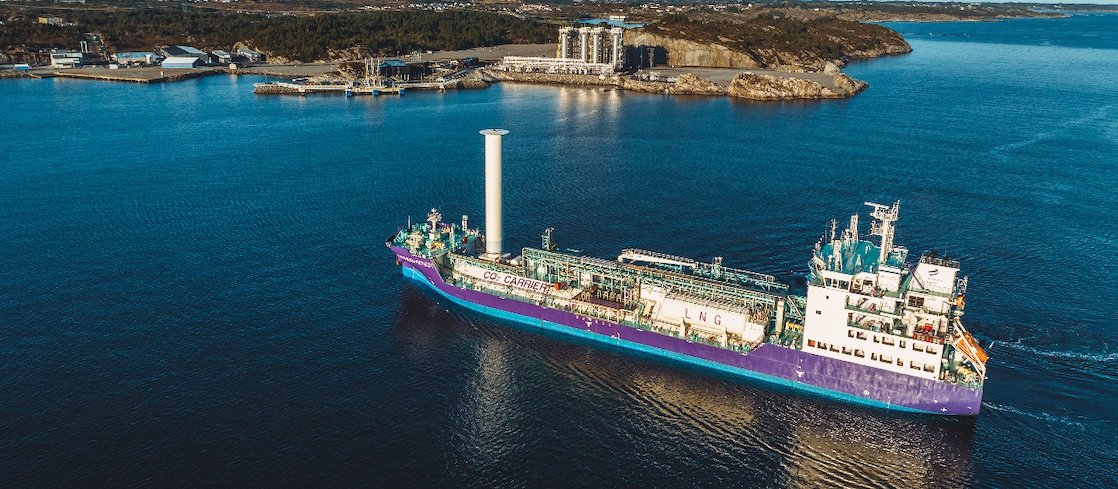
Through the Longship Project – Europe’s first full value chain for capturing, transporting and storing industrial CO₂ – the Norwegian government funded the initial infrastructure and backed the first two emitters (Heidelberg Materials and Hafslund Celsio) so they could join the project. A final investment decision was taken last year on Phase 2 of Northern Lights, which aims to expand its capacity from 1.5 to at least 5 million tonnes of CO₂ per year, supported by commercial agreements and additional infrastructure. The expansion should be completed and ready for operation in the second half of 2028.
This strong government support and advocacy naturally created the conditions for commercialisation, allowing the joint venture partners to move into later phases and attract additional customers. The broader lesson here is that establishing early CCS value chains can help unlock commercial markets.
How mature are the regulatory frameworks governing cross-border CO₂ transport and long-term storage?
It’s essential that I mention the London Protocol here. Introduced by the International Maritime Organisation in 2006, it has been absolutely central in shaping the rules around cross-border CO₂ transport and storage. Historically, it restricted subsea storage across borders because CO₂ was broadly classified as a waste product. That has since changed, with cross-border transport and storage now permitted through bilateral agreements between countries. Several such agreements have already been concluded, including those linked to Norway and the Northern Lights project, and more are expected as CCS hubs develop in regions where storage capacity and emissions sources are geographically separated.
Personally, I would also like to see more bilateral agreements happening in APAC, particularly between storage-constrained countries such as Japan and Korea with abundant-storage countries like Australia and Malaysia.
For long-term stewardship, the widely recognised model is that operators manage monitoring and storage sites while they are operational. After closure, once specific criteria are met or after a defined period, governments assume responsibility – reflecting the reality that public institutions are often better placed to oversee storage over the very long timeframes involved.
How it works and why it matters
Explore how carbon capture and storage (CCS) enables emissions reduction in hard-to-abate sectors and supports scalable, science-backed climate action.

What role do policymakers and industry play in creating the conditions for CCS adoption – both in terms of policy frameworks and public trust?
The most important step is creating the right conditions for CCS value chains to develop and mature. That means clear policy frameworks, greater regulatory certainty and support mechanisms for emitters. If emitters are not incentivised to adopt CCS, there will be no demand for transport and storage infrastructure.
Building that foundation is therefore the first step – physical infrastructure will develop once the right conditions are in place.
At the same time, policymakers and industry need to communicate the societal benefits of CCS. Public engagement is essential wherever projects are developed. When projects come into operation, their benefits should become visible in practice: maintaining industrial competitiveness, creating jobs locally, helping to decarbonise industry and contributing to national climate targets.
Like with most things, there will always be some opposition, but projects in operation are evidence that acceptance can be achieved.
Looking ahead, what would indicate that CCS markets are on the right track?
The key signal will be whether early projects genuinely create the foundations for scale-up. Beyond that, sufficient carbon pricing will be important, particularly in regions such as Europe.
Over time, we would also expect stronger customer demand for decarbonised products. If customers are willing to pay a premium for products such as lower-carbon cement or steel, that strengthens the CCS business case. There’s also potential for carbon dioxide removal markets to grow, both in voluntary and compliance spaces.
Ross Brown, Global Policy Lead for CCS at Shell“Ultimately, the industry needs to evolve beyond mere reliance on the government and develop new business models to ensure the industry can survive and thrive – in a nutshell, scale.”
A personal perspective

How has your background shaped the way you think about climate policy today?
Studying international law has made me more curious and analytical. Embarking on a Masters in carbon management later on gave me a greater understanding of the policy, business and scientific aspects of the energy transition. That combination has been useful because climate policy sits at the intersection of all three.
Eventually I moved from communications roles for shipping and energy companies to public affairs and policy work across the energy and industrial sectors. Moving into a role focused on CCS policy at Shell was a long time coming as I had applied for several roles in the company before, and it finally materialised four years ago.
What keeps you motivated working in climate policy today?
I believe having a full and active life outside of work is important. Creating that balance helps keep me happy and enthusiastic about the work itself.
Ross Brown, Global Policy Lead for CCS at Shell“I often say this job is my dream job – and I genuinely mean it. Being able to work on the policy and practical aspects of CCS, which I find deeply interesting and purposeful, is probably motivation enough.”
Date of publication: July, 2026
Carbon Capture and Storage (CCS)
CCS offers a way to reduce emissions, including from sectors that are slower-to-decarbonise. Learn more about this technology and how Shell is working to unlock its potential around the world.
Disclaimer
Disclaimer
Cautionary Note
The companies in which Shell plc directly and indirectly owns investments are separate legal entities. In this content “Shell”, “Shell Group” and “Group” are sometimes used for convenience to reference Shell plc and its subsidiaries in general. Likewise, the words “we”, “us” and “our” are also used to refer to Shell plc and its subsidiaries in general or to those who work for them. These terms are also used where no useful purpose is served by identifying the particular entity or entities. ‘‘Subsidiaries’’, “Shell subsidiaries” and “Shell companies” as used in this content refer to entities over which Shell plc either directly or indirectly has control. The terms “joint venture”, “joint operations”, “joint arrangements”, and “associates” may also be used to refer to a commercial arrangement in which Shell has a direct or indirect ownership interest with one or more parties. The term “Shell interest” is used for convenience to indicate the direct and/or indirect ownership interest held by Shell in an entity or unincorporated joint arrangement, after exclusion of all third-party interest.
Forward-Looking statements
This content contains forward-looking statements (within the meaning of the U.S. Private Securities Litigation Reform Act of 1995) concerning the financial condition, results of operations and businesses of Shell. All statements other than statements of historical fact are, or may be deemed to be, forward-looking statements. Forward-looking statements are statements of future expectations that are based on management’s current expectations and assumptions, including (without limitation) those concerning Shell’s strategy and operating plans, macroeconomic conditions, future energy demand, supply and product mix, commodity prices, demand for Shell’s products, production results and reserve estimates, development, execution and management of projects, energy transition and climate change, management of safety and environmental risks, costs, cash capital expenditures, technology advancements, legislative, judicial, fiscal and regulatory developments, regional conflicts and trading conditions, and involve known and unknown risks and uncertainties that could cause actual results, performance or events to differ materially from those expressed or implied in these statements. Forward-looking statements include, among other things, statements concerning the potential exposure of Shell to market risks and statements expressing management’s expectations, beliefs, estimates, forecasts, projections and assumptions. These forward-looking statements are identified by their use of terms and phrases such as “aim”; “ambition”; ‘‘anticipate’’; “aspire”, “aspiration”, ‘‘believe’’; “commit”; “commitment”; ‘‘could’’; “desire”; ‘‘estimate’’; ‘‘expect’’; ‘‘goals’’; ‘‘intend’’; ‘‘may’’; “milestones”; ‘‘objectives’’; ‘‘outlook’’; ‘‘plan’’; ‘‘probably’’; ‘‘project’’; ‘‘risks’’; “schedule”; ‘‘seek’’; ‘‘should’’; ‘‘target’’; “vision”; ‘‘will’’; “would” and similar terms and phrases. There are a number of factors that could affect the future operations of Shell and could cause those results to differ materially from those expressed in the forward-looking statements included in this content, including (without limitation): (a) price fluctuations in crude oil and natural gas; (b) changes in demand for Shell’s products; (c) currency fluctuations; (d) drilling and production results; (e) reserves estimates; (f) loss of market share and industry competition; (g) environmental and physical risks, including climate change; (h) risks associated with the identification of suitable potential acquisition properties and targets, and successful negotiation and completion of such transactions; (i) the risk of doing business in developing countries and countries subject to international sanctions; (j) legislative, judicial, fiscal and regulatory developments including tariffs and regulatory measures addressing climate change; (k) economic and financial market conditions in various countries and regions; (l) political risks, including the risks of expropriation and renegotiation of the terms of contracts with governmental entities, delays or advancements in the approval of projects and delays in the reimbursement for shared costs; (m) risks associated with the impact of pandemics, regional conflicts, such as the Russia-Ukraine war and the conflict in the Middle East, and a significant cyber security, data privacy or IT incident; (n) the pace of the energy transition; and (o) changes in trading conditions. No assurance is provided that future dividend payments will match or exceed previous dividend payments. All forward-looking statements contained in this content are expressly qualified in their entirety by the cautionary statements contained or referred to in this section. Readers should not place undue reliance on forward-looking statements. Additional risk factors that may affect future results are contained in Shell plc’s Form 20-F for the year ended December 31, 2025 (available at www.shell.com/investors/news-and-filings/sec-filings.html and www.sec.gov). These risk factors also expressly qualify all forward-looking statements contained in this content and should be considered by the reader. Each forward-looking statement speaks only as of the date of the publication mentioned in this website. Neither Shell plc nor any of its subsidiaries undertake any obligation to publicly update or revise any forward-looking statement as a result of new information, future events or other information. In light of these risks, results could differ materially from those stated, implied or inferred from the forward-looking statements contained in this content.
Shell’s net carbon intensity and net-zero emissions target
In this content we may refer to Shell’s “net carbon intensity” (NCI), which includes Shell’s carbon emissions from the production of our energy products, our suppliers’ carbon emissions in supplying energy for that production and our customers’ carbon emissions associated with their use of the energy products we sell. Shell’s NCI also includes the emissions associated with the production and use of energy products produced by others which Shell purchases for resale. Shell only controls its own emissions. The use of the terms Shell’s “net carbon intensity” or NCI is for convenience only and not intended to suggest these emissions are those of Shell plc or its subsidiaries.
Shell’s operating plan and outlook are forecasted for a three-year period and ten-year period, respectively, and are updated every year. They reflect the current economic environment and what we can reasonably expect to see over the next three and ten years. Accordingly, the outlook reflects our combined Scope 1 and 2 target, NCI target and our oil products ambition over the next ten years. However, Shell’s operating plan and outlook cannot reflect our 2050 net-zero emissions target, as this target is outside our planning period. Such future operating plans and outlooks could include changes to our portfolio, efficiency improvements and the use of carbon capture and storage and carbon credits. In the future, as society moves towards net-zero emissions, we expect Shell’s operating plans and outlooks to reflect this movement. However, if society is not net zero in 2050, as of today, there would be significant risk that Shell may not meet this target.
The information provided above regarding Shell’s NCI and net zero emissions target are not intended, nor should they be construed as introducing, suggesting or making any claim, target or representation thereof other than what is included in the content.
Forward-Looking non-GAAP measures
This content may contain certain forward-looking non-GAAP measures such as free cash flow and underlying operating expenses. We are unable to provide a reconciliation of these forward-looking non-GAAP measures to the most comparable GAAP financial measures because certain information needed to reconcile those non-GAAP measures to the most comparable GAAP financial measures is dependent on future events some of which are outside the control of Shell, such as oil and gas prices, interest rates and exchange rates. Moreover, estimating such GAAP measures with the required precision necessary to provide a meaningful reconciliation is extremely difficult and could not be accomplished without unreasonable effort. Non-GAAP measures in respect of future periods which cannot be reconciled to the most comparable GAAP financial measure are calculated in a manner which is consistent with the accounting policies applied in Shell plc’s consolidated financial statements. These forward-looking non-GAAP measures are provided to assist readers in understanding management’s use and expectations of such measures and may not be appropriate for other purposes.
The contents of websites referred to in this content do not form part of this content.
We may have used certain terms, such as resources, in this content that the United States Securities and Exchange Commission (SEC) strictly prohibits us from including in our filings with the SEC. Investors are urged to consider closely the disclosure in our Form 20-F, File No 1-32575, available on the SEC website www.sec.gov.