Making hydrogen work: lessons from early projects
Andy Beard, President of Hydrogen, shares lessons from Shell’s major hydrogen projects and reflects on what early experience is teaching us about scaling renewable hydrogen.

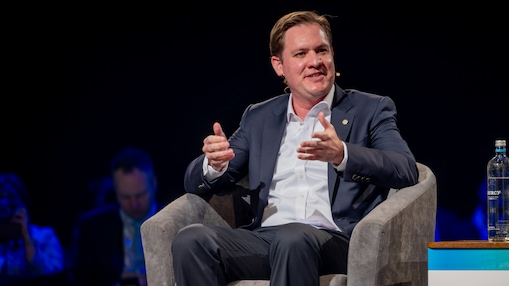
Andy Beard, President of Hydrogen at Shell
Andy leads Shell’s global hydrogen business across the value chain. His focus is on delivering Shell’s hydrogen portfolio safely and efficiently, strengthening commercial discipline, and building practical experience in a market that is still developing.
Across the industry, the conversation around hydrogen has become more practical and more grounded. Rather than focusing on ambition alone, attention is turning to the realities of delivering first projects, understanding demand and building the infrastructure needed for a market that is still at an early stage.
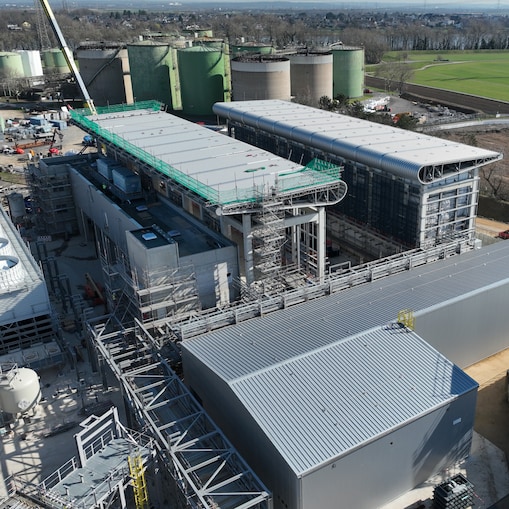
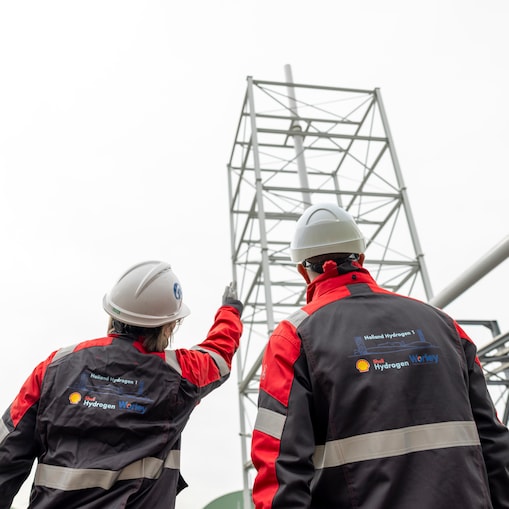
Andy Beard, President of Hydrogen at Shell, reflects on this shift through the lens of Shell’s two major renewable hydrogen projects Holland Hydrogen 1 in the Netherlands and REFHYNE 2 in Germany. As these projects move from concept to completion, they provide important lessons on what it takes to develop commercially viable renewable hydrogen.
Hydrogen has been heavily scrutinised in recent years. What gives you confidence that it still has an important role to play in the energy transition?
The conversation around hydrogen has matured significantly over the last few years, and the more grounded view we’re seeing today is a sign of progress.
A few years ago, there was a perception that hydrogen could solve almost every decarbonisation challenge. Today, the industry is taking a more realistic view of where it creates the most value. Hydrogen is not the answer to everything. But in sectors where alternatives are limited, particularly in heavy industry, it can play an important role in decarbonising existing processes and supporting new low-carbon pathways.
The question is no longer whether hydrogen can work – our experience has shown that it can. The challenge now is how to scale it in a way that is commercially viable.
Andy Beard, President of Hydrogen at Shell“For us, the focus is on building practical experience, reducing costs, and strengthening the commercial and operational foundations.”
Shell has taken final investment decisions on major renewable hydrogen projects in Germany and the Netherlands. Can you tell us more about that process?
Taking a final investment decision on a first-of-a-kind project is ultimately about reducing uncertainty. For us, three factors were critical in building confidence and reducing risk to a level where we could make a positive investment decision.
Operational experience
Through REFHYNE 1 at our Rheinland Energy and Chemicals Park, we’ve been able to see how large-scale electrolysers perform in a real industrial environment. That experience gave us valuable insight into system integration, operations and compliance, helping reduce execution risk as we moved towards larger projects.
Demand certainty
Both Holland Hydrogen 1 and REFHYNE 2 are integrated into existing refinery systems. That means there is an immediate customer for the renewable hydrogen produced, providing a clearer route to market while the broader hydrogen market continues to develop.
Policy and cost clarity
Electricity is the largest operating cost for electrolysers, so regulatory frameworks around power markets and grid charges have a significant impact on project economics. Supportive policies, including the Renewable Energy Directive (RED) and renewable hydrogen targets in Europe, helped provide sufficient confidence to move forward.
What have been the biggest lessons from developing some of Europe’s first large-scale renewable hydrogen projects?
One of the biggest lessons is that the challenges extend well beyond the technology itself.
The electrolysers are only one part of a much broader system. The success of a project depends just as much on access to renewable electricity, infrastructure availability, certification requirements, cost competitiveness and how regulation is implemented in practice.
We’ve also learned that certain insights can only be gained through real-world experience. Models are useful, but understanding how assets perform day-to-day, how they interact with existing industrial systems and deliver reliability in practice, only comes from operating in real industrial conditions. And we are still learning.
Infrastructure is another critical factor. Hydrogen projects do not exist in isolation: they depend on power networks, transport systems and industrial demand evolving in parallel. If one part of the system moves more slowly than the others, it can create challenges for project delivery and scale-up.
That’s why we often talk about hydrogen as a systemic challenge, rather than simply a technology challenge.
What role does supportive policy play at this early stage?
The industry has made significant progress, but hydrogen remains a developing market.
At this stage, stable and predictable policy frameworks are essential. They help reduce risk for investors and, just as importantly, they create confidence for customers considering hydrogen as a lower-carbon solution.
Importantly, policy needs to support both the supply and demand sides of the market. Producing low-carbon hydrogen is only one part of the equation and demand needs to develop alongside supply. That means giving customers the incentives and confidence to adopt hydrogen at scale.
One practical way to do that is by anchoring demand in existing industrial applications. Refineries, for example, can act as early customers – generating market signals and operational experience while broader demand develops across sectors such as chemicals and transport.
At the same time, regulation needs to reflect the realities of an emerging market. Early projects will inevitably face technical, commercial and infrastructural challenges – and policy frameworks should allow room for learning and evolution as the industry matures.
Ultimately, the goal is to create the conditions for early projects to become more bankable, replicable and commercially robust over time.
In your view, what does success look like for the hydrogen industry over the next decade?
In the near term, success for the industry means bringing more projects online, learning from them and applying those lessons with discipline.
Over the longer term, success would mean hydrogen becoming a more established part of the energy system, rather than something that feels novel or exceptional. That means supply, demand and infrastructure developing together, customers being able to access hydrogen with confidence, and projects increasingly able to stand on their own commercial foundations.
Hydrogen will not develop overnight. But if the industry continues to build practical experience, invest in innovation and support the right market conditions, I am confident it can become an important part of the broader energy transition.
At this stage, success is less about proving the technology and more about creating the conditions that allow hydrogen to become commercially viable where it has a clear role to play.
Date of publication: August, 2026
Hydrogen
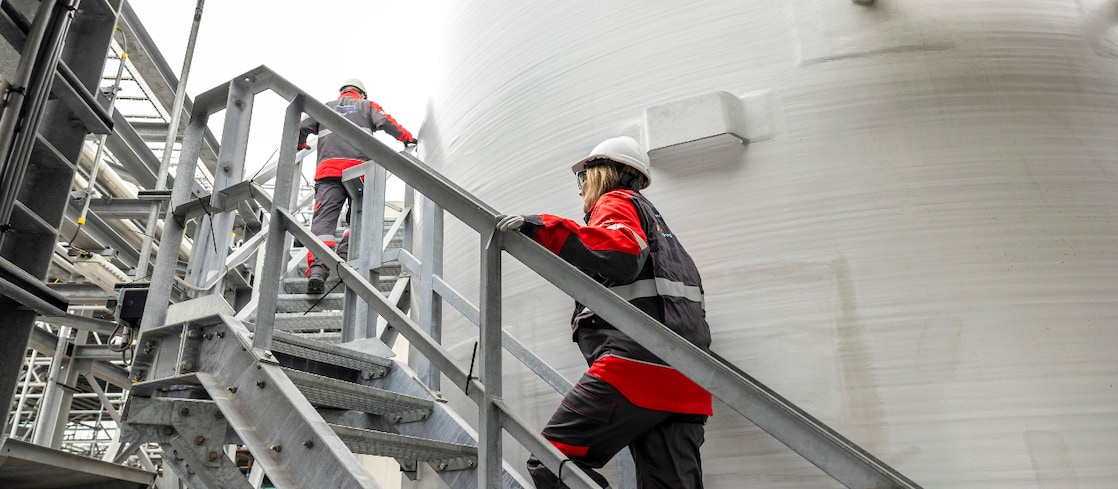
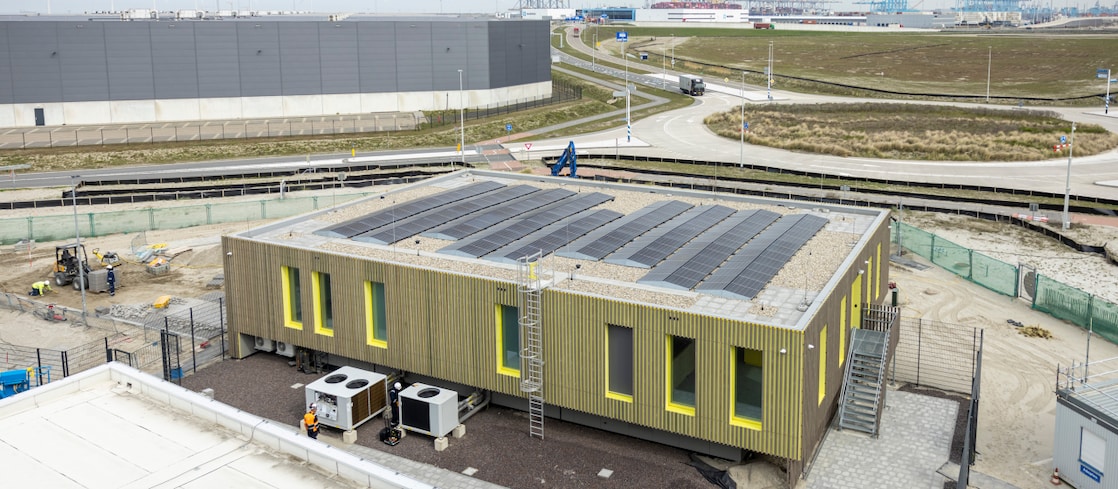
Shell’s renewable hydrogen experience is shaped by major projects such as Holland Hydrogen 1 in the Netherlands and REFHYNE 2 in Germany.