AVGAS
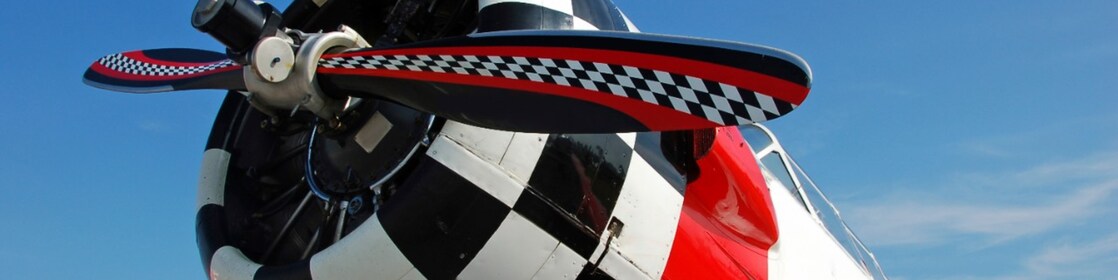
Avgas is the type of aviation fuel used in small piston engine powered aircraft within the general aviation community. These aircraft are predominantly used by private pilots and flying clubs and for tasks such as flight training and crop dusting. Piston engines operate using the same basic principles as the spark ignition engines found in cars, but they have a much higher performance requirement.
Types of avgas
There are two main avgas grades (100 and 100LL low lead) used in the general aviation community. In each of these types, the numbers represent the octane rating. There are also other types of avgas that are either rarely used or no longer in production.
Find your nearest Avgas supplier
Avgas 100
The standard high-octane fuel for aviation piston engines. It has a high lead content and is dyed green. There are two major specifications for Avgas 100: the ASTM D910 and UK DEF STAN 91-090. These two differ over antioxidant content, oxidation stability requirements and max lead content.
Avgas 100LL
This grade is the low-lead version of Avgas 100. This grade is listed in the same specifications as Avgas 100, namely ASTM D910 and UK DEF STAN 91-090. Avgas 100LL is dyed blue.
To read more about the fuel, download the Avgas 100LL MSDS now.
Avgas 80
This type of avgas is no longer in production. Avgas 100LL is the most suitable fuel to use in its place if it’s within the aircraft’s type certificate operating limitations. Check the aircraft’s operating handbook for guidance.
Avgas 115
This was a high-octane avgas mostly used in military combat aircraft in the late 1940s when there was demand for high power output. Now, most military aircraft use turbine engines. For this reason, there is no longer any demand for Avgas 115, and so it is no longer available.
Avgas UL91 and Avgas UL94
These grades are lead-free versions of avgas. Both are compositionally like Avgas 100LL but the reduction in lead content results in a lower octane performance. Shell does not currently market either grade.
Future unleaded avgas
At the time of writing, Shell is working on the development of an unleaded Avgas which has an octane performance equivalent to, or better than, that of Avgas 100LL.
The intent is for this grade to be a complete unleaded replacement for the leaded grades Avgas 100LL and Avgas 100 but testing and development work is continuing to demonstrate the suitability of this fuel for fleet-wide application.
At the time of writing, this fuel is not commercially available but is controlled by the specification ASTM D7960.
AVGAS FAQS
How much does avgas weigh?
How much does avgas weigh?
The standard weight for avgas is 6 lb per gallon.
Where can I buy avgas?
Where can I buy avgas?
Shell supplies avgas, and other aviation fuels, to companies operating in airports around the globe. Find the nearest place to refuel your aircraft.
How much does avgas cost?
How much does avgas cost?
The price of avgas varies between countries. Local supply logistics can have a big impact on cost, such as in Pacific Islands that have a longer and more complex supply route compared to inland USA. Local government taxes and duty can also affect price – for example, they are applied in the UK but not the USA.
What do avgas colours mean?
What do avgas colours mean?
Each grade of avgas is dyed a different colour to make it easier to identify. For example, Avgas 100 is green and Avgas 100LL is blue.
Can mogas be used instead of avgas?
Can mogas be used instead of avgas?
It is not legal to use mogas (motor gasoline) instead of avgas for most aircraft pilots. Some private pilots can use mogas but we would not recommend this.
What is the difference between avgas and jet fuel?
What is the difference between avgas and jet fuel?
Avgas is fuel for small piston engine powered aircraft, while jet fuel is more like kerosene and is used to power turbine engine aircraft.