People Powering Progress: EcoOils COO on safety and driving biofuels growth
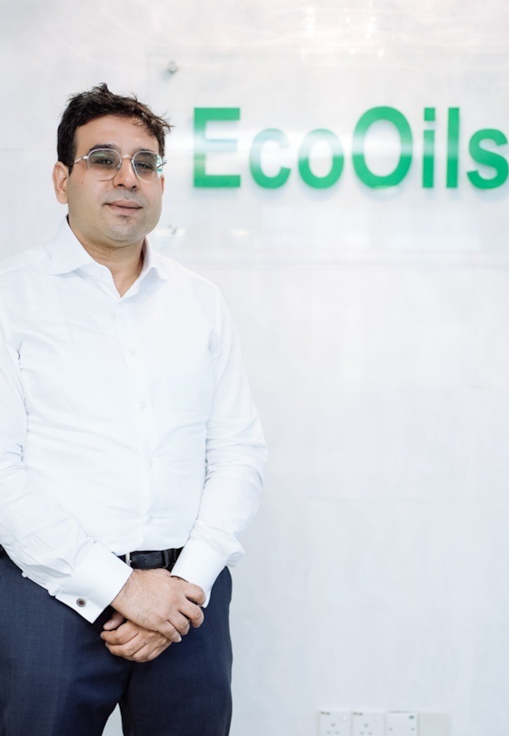
EcoOils COO Rida Sabri opens up on his journey within Shell, what it takes to scale low-carbon feedstocks and build a safe, innovative business across Malaysia and Indonesia.
For Rida Sabri, progress is built on discipline, curiosity and constant innovation. His role sits at the heart of a fast-moving part of the energy system that sees waste being transformed into liquid biofuels – requiring him to balance rapid growth with the patience and rigour needed to build safe, reliable operations across Southeast Asia.
Rida’s journey within Shell is far from typical. He began his career as a technical engineer in Upstream, moved into gas-to-liquids in Qatar and later transitioned into biofuels. His professional path demonstrates how a strong technical grounding becomes even more impactful when paired with commercial acumen.
Today, that dual capability shapes the way he leads EcoOils – with a strong focus on problem-solving and a deep respect for the diverse cultures in which the company operates.
In his role overseeing operations in Malaysia and Indonesia, Rida is strengthening the company’s foundations while expanding its role in supplying certified waste-based feedstocks for sustainable aviation fuel (SAF) and renewable diesel. His story is one of continuous learning, agility and leading with humility – and of recognising why, in his words, “every drop counts”.
You’ve taken on multiple roles over the past two decades at Shell. What brought you into Low Carbon Solutions?
It came naturally as I moved through different roles. I joined Shell in 2004 as a graduate field engineer in Upstream. I was fascinated by complex projects and how energy can stimulate economic growth. The opportunity to travel and gain international experience was also a big part of the appeal.
I moved into liquid biofuels in late 2022 and, have spent the last three years working on feedstocks. It happened progressively as I moved along the value chain – upstream, then gas, then new energies. I can’t say the destination was clear from the start, but the journey led me here. Looking back, not having a rigid plan helped me to stay curious and open to new challenges.
I also had the opportunity to be trained by Shell on both the technical and commercial sides – especially on mid-size investments – which has shaped how I look at the business now.
What is EcoOils, and what does the company’s purpose mean to you?
EcoOils is a regional leader in producing ISCC (International Sustainability & Carbon Certification)-certified waste-based feedstocks, with three plants in Malaysia and two in Indonesia. The company already had a strong track record in biofuels and hydrotreated vegetable oil (HVO) when Shell acquired it, producing feedstocks used in the manufacture of low-carbon fuels.
I joined that same year to look after the assets and operations, and to help strengthen EcoOils from an HSSE (Health, Safety, Security, and Environment), operational and commercial standpoint. With the investments we are making, our goal is to grow production, expand our product portfolio, and position the company as a platform for future feedstocks. Our products play a key role in SAF and renewable diesel because they are essential inputs for producing low-carbon fuels.
On a personal level, the beauty of the role lies in its tangible impact. Every drop we produce ultimately becomes low-carbon fuel that powers a plane or a truck. But it is also challenging as this is not a traditional oil and gas business.
Rida Sabri, COO at EcoOils“You need to adapt, learn, bring humility and innovate. EcoOils operates with the pace and mindset of a start-up, relying heavily on curiosity and innovation to grow. My role is to bring together the technical and commercial aspects so that we scale responsibly.”
How do you balance daily operations with the need to scale quickly?
Prioritising HSSE
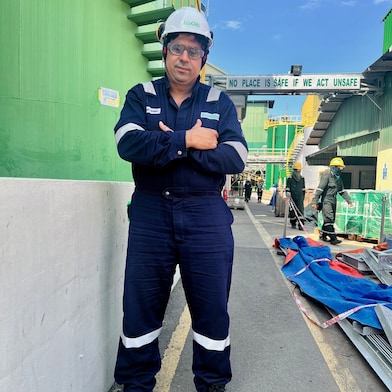
That to me, is non-negotiable. A business only runs well if it runs safely. Our process uses solvent extraction, and these solvents are flammable and can pose fire or exposure risks if not carefully managed. That’s why we need strong HSSE foundations.
Optimising Plant Performance
Running the plants at optimal performance, meeting production capacity and minimising downtime. We recently took a final investment decision on our sixth plant in Indonesia. We are also debottlenecking existing plants and looking for other opportunities to expand.
What does successful collaboration across stakeholders look like?
The energy transition cannot be delivered by energy companies alone. Governments must put in place the right regulatory frameworks to attract investment, and because these investments are long-term – 10, 20 or 25 years – regulation must be stable enough to support that horizon.
In our business, we also need sustainable value chains. We work with suppliers over the long term to build relationships and ensure traceability and integrity. Today, we have more than 150 suppliers.
In addition, our plants are embedded in local communities, we work and live alongside these people. We need to respect our communities and work within our licence to operate. On the sales side, effective collaboration means demonstrating that we uphold stable regulatory frameworks, strong and long‑term supplier partnerships, a robust licence to operate, and consistent quality and compliance across everything we deliver.
How does EcoOils contribute to Shell’s broader decarbonisation efforts?
EcoOils aims to create value by supplying waste-based feedstocks used in the production of liquid biofuels. In aviation, SAF is one option being developed and used alongside other technologies and operational measures to address lifecycle GHG emissions.
EcoOils produces waste‑based feedstocks that can be upgraded into these low‑carbon fuels. These feedstocks are then processed by fuel producers into low‑carbon fuels and blended into conventional fuels for use in aviation and other industries.
It’s important to be clear about how carbon‑reduction claims work. When EcoOils sells feedstock to a third‑party producer, that producer – not Shell – owns the associated carbon‑reduction benefits. This means those reductions cannot always be directly attributed to Shell’s own emissions footprint.
Even so, the impact is significant. By sourcing and supplying EcoOils feedstocks to the market, we help expand the availability of low‑carbon fuels, which supports decarbonisation efforts. From a carbon‑footprint perspective, these feedstocks ultimately help reduce Scope 3 emissions because they are used in lower‑carbon fuels consumed by other sectors and customers.
Above all, we approach this work with humility: humility keeps you grounded and reminds you that you’re just one part of something much bigger.
Rida Sabri, COO at EcoOils“Our volumes may look big from our vantage point but compared with what the world needs in terms of biofuels, they are still small. EcoOils operates with the mindset that “every drop counts”: we aim to support the supply of feedstocks used to produce biofuels and to grow our business over time.”
What are the biggest blockers to decarbonisation and how does that apply to your field?
We know how to extract feedstocks from waste – the technology is not the issue. The real challenge is that waste itself is limited. As demand increases, you start paying for waste, which pushes up feedstock costs.
Regulation is another challenge. Regulatory frameworks differ across regions and can shift when politics change. But our investments are long‑term – often 30 or 40 years – and it’s difficult to justify decisions of that scale when the rules may change every four years. Regulation can be a barrier just as easily as it can be a powerful catalyst for progress.
There is no single solution to reducing greenhouse gas emissions. A range of technologies and approaches will need to be explored, tested and scaled to understand their potential and the role they may play in supporting lower-emissions energy systems.
As you continue to scale operations across Southeast Asia, how do you balance safety and innovation?
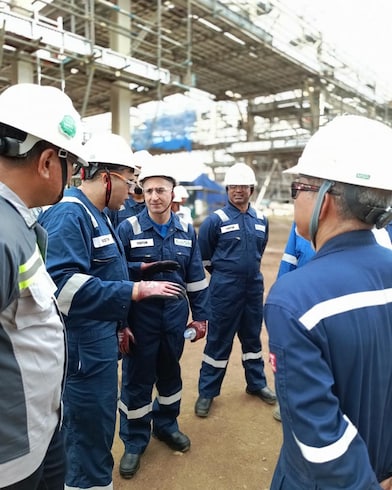
We focus on three key areas: people, plants and processes. For our people, we are improving capabilities through training and by raising awareness of operational and process safety. The harder part is building a strong HSSE culture. Before we acquired the company, the emphasis was more on production than HSSE. Changing that mindset is a big challenge.
On plants, we have been upgrading facilities and making them safer; and for processes, we are balancing the agility of a smaller company with the need for systems that support safety, reliability and cost-effectiveness.
Innovation is essential. We are exploring how to apply our technology to other waste feedstocks, and we are developing new applications. We have an integrated value chain with R&D labs and production-scale plants where we can test directly.
Running a business across Malaysia and Indonesia also requires a deep appreciation of local cultures. As an expat, I had to adapt quickly. Even within Indonesia, each of our locations has its own cultural identity. Those differences teach you as much as any technical challenge: they shape how you listen, how you lead and how you build trust. Creating collaboration and aligned ways of working across these cultures is an important part of my leadership role.
How are innovation and circular thinking reshaping waste management in the region?
Malaysia and Indonesia are, in many ways, quite advanced in this space because of their well-established palm oil industries. Palm oil production generates significant volumes of waste, which can end up in landfills. EcoOils emerged against this context with the specific purpose of converting palm‑oil‑related waste into higher‑value products, helping to recover value from waste streams and support more circular resource use.
These by-products were initially used for other purposes, such as animal feed. Over time, the industry progressed to biofuels, and now to SAF and renewable diesel. So, the waste-to-value concept has been there for 20-30 years, has already been monetised and has generated profits.
The question now is: how do we build on that? How can we leverage companies like EcoOils to do more, and use the technology for other applications and other types of waste? That’s where the next phase of innovation lies.
How do you envision EcoOils’ future role?
We’re exploring diversification beyond palm-based waste – looking at other streams, from coffee waste to other residues, and seeing whether we can extract feedstock from them. We want EcoOils to be more diversified across waste types. We don’t intend to stay at our current scale – we're aiming to grow. We also want EcoOils to be a safe workplace where people can flourish.
How are digital tools and data shaping EcoOils’ future?
There is significant room for improvement. Our assets have remote control and traditional maintenance approaches, but AI could help with predictive maintenance, process optimisation and anomaly detection. On logistics, digital tools could track feedstock movements and emissions across the supply chain. There is room to introduce progressive digitalisation, but that requires education. We are planning internal AI awareness sessions to help highlight its benefits.
What have your roles taught you about transformation?
First, humility. When you’re inside a business, it can feel big. But when you zoom out, you realise that the energy transition and broader decarbonisation can only be achieved if everyone plays their part – governments, companies, communities, customers. Our business is just one piece of a much bigger puzzle.
Second, transformation requires resilience, patience and learning. When you acquire a company, you can’t just arrive with a pre-packaged plan and execute it. You need to spend the first 100 days, at least, listening, understanding the business, learning how it works, and only then shaping a transformation plan. Transformation is long and non-linear: you adjust as you progress, and you learn to be patient and value small wins along the way.
Third, my own career has mirrored the broader energy transition: from oil and gas replacing coal, to gas and GTL, and now to low-carbon solutions.
Rida Sabri, COO at EcoOils“Moving from one business to another, you carry forward what’s beneficial and you leave behind what isn’t. That’s also a form of personal transformation.”
What keeps you motivated?
Every day, the news highlights investments in decarbonisation, reinforcing that the energy transition is real. These developments are motivating – they push you to drive your own business and to make it more impactful.
The other important factor is time. Compared with the 1990s, many emissions-reduction ambitions seemed distant. Today, the timeframe for action is much closer. That timeline is both a challenge and a motivator: it creates a sense of urgency to develop and scale credible solutions.
Any final thoughts you would like to share?
When I reflect, I feel grateful for the opportunity to work for an international company, to experience different cultures and to see so many parts of the value chain firsthand. You never stop learning: every day you’re thinking about new ways of doing things. It’s humbling to be in a business that turns waste into value; transforming materials that might otherwise be discarded into new products and applications. My hope is that together we are contributing to resource efficiency and helping enable broader energy transition efforts through practical, scalable solutions.
Date of publication: April, 2026
Disclaimer
Disclaimer
Cautionary Note
The companies in which Shell plc directly and indirectly owns investments are separate legal entities. In this content “Shell”, “Shell Group” and “Group” are sometimes used for convenience to reference Shell plc and its subsidiaries in general. Likewise, the words “we”, “us” and “our” are also used to refer to Shell plc and its subsidiaries in general or to those who work for them. These terms are also used where no useful purpose is served by identifying the particular entity or entities. ‘‘Subsidiaries’’, “Shell subsidiaries” and “Shell companies” as used in this content refer to entities over which Shell plc either directly or indirectly has control. The terms “joint venture”, “joint operations”, “joint arrangements”, and “associates” may also be used to refer to a commercial arrangement in which Shell has a direct or indirect ownership interest with one or more parties. The term “Shell interest” is used for convenience to indicate the direct and/or indirect ownership interest held by Shell in an entity or unincorporated joint arrangement, after exclusion of all third-party interest.
Forward-Looking statements
This content contains forward-looking statements (within the meaning of the U.S. Private Securities Litigation Reform Act of 1995) concerning the financial condition, results of operations and businesses of Shell. All statements other than statements of historical fact are, or may be deemed to be, forward-looking statements. Forward-looking statements are statements of future expectations that are based on management’s current expectations and assumptions, including (without limitation) those concerning Shell’s strategy and operating plans, macroeconomic conditions, future energy demand, supply and product mix, commodity prices, demand for Shell’s products, production results and reserve estimates, development, execution and management of projects, energy transition and climate change, management of safety and environmental risks, costs, cash capital expenditures, technology advancements, legislative, judicial, fiscal and regulatory developments, regional conflicts and trading conditions, and involve known and unknown risks and uncertainties that could cause actual results, performance or events to differ materially from those expressed or implied in these statements. Forward-looking statements include, among other things, statements concerning the potential exposure of Shell to market risks and statements expressing management’s expectations, beliefs, estimates, forecasts, projections and assumptions. These forward-looking statements are identified by their use of terms and phrases such as “aim”; “ambition”; ‘‘anticipate’’; “aspire”, “aspiration”, ‘‘believe’’; “commit”; “commitment”; ‘‘could’’; “desire”; ‘‘estimate’’; ‘‘expect’’; ‘‘goals’’; ‘‘intend’’; ‘‘may’’; “milestones”; ‘‘objectives’’; ‘‘outlook’’; ‘‘plan’’; ‘‘probably’’; ‘‘project’’; ‘‘risks’’; “schedule”; ‘‘seek’’; ‘‘should’’; ‘‘target’’; “vision”; ‘‘will’’; “would” and similar terms and phrases. There are a number of factors that could affect the future operations of Shell and could cause those results to differ materially from those expressed in the forward-looking statements included in this content, including (without limitation): (a) price fluctuations in crude oil and natural gas; (b) changes in demand for Shell’s products; (c) currency fluctuations; (d) drilling and production results; (e) reserves estimates; (f) loss of market share and industry competition; (g) environmental and physical risks, including climate change; (h) risks associated with the identification of suitable potential acquisition properties and targets, and successful negotiation and completion of such transactions; (i) the risk of doing business in developing countries and countries subject to international sanctions; (j) legislative, judicial, fiscal and regulatory developments including tariffs and regulatory measures addressing climate change; (k) economic and financial market conditions in various countries and regions; (l) political risks, including the risks of expropriation and renegotiation of the terms of contracts with governmental entities, delays or advancements in the approval of projects and delays in the reimbursement for shared costs; (m) risks associated with the impact of pandemics, regional conflicts, such as the Russia-Ukraine war and the conflict in the Middle East, and a significant cyber security, data privacy or IT incident; (n) the pace of the energy transition; and (o) changes in trading conditions. No assurance is provided that future dividend payments will match or exceed previous dividend payments. All forward-looking statements contained in this content are expressly qualified in their entirety by the cautionary statements contained or referred to in this section. Readers should not place undue reliance on forward-looking statements. Additional risk factors that may affect future results are contained in Shell plc’s Form 20-F for the year ended December 31, 2025 (available at www.shell.com/investors/news-and-filings/sec-filings.html and www.sec.gov). These risk factors also expressly qualify all forward-looking statements contained in this content and should be considered by the reader. Each forward-looking statement speaks only as of the date of the publication mentioned in this website. Neither Shell plc nor any of its subsidiaries undertake any obligation to publicly update or revise any forward-looking statement as a result of new information, future events or other information. In light of these risks, results could differ materially from those stated, implied or inferred from the forward-looking statements contained in this content.
Shell’s net carbon intensity and net-zero emissions target
In this content we may refer to Shell’s “net carbon intensity” (NCI), which includes Shell’s carbon emissions from the production of our energy products, our suppliers’ carbon emissions in supplying energy for that production and our customers’ carbon emissions associated with their use of the energy products we sell. Shell’s NCI also includes the emissions associated with the production and use of energy products produced by others which Shell purchases for resale. Shell only controls its own emissions. The use of the terms Shell’s “net carbon intensity” or NCI is for convenience only and not intended to suggest these emissions are those of Shell plc or its subsidiaries.
Shell’s operating plan and outlook are forecasted for a three-year period and ten-year period, respectively, and are updated every year. They reflect the current economic environment and what we can reasonably expect to see over the next three and ten years. Accordingly, the outlook reflects our combined Scope 1 and 2 target, NCI target and our oil products ambition over the next ten years. However, Shell’s operating plan and outlook cannot reflect our 2050 net-zero emissions target, as this target is outside our planning period. Such future operating plans and outlooks could include changes to our portfolio, efficiency improvements and the use of carbon capture and storage and carbon credits. In the future, as society moves towards net-zero emissions, we expect Shell’s operating plans and outlooks to reflect this movement. However, if society is not net zero in 2050, as of today, there would be significant risk that Shell may not meet this target.
The information provided above regarding Shell’s NCI and net zero emissions target are not intended, nor should they be construed as introducing, suggesting or making any claim, target or representation thereof other than what is included in the content.
Forward-Looking non-GAAP measures
This content may contain certain forward-looking non-GAAP measures such as free cash flow and underlying operating expenses. We are unable to provide a reconciliation of these forward-looking non-GAAP measures to the most comparable GAAP financial measures because certain information needed to reconcile those non-GAAP measures to the most comparable GAAP financial measures is dependent on future events some of which are outside the control of Shell, such as oil and gas prices, interest rates and exchange rates. Moreover, estimating such GAAP measures with the required precision necessary to provide a meaningful reconciliation is extremely difficult and could not be accomplished without unreasonable effort. Non-GAAP measures in respect of future periods which cannot be reconciled to the most comparable GAAP financial measure are calculated in a manner which is consistent with the accounting policies applied in Shell plc’s consolidated financial statements. These forward-looking non-GAAP measures are provided to assist readers in understanding management’s use and expectations of such measures and may not be appropriate for other purposes.
The contents of websites referred to in this content do not form part of this content.
We may have used certain terms, such as resources, in this content that the United States Securities and Exchange Commission (SEC) strictly prohibits us from including in our filings with the SEC. Investors are urged to consider closely the disclosure in our Form 20-F, File No 1-32575, available on the SEC website www.sec.gov.