Gas-to-liquids (GTL)
Shell’s gas-to-liquids (GTL) technology turns natural gas into high-quality liquid fuels, base oils, and other liquid products traditionally made from crude oil. Our GTL leadership is founded on more than 45 years of research, development and commercial expertise.
What is gas-to-liquids?
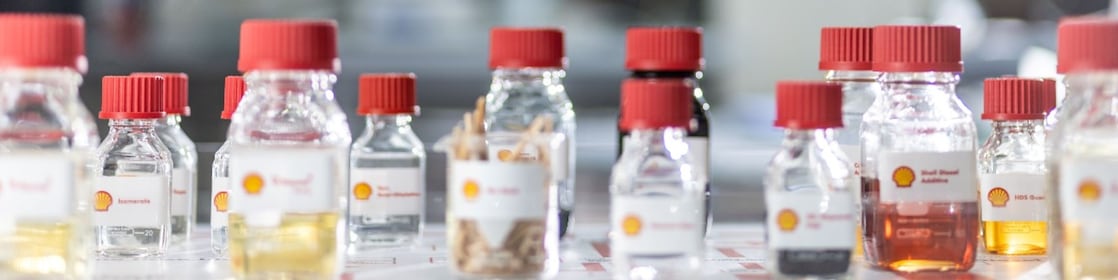
Gas-to-liquids (GTL) is a process that converts natural gas into high-quality liquid products including:
- Transport fuels for heavy-duty vehicles and aviation;
- Motor oils and base oils for lubricants and immersion cooling fluids;
- Chemical feedstocks for plastics, detergents and cosmetics.
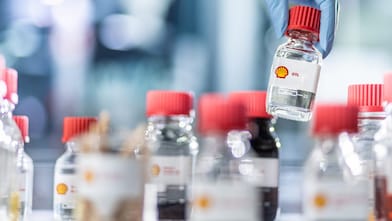
GTL products are colourless and odourless. They typically contain low levels of sulphur, aromatics and nitrogen compared with crude oil.
By enabling countries to monetise natural gas resources, GTL production also supports economic growth and helps meet rising demand for liquid fuels and products.
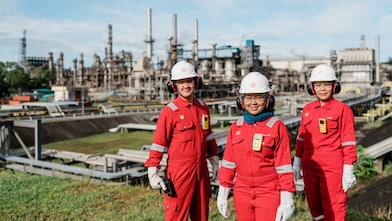
World-leading GTL plants
Shell began developing GTL technology in the 1970s, pioneering research that laid the foundation for today’s global GTL industry.
- In 1993, we opened Shell MDS in Bintulu, Malaysia – the world’s first commercial gas-to-liquids plant.
- In 2011, we commissioned Pearl GTL in Qatar – the world’s largest GTL facility.
We have invested more than $1 billion in our proprietary GTL technology over the last 25 years and have filed over 3,500 patents.
We continue to advance GTL by refining plant design, improving processes and expanding our GTL product portfolio. We have also developed flexible, scalable GTL concepts to meet demand for smaller production facilities.
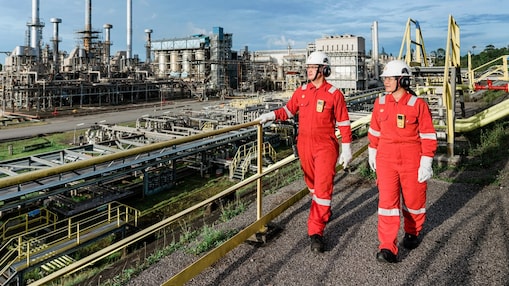
How GTL production works
The GTL process consists of three stages:
Syngas production
Natural gas is partially oxidised to create synthesis gas (syngas) – a mixture of hydrogen and carbon monoxide. Impurities are removed.
Fischer–Tropsch synthesis
Using a catalyst, syngas is converted into long-chain hydrocarbons, forming a wax-like substance at room temperature.
Upgrading
Cracking and isomerisation processes tailor hydrocarbon chains to produce high-quality liquids such as diesel, kerosene and lubricant base oils.

Shell GTL technology and catalysts
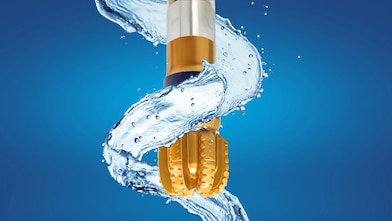
Advanced cobalt-based catalysts from Shell Catalysts & Technologies enable large-scale conversion of natural gas into liquid fuels and other products.
Each catalyst bead – about the size of a cooked grain of rice – contains nanoscale porous channels. Just 150 grams provides a surface area equivalent to a football pitch, maximising contact between gas molecules and catalytic surfaces to enhance reaction efficiency.
The cobalt in spent catalysts is periodically recovered and reused, helping to reduce waste.
Over the past 50 years, Shell’s research efforts, centred primarily at the Energy Transition Campus Amsterdam (ETCA), have been focused on improving catalyst performance, increasing selectivity towards heavier molecules and extending catalyst lifetime.
GTL product portfolio
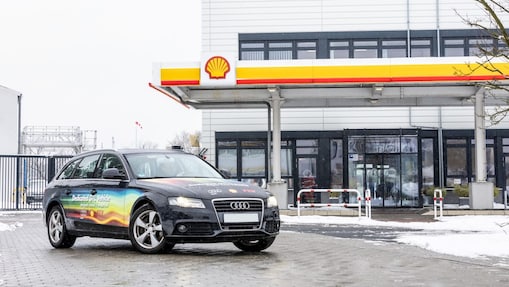
GTL gasoil (fuel)
Shell GTL gasoil is diesel alternative that produces lower local emissions of particulate matter, nitrogen oxides, hydrocarbons and carbon monoxide than conventional diesel. It can be used in existing heavy-duty diesel engines with no vehicle modifications or additional infrastructure investment.1
With a higher cetane number, lower density and lower sulphur and aromatics content than conventional diesel, GTL gasoil is already in daily use across commercial fleets in Germany and the Netherlands. It is also widely used as a premium blending component and forms part of Shell V‑Power Diesel in selected markets.
At peak production, Pearl GTL produces around 50,000 barrels per day of GTL gasoil – enough to fill more than 160,000 cars each day.
1 Based on Shell’s operability studies conducted to date