Fire-Resistant Hydraulic Fluids
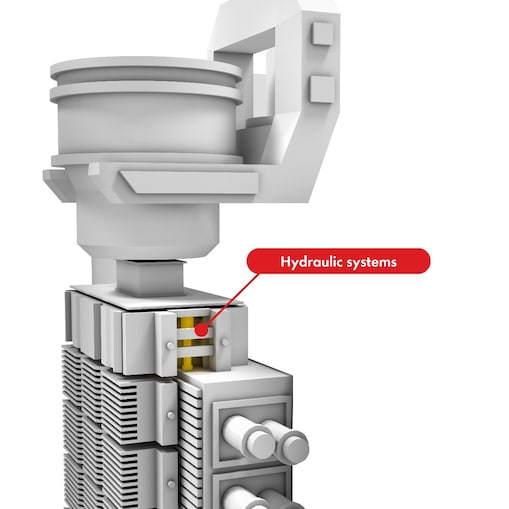
Protect your people and facilities with effective fire-resistance
Choosing the right fire-resistant fluid can be a complex decision and involves balancing product performance, cost and regulatory requirements. Ongoing changes in industry standards can also influence the selection process.
Drive system efficiency in your hydraulic equipment with excellent component protection – all while reducing the risk of fluid ignition to improve the safety and productivity of your facilities.
Our range of fire-resistant hydraulic fluids provide enhanced protection to reduce the risk of ignition and prevent fire hazards in your operations.

Why should you use a fire-resistant lubricant?
Shell Fire-Resistant Hydraulic Fluids are specially formulated to avoid the propagation of a flame and are difficult to ignite – reducing potential fire hazards and improving safety.
With more compact hydraulic systems that operate at growing power and under increasing pressure, fire risks are becoming more prominent in industrial settings – despite advances in safety.
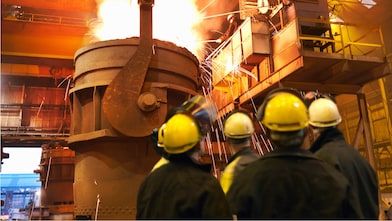
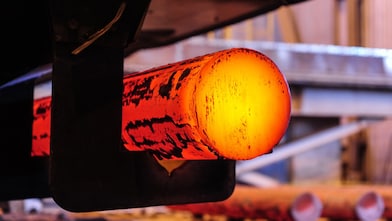
Hydraulic systems that operate in severe conditions, extreme temperatures or near an ignition source face an increased risk of fire. So, protecting your people, your equipment and your business from this is essential.
Reasons to use fire-resistant hydraulic fluids

Enhanced safety

Extended service life
Avoid the need for maintenance with high-performance fluids and oil monitoring services to improve your productivity and lower your total cost of ownership (TCO).

Wear protection
Reduce your maintenance costs with enhanced anti-wear properties that keep your equipment components and hydraulic fluid systems running smoothly for longer.

Operate in severe conditions
Operate productively and safely in extremely high or low temperatures, with consistent viscosity delivering responsive performance.
Reducing your impact
Mining and steel operations require hydraulic fluids that deliver high levels of equipment protection while helping to reduce the impact of leaks or accidental spills into aquatic environments. Compared with conventional mineral oils, selected products in the portfolio offer reduced environmental persistence due to their biodegradability profile.1
Our portfolio of specially formulated fire-resistant hydraulic fluids are difficult to ignite and designed not to propagate flame from an ignition source compared with conventional mineral oil-based fluids.
1 For example, at least 97% by mass of Shell Fire Resistant S3 DU 46 components are readily biodegradable, achieving a passing result of ≥60% according to OECD 301B.

Discover our fire-resistant hydraulic fluids
Our portfolio of fire-resistant hydraulic fluids is designed for effective fire-risk reduction, across a range of metal, industrial and mobile applications. Using fire-resistant lubricants is a cost-effective option compared with installing mechanical fire-suppression equipment.
We help customers to make the right selection for their business through a detailed dialogue about the products that could, and should, be selected for each application. This advice draws on Shell’s expertise with the products and the customer’s understanding of the end use.
Explore our fire-resistant port
| Product | Technology | ISO VISCOSITY GRADES | Benefits & Applications |
|---|---|---|---|
| Shell Turbo S5 DR | HFDR: tri-aryl phosphate based on butylated phenol | 46 | Good oxidation and hydrolytic stability, low foaming. FM Approved, ISO 12922. |
| Shell Fire-Resistant Hydraulic Fluid S3 DU | HFDU: nonaqueous synthetic polyalkylene glycol (PAG/ HPEG) | 46, 68, 100 | Excellent wear protection, oxidation and thermal stability, FM Approved. |
| Shell Fire-Resistant Hydraulic Fluid S2 DU | HFDU: nonaqueous synthetic organic esters (HEES) | 46, 68 | Good wear protection and system efficiency. A mean bio-based content 82% ASTM D6866. FM Approved, ISO 12922:2013 |
| Shell Fire-Resistant Hydraulic Fluid S1 DU | HFDU: nonaqueous natural ester (HETG) and polyalkylene glycol (PAG) blend | 32, 40, 60 | Good wear protection. USDA certified. FM Approved |
| Shell Water-Glycol S2 CX | HFC: Water-glycol | 46 | High-pressure performance up to 4,000 psi, all-season performance. FM Approved, ISO 12922 |

Shell Turbo S5 DR
A high-performance phosphate ester (HFDR) self-extinguishing fire-resistant fluid, Shell Turbo S5 DR features a high flash point, high fire point and high auto ignition temperature. It can be used as the hydraulic fluid in electrohydraulic governor controls (EHC) systems in steam and gas turbines.

Make a safe switch to fire-resistant hydraulic fluids
Switching from a mineral oil to a water-based or synthetic hydraulic fluid with fire-resistant properties is an effective way to improve the safety of your facilities. Using fire-resistant lubricants is a cost-effective option compared with installing mechanical fire-suppression equipment.
However, care must be taken to ensure the conversion is carried out correctly. It is important to review OEM requirements to confirm the compatibility of a lubricant with system components (including seals, hoses and filters). Even when using compatible lubricants, a small quantity of mineral oil can impair the fire resistance and stability of the new hydraulic fluid.
Similarly, when converting from one fire-resistant fluid category to another, the lubricants must not come into contact. Mixing incompatible lubricants can result in equipment failure. Even hydraulic fluids from the same category, but from different suppliers, should not be mixed unless you can clearly establish their compatibility. Be sure to consult with suppliers when looking to switch to an alternative hydraulic fluid.