
Shell Coolants
Shell Cooling Solutions for a Wide Range of Applications
Making the right coolant choice
High-quality coolants help protect engines from overheating while preventing corrosion, scale and deposit build-up that can damage cooling systems and reduce heat transfer efficiency.
By maintaining effective cooling and protecting critical components, they help minimise costly breakdowns, reduce maintenance and keep vehicles operating reliably.

Five ways high-quality coolants protect your engine

Shell Coolants can help to

Prevent overheating
Maintain optimum operating temperatures to help reduce the risk of breakdowns and costly repairs.

Protect seals
Compatible with elastomer seals to help prevent coolant leaks.

Protect water pumps
Reduce cavitation, corrosion and pitting to extend water pump life.

Maintain engine efficiency
Protect cylinder liners from cavitation and corrosion to support reliable engine performance.

Protect heat exchangers
Help prevent freezing, corrosion, scale and sediment build-up for efficient heat transfer.
Why choose Shell coolants
Shell coolants are formulated to exceed the engine performance requirements, from city cars to mining machines, data centres and wind turbines.
They can reduce the cost of vehicle/equipment ownership by helping
- prevent overheating through outstanding heat transfer
- reduce costly maintenance through long service life
- protect against freezing.

Coolants for internal combustion engines and wind turbines

From passenger cars and heavy-duty trucks to construction, mining and agricultural equipment, internal combustion engines rely on advanced coolants to maintain optimum operating temperatures and protect against overheating, freezing and corrosion. Shell's coolant portfolio, including Shell Rotella ELC, Shell Coolant and ShellZone, uses advanced organic acid technology (OAT) formulations to deliver long-life corrosion protection, water pump durability and extended service intervals across a wide range of engine applications.


These same long-life coolant technologies are also trusted in wind power applications. Shell Rotella ELC and Shell Coolant products help dissipate heat from wind turbine generators, gearboxes and power electronics while providing robust thermal stability, freeze protection and corrosion resistance. By helping maintain efficient cooling and protecting critical components, they support reliable turbine operation, reduce maintenance and extend equipment life in demanding onshore and offshore environments.
Read the transcript
Read the transcript
Title: Shell Coolant mythbusting
Duration: 2:44 minutes
Description: An animated video explaining how Shell coolants help protect engines and the importance of using the correct coolant, debunking three common myths.
Shell coolant mythbusting transcript
[Background music plays]
Bright, inspirational music playing, melodies inspired by the Shell jingle.
[Text displays]
Shell Coolant
[Male voice-over]
Shell Coolant
[Animated sequence]
A Shell Coolant Longlife Plus Ready to Use bottle appears. Stylised snowflakes drift down. A white shield graphic appears behind the text.
[Text displays]
Keep it cool. Keep it protected.
[Male voice-over]
Keep it cool. Keep it protected.
[Visuals]
Screen slides left to show animated video.
[Animated sequence]
An illustrated street scene is shown. A passenger car in Shell red drives along a city road. Other vehicles, including a white van and truck, pass by.
The camera pans to the front of the car as steam bellows from under the bonnet, illustrating an overheating engine.
[Male voice-over]
Keeping your engine in good health is essential, but without the right coolant, it may break down sooner than you think.
[Visuals]
The scene transitions back to the Shell Coolant Longlife Plus pack shot.
[Animated sequence]
Sun and snowflake graphics appear on either side of the product. The Shell Coolant bottle drops off-screen to reveal a rotating stylised image of an engine.
[Text displays]
Protect
[Animated sequence]
A high temperature icon appears on the left and a low temperature icon appears on the right. They both merge in the centre, into a thermometer icon showing a moderate temperature. Arrows circle around the thermometer icon.
[Male voice-over]
Shell Coolants are formulated to help protect modern equipment from freezing and overheating, and keep your system running at an optimum temperature range – all year round.
[Animated sequence]
The steaming red car reappears with a temperature gauge beside it. The gauge rises into the red zone as the engine overheats.
The animation transitions to an illustrated cooling system, showing coolant circulating through the radiator and engine. Warning symbols appear at various points in the system.
[Text displays]
*Based on tests performed against ASTM D5930 and ASTM D276.
[Male voice-over]
Coolants help to protect your equipment by transferring heat away from components, regulating temperature and maximising performance.
[Visuals]
The engine image reappears.
[Text displays]
Prevent
[Animated sequence]
The animation zooms into a close-up of the turbocharger. Two close-up images are shown to illustrate the condition of components.
[Text displays]
*Gel formation claim is for non-silicated formulations.
[Graphics]
Gel formations in engine turbochargers using two coolant technologies are shown side by side. The organic additive technology example is marked with a tick, while the inorganic example is marked with a warning symbol.
[Text displays]
Organic additive technology coolant
Inorganic additive technology coolant
[Animated sequence]
The cooling system reappears with a dollar symbol overlaid. The temperature gauge icon beside it shows an appropriately heated engine.
[Male voice-over]
Shell Coolants help prevent cooling system failure caused by scale deposits, sediment, corrosion and gel formation, thanks to its coolant technology – helping to reduce costly equipment failure.
[Animated sequence]
The scene changes and a chemical structure is displayed, followed by the engine reappearing on screen. Time and maintenance icons appear alongside the engine.
[Text displays]
Prolong
[Animated sequence]
The animation transitions to show a graph comparing organic additive technology with conventional technology.
[Graphics]
The graph shows the decline of relative inhibitor concentration in percent over the test duration in thousands of miles. The conventional technology shows a decline from 100% to 0% over test durations of between around 70,000 miles and 300,000 miles. The organic additive technology remains at between around 85% to 95% concentration at the end of the testing at 600,000 miles.
[Text displays]
*Based on tests performed against ASTM D6190, ASTM D5827 and HPCL.
[Male voice-over]
Our coolants are formulated with special additives to help prolong a longer service life than conventional, fully-formulated, inorganic additive technology coolant.
[Visuals]
The scene changes to a blue background with a droplet pattern. Boxes appear to display the text.
[Text displays]
Myth 1
Using water will do the same job, right?
[Male voice-over]
Myth 1
Using water will do the same job, right?
[Graphics]
A red cross appears near the text boxes.
[Text displays]
No.
[Male voice-over]
No.
[Animated sequence]
The animation transitions to show several coupons in a laboratory coupon test illustration.
A new metal coupon is shown first. Additional Shell coolant coupon and water coupons appear alongside it. The Shell coolant coupon remains clean and is marked with a blue tick. The coupon exposed to water becomes visibly corroded and is marked with a red warning symbol.
[Text displays]
Laboratory coupon test
*Based on tests performed against ASTM D1384.
[Male voice-over]
Using water only can cause cooling system failure caused by scale deposits, sediment and corrosion due to a lack of corrosion inhibitors.
[Animated sequence]
The scene changes as the engine reappears. The engine becomes blue as snowflake graphics move towards it. A crossed-out red snowflake icon indicates no freeze protection.
[Male voice-over]
In addition, there is no freeze protection, which can result in cooling system damage in cold climates.
[Visuals]
The scene transitions back to the Shell Coolant Longlife Plus pack shot.
[Animated sequence]
The animation transitions to show several cooling system components in a liner pitting protection test illustration.
Components showing corrosion are marked with red warning symbols, while the component without corrosion is marked with a blue tick.
The scene changes as the engine reappears next to a temperature gauge icon showing an appropriately heated engine.
[Text displays]
Liner pitting protection
*Based on field trials performed with a Shell ELC NF coolant versus a competitor IAT coolant.
[Male voice-over]
A high-quality coolant is essential to keep your cooling system and engine protected from corrosion, scaling and sediment buildup, and to help an engine stay at its optimum temperature.
[Visuals]
A blue background is shown.
[Text displays]
Myth busted
[Visuals]
The scene changes to a blue background with a coolant bottle pattern. Boxes appear to display the text.
[Text displays]
Myth 2
Aren’t all coolants the same?
[Male voice-over]
Myth 2
Aren’t all coolants the same?
[Graphics]
A red cross appears near the text boxes.
[Text displays]
No.
[Male voice-over]
No.
[Animated sequence]
The scene changes and an outline of a coolant container appears beside an engine and car icon. A tick appears on the container. The Shell Coolant Longlife Plus pack shot then replaces the outline.
[Male voice-over]
You must use the right coolant based on its properties and the specific requirements of your engine’s cooling system.
[Animated sequence]
A series of vehicle and equipment icons appear, including passenger vehicles, motorcycles, wind turbines, agricultural equipment, trucks and construction equipment.
Ticks appear beneath each application, illustrating the application breadth of Shell coolants.
[Male voice-over]
Shell Coolants offers a range of products to suit different engine types and operations.
[Visuals]
A blue background is shown.
[Text displays]
Myth busted
[Visuals]
The scene changes to a blue background with a sun and snowflake graphic pattern. Boxes appear to display the text.
[Text displays]
Myth 3
Coolants are only needed for extremely hot or cold climates.
[Male voice-over]
Myth 3
Coolants are only needed for extremely hot or cold climates.
[Graphics]
A red cross appears near the text boxes.
[Text displays]
No.
[Male voice-over]
No.
[Animated sequence]
The animation transitions to show a red car driving along a road.
Thermometer icons appear around the vehicle, representing different low, moderate and high operating temperatures.
[Male voice-over]
Coolants are required to regulate your engine temperature, regardless of the temperature outside.
[Animated sequence]
The scene changes to show the engine illustration. The engine is shown against a red background as a thermometer icon appears alongside the engine, showing temperatures rising to 2,000°C.
The animation zooms back out to the red car. A thermometer icon showing a moderate temperature appears. Arrows circle around the icon. The icon in the centre switches to show different engine types.
[Text displays]
*Source: Novel internal combustion engine technologies for performance improvement and emission reduction, Sarthak Paveja and Rajan Kumar, Springer.
2,000°C
[Male voice-over]
After all, fuel combustion inside an engine can create temperatures above 2,000°C/3,600°F, so a high-quality coolant is essential all year round for all engine types.
[Visuals]
A blue background is shown.
[Text displays]
Myth busted
[Animated sequence]
A scene showing different vehicles appears, including an excavator, tractor, lorry and car.
[Visuals]
A box appears in the foreground displaying text.
[Text displays]
Our diverse portfolio can help protect your equipment, prevent damage and prolong its life.
[Male voice-over]
Our diverse portfolio can help protect your equipment, prevent damage and prolong its life.
[Animated sequence]
The animation transitions to a Shell Coolant Longlife Plus pack shot. Stylised snowflakes drift down. A white shield graphic appears behind the text.
[Text displays]
Shell Coolant
[Male voice-over]
Shell Coolant
[Text displays]
Keep it cool. Keep it protected.
[Male voice-over]
Keep it cool. Keep it protected.
[Music ends]
[Graphics]
Shell logo on a white background
[Background music plays]
Shell jingle plays.
Coolant matters more than you think. Watch the video to see why ICE vehicles need coolants and to bust common myths. >>
Frequently asked questions
Want to know more? Here are some answers to questions we’re often asked.
Why coolants are needed for my vehicle/equipment?
Why coolants are needed for my vehicle/equipment?
Coolants help protect modern equipment from freezing, overheating and corrosion, maintaining optimum operating temperatures in all climates.
By efficiently transferring heat away from critical components, they help maximise performance and reliability while preventing cooling system problems such as scale deposits, corrosion and gel formation that can lead to costly failures.
Formulated with advanced additive technologies, Shell OAT coolants deliver long service life and longer-lasting protection than conventional inorganic additive technology (IAT) coolants.
Does using water do the same job as coolant?
Does using water do the same job as coolant?
No. Using water alone can lead to scale, corrosion and deposit build-up, increasing the risk of cooling system failure and reducing heat transfer efficiency. It also provides no freeze protection, leaving equipment vulnerable to damage in cold climates. A high-quality coolant helps protect the cooling system and engine from corrosion, scaling and deposits while maintaining optimum operating temperatures year-round.
Aren't all coolants the same?
Aren't all coolants the same?
No. Selecting the right coolant requires matching its performance properties to the specific requirements of the engine and its cooling system.
Are coolants only needed for extremely hot or cold climates?
Are coolants only needed for extremely hot or cold climates?
No. Coolants help maintain optimum engine operating temperatures in all climates. With combustion temperatures exceeding 2,000°C, a high-quality coolant is essential to dissipate heat efficiently, prevent overheating and provide year-round protection for all engine types.
Cautionary Note
Cautionary Note
The companies in which Shell plc directly and indirectly owns investments are separate legal entities. In this report “Shell”, “Shell Group” and “Group” are sometimes used for convenience to reference Shell plc and its subsidiaries in general. Likewise, the words “we”, “us” and “our” are also used to refer to Shell plc and its subsidiaries in general or to those who work for them. These terms are also used where no useful purpose is served by identifying the particular entity or entities. ‘‘Subsidiaries’’, “Shell subsidiaries” and “Shell companies” as used in this report refer to entities over which Shell plc either directly or indirectly has control. The terms “joint venture”, “joint operations”, “joint arrangements”, and “associates” may also be used to refer to a commercial arrangement in which Shell has a direct or indirect ownership interest with one or more parties. The term “Shell interest” is used for convenience to indicate the direct and/or indirect ownership interest held by Shell in an entity or unincorporated joint arrangement, after exclusion of all third-party interest.
Forward-Looking statements
This report contains forward-looking statements (within the meaning of the U.S. Private Securities Litigation Reform Act of 1995) concerning the financial condition, results of operations and businesses of Shell. All statements other than statements of historical fact are, or may be deemed to be, forward-looking statements. Forward-looking statements are statements of future expectations that are based on management’s current expectations and assumptions, including (without limitation) those concerning Shell’s strategy and operating plans, macroeconomic conditions, future energy demand, supply and product mix, commodity prices, demand for Shell’s products, production results and reserve estimates, development, execution and management of projects, energy transition and climate change, management of safety and environmental risks, costs, cash capital expenditures, technology advancements, legislative, judicial, fiscal and regulatory developments, regional conflicts and trading conditions, and involve known and unknown risks and uncertainties that could cause actual results, performance or events to differ materially from those expressed or implied in these statements. Forward looking statements include, among other things, statements concerning the potential exposure of Shell to market risks and statements expressing management’s expectations, beliefs, estimates, forecasts, projections and assumptions. These forward-looking statements are identified by their use of terms and phrases such as “aim”; “ambition”; ‘‘anticipate’’; “aspire”, “aspiration”, ‘‘believe’’; “commit”; “commitment”; ‘‘could’’; “desire”; ‘‘estimate’’; ‘‘expect’’; ‘‘goals’’; ‘‘intend’’; ‘‘may’’; “milestones”; ‘‘objectives’’; ‘‘outlook’’; ‘‘plan’’; ‘‘probably’’; ‘‘project’’; ‘‘risks’’; “schedule”; ‘‘seek’’; ‘‘should’’; ‘‘target’’; “vision”; ‘‘will’’; “would” and similar terms and phrases. There are a number of factors that could affect the future operations of Shell and could cause those results to differ materially from those expressed in the forward-looking statements included in this report, including (without limitation): (a) price fluctuations in crude oil and natural gas; (b) changes in demand for Shell’s products; (c) currency fluctuations; (d) drilling and production results; (e) reserves estimates; (f) loss of market share and industry competition; (g) environmental and physical risks, including climate change; (h) risks associated with the identification of suitable potential acquisition properties and targets, and successful negotiation and completion of such transactions; (i) the risk of doing business in developing countries and countries subject to international sanctions; (j) legislative, judicial, fiscal and regulatory developments including tariffs and regulatory measures addressing climate change; (k) economic and financial market conditions in various countries and regions; (l) political risks, including the risks of expropriation and renegotiation of the terms of contracts with governmental entities, delays or advancements in the approval of projects and delays in the reimbursement for shared costs; (m) risks associated with the impact of pandemics, regional conflicts, such as the Russia-Ukraine war and the conflict in the Middle East, and a significant cyber security, data privacy or IT incident; (n) the pace of the energy transition; and (o) changes in trading conditions. No assurance is provided that future dividend payments will match or exceed previous dividend payments. All forward-looking statements contained in this report are expressly qualified in their entirety by the cautionary statements contained or referred to in this section. Readers should not place undue reliance on forward-looking statements. Additional risk factors that may affect future results are contained in Shell plc’s Form 20-F for the year ended December 31, 2025 (available at www.shell.com/investors/news-and-filings/sec-filings.html and www.sec.gov). These risk factors also expressly qualify all forward-looking statements contained in this report and should be considered by the reader. Each forward-looking statement speaks only as of the date of this report. Neither Shell plc nor any of its subsidiaries undertake any obligation to publicly update or revise any forward-looking statement as a result of new information, future events or other information. In light of these risks, results could differ materially from those stated, implied or inferred from the forward-looking statements contained in this report.
Shell’s net carbon intensity and net-zero emissions target
In this report we may refer to Shell’s “net carbon intensity” (NCI), which includes Shell’s carbon emissions from the production of our energy products, our suppliers’ carbon emissions in supplying energy for that production and our customers’ carbon emissions associated with their use of the energy products we sell. Shell’s NCI also includes the emissions associated with the production and use of energy products produced by others which Shell purchases for resale. Shell only controls its own emissions. The use of the terms Shell’s “net carbon intensity” or NCI is for convenience only and not intended to suggest these emissions are those of Shell plc or its subsidiaries.
Shell’s operating plan and outlook are forecasted for a three-year period and ten-year period, respectively, and are updated every year. They reflect the current economic environment and what we can reasonably expect to see over the next three and ten years. Accordingly, the outlook reflects our combined Scope 1 and 2 target, NCI target and our oil products ambition over the next ten years. However, Shell’s operating plan and outlook cannot reflect our 2050 net-zero emissions target, as this target is outside our planning period. Such future operating plans and outlooks could include changes to our portfolio, efficiency improvements and the use of carbon capture and storage and carbon credits. In the future, as society moves towards net-zero emissions, we expect Shell’s operating plans and outlooks to reflect this movement. However, if society is not net zero in 2050, as of today, there would be significant risk that Shell may not meet this target.
The information provided above regarding Shell’s NCI and net zero emissions target are not intended, nor should they be construed as introducing, suggesting or making any claim, target or representation thereof other than what is included in the report.
Forward-Looking non-GAAP measures
This report may contain certain forward-looking non-GAAP measures such as free cash flow and underlying operating expenses. We are unable to provide a reconciliation of these forward-looking non GAAP measures to the most comparable GAAP financial measures because certain information needed to reconcile those non-GAAP measures to the most comparable GAAP financial measures is dependent on future events some of which are outside the control of Shell, such as oil and gas prices, interest rates and exchange rates. Moreover, estimating such GAAP measures with the required precision necessary to provide a meaningful reconciliation is extremely difficult and could not be accomplished without unreasonable effort. Non-GAAP measures in respect of future periods which cannot be reconciled to the most comparable GAAP financial measure are calculated in a manner which is consistent with the accounting policies applied in Shell plc’s consolidated financial statements. These forward-looking non GAAP measures are provided to assist readers in understanding management’s use and expectations of such measures and may not be appropriate for other purposes.
The contents of websites referred to in this report do not form part of this report.
We may have used certain terms, such as resources, in this report that the United States Securities and Exchange Commission (SEC) strictly prohibits us from including in our filings with the SEC. Investors are urged to consider closely the disclosure in our Form 20-F, File No 1-32575, available on the SEC website www.sec.gov.
Cooling solutions for every critical application. From heavy-duty diesel engines and electric vehicles to battery energy storage systems and data centres.
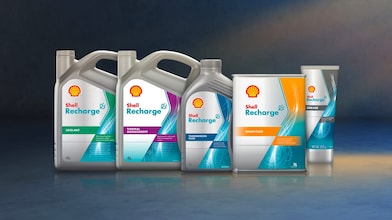
Discover Shell Recharge EV Fluids
Find out how our specialised friction and thermal management solutions are designed to advance new possibilities for EVs.

Liquid Cooling Fluids
Liquid cooling fluids are an efficient way to absorb and dissipate the heat generated by electronic components especially those used in computer and data centre hardware.
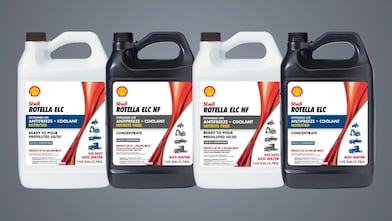
Shell Rotella Coolants
Explore our portfolio of Shell Rotella extended life coolants, designed to provide high performance protection for today’s heavy-duty diesel engines and more. Available in the United States and Canada.