
Shell Lubricants – our approach to sustainability
Lubricants play a vital role in keeping the world moving and machinery operating efficiently. As demand for mobility, construction and industrial production rises, so too will the need for lubricants. Meeting this growing demand means managing the environmental and social impact of lubricants across your value chain.
Reducing emissions from our operations
From where we source our energy to how we produce lubricants, we are fundamentally changing the way we operate.
More than half of the electricity used at our global lubricant and grease plants now comes from renewable sources1. In China, one of our plants is set to use 300 tonnes less diesel every year, while driving down annual emissions by more than 900 tonnes. How? By using a new thermal energy storage system, which relies on renewable electricity, instead of diesel, to generate steam the Zhuhai plant needs to produce lubricants and greases.
We have reduced more than 55000 tonnes of Scope 1 and 2 greenhouse gas emissions from our global lubricant operations2. This means we have reduced our production carbon intensity by 45% since 2016. We got there by improving our energy efficiency, using renewable electricity and upgrading equipment.

Advancing resource efficiency and reducing emissions
Increased use of re-refined and renewable feedstocks
We are increasing the use of re-refined base oils and renewable feedstocks in selected applications where they meet relevant technical and quality requirements. We work with innovative companies – for example, our partnership with Blue Tide enables the re-refining of used lubricants into base oils that can be used in the production of new lubricant products, supporting resource recovery and material reuse.3
Packaging innovation and waste management
We are exploring packaging innovations across our supply chains, including increasing the use of recycled content and improving packaging recyclability. In selected regions, we also provide waste oil management services to support the collection and appropriate handling of used oil.
Lubricants with a biodegradability profile
Our customers need choice when it comes to lubricants with biodegradability characteristics. That's why we have expanded our portfolio of lubricants with a biodegradability profile4 ,including Shell Panolin, Shell Midel and Mivolt, providing customers with a broader range of solutions for different operating environments and application needs.
Reducing, reusing and recycling our packaging
By the end of 2025, we had achieved a level of 21% recycled plastic content by weight in Shell branded plastic packaging compared with 10% in the base year of 20225.
We have been working with our suppliers and contractors to:
- Produce our first 100% post consumer recycled plastic lubricants bottles (for selected products) at our plants in Thailand, India, Indonesia and Malaysia
- Introduce jerrycans in Europe, which use 27% less plastic and are better suited to recycling than round pails6
- Launch, in China, a 1 litre label free bottle for motor oils, which uses 3% less plastic by weight compared to standard alternatives and allows for easier recycling7
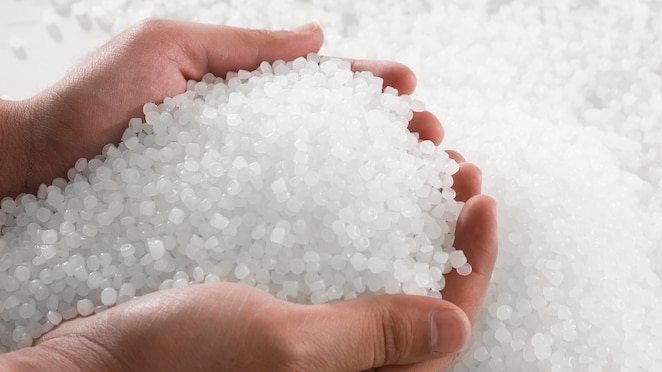
In China and North America: Our bag in box lubricants up to 89% less plastic than regular 1 litre plastic bottles8.
In India: We have pioneered a proof concept for closed loop recycling which involves the collection and recycling of used plastic lubricant bottles for creation of new Shell Lubricant bottles with post-consumer resin content9.
And in Germany: We worked with our partners to produce 100% recycled steel drums10.
Supporting operational efficiency and performance goals
Our high-performance lubricants are designed to help customers improve fuel economy, energy efficiency and thermal management in a range of applications. These performance characteristics may contribute to operational efficiencies and help optimise lubricant use, depending on the application and operating conditions. Customers should assess product suitability against their specific performance requirements.
High Performance products, plus the power of technology

Shell Panolin lubricants with a biodegradability profile
Shell PANOLIN is our range of high-performance lubricants assessed against readily biodegradable criteria11 and formulated to demonstrate a lower aquatic environmental impact12.
Shell MIDEL Ester Transformer Fluids
Uncompromising fire safety, longer asset life and product biodegradability characteristics designed to support spill risk management. Just some of the benefits of this range of transformer fluids.
Shell Risella C Re-engineered Process Oils
With circular process oils, you can develop formulations with increased recycled content. Depending on the product selected, lifecycle greenhouse gas emissions may be lower compared with conventional alternatives13.
Explore our Lubricant Services
Tools and expert support designed to help improve operational efficiency, reduce maintenance costs and minimise downtime.
More about sustainability in Shell



Carbon compensation solutions available to customers
We offer a range of carbon compensation programmes that customers may choose to incorporate into their broader climate and sustainability strategies. These programmes are supported by carbon credits that meet specified quality criteria. Carbon compensation does not reduce a customer's own greenhouse gas emissions and should be considered alongside efforts to avoid and reduce emissions where possible.

Disclaimers
1. Renewable sources include use of solar energy, renewable power contracts and renewable energy certificates
2. Basis: Scope 1 & 2 Emissions for Shell Owned and Operated Lubricant and Grease Assets as tracked and measured within Shell Environmental Reporting System for FY2024. Production Carbon Intensity is defined as Total Scope 1 & 2 GHG Emissions per production volume.
3. Blue Tide & Shell Lubricants Complete Re Refining Facility to Develop High-performance Lubricants
4. The overall biodegradability profile of a lubricant is determined by the biodegradability characteristics of its individual components rather than by a finished-product biodegradability test.
5. According to Shell internal reporting
6. Over 27% plastic reduction when comparing 20L Jerrycans versus 20L round pails previously used.
7. Elimination of the label and ink printing allows for the bottle to be made of a single material which is more suited for recycling. This bottle uses 3% less plastic compared to the current 1 litre bottle
8. Up to 89% less plastic is used when comparing a single 22.7 litre bag in box solution to the equivalent of 24 1 litre rigid plastic bottles.
9. Both Shell and non-Shell used lubricant bottles were collected for recycling and processing into post-consumer resin for use in new Shell Lubricant bottles
10. Drums are made with 100% recycled steel, instead of virgin steel.
11. All Shell PANOLIN lubricants biodegradability claims are substantiated by a biodegradability profile based on component-based test data and support by product-level test data when required. Example: At least 87% w/w of Shell PANOLIN S4 HLP Synth 46 components are readily biodegradable, achieving a passing result of ≥60% according to OECD 301B and meets the requirements of EN 17181:2019, a modified OECD 301B-based test method for determining the aerobic biodegradation of fully formulated lubricants.
12. Offers reduced impact of leaks or accidental spillage into aquatic environments compared to conventional mineral oils thanks to their biodegradability profile. (Publication EPA 800-R-11-002).
13. As described in the relevant product documentation.