Realising Potential
Balancing Performance and Operational Requirements
As electricity generation, transmission and consumption continue to evolve, the demands placed on transformers are changing. These developments create new challenges for power operators, particularly when it comes to maintaining reliable transformer performance across a range of operating conditions.
Two notable trends are increasing demand for electrical power and a growing number of transformers operating in demanding, remote or regulated locations. Together, these factors require transformer fluids that combine established performance characteristics with properties such readily biodegradable* base oil, low-temperature operation and compatibility with existing equipment.
*As determined by OECD 301 test methods.
Meeting the Needs of Increased Power Demands
An uptick in renewable energy – solar and offshore wind farms, for example – has led to an increase in the number of power generation sites away from where that power is consumed. The long-distance electricity supply that this requires means higher voltages are often needed to ensure efficient transmission.
The modern grid can create stresses for ageing infrastructure – including transformers initially designed for much lower loads and operating temperatures.
To combat this, today’s transformer oils must have:
- High dielectric strength
- Efficient cooling properties
- Enhanced oxidation resistance
Designed for Demanding and Regulated Environments
Performance alone is often not enough for today’s transformers. Modern equipment is frequently found in demanding or regulated environments, whether that’s an arctic climate or woodland area.
These conditions come with their own challenges for equipment, maintenance and transformer oil. Transformer fluids may be selected based on characteristics such as:
- Readily biodegradable* base oils, which may help reduce the persistence of fluid residues following an accidental release compared with conventional mineral oil-based fluids.
- The base oils used in Shell MIDEL ester fluids and Shell Diala S4 ZX-I/ZX-IG and Shell Diala S5 BD are readily biodegradable according to OECD 301 test criteria
- Low pour points, good flow properties and cold-temperature performance suitable for challenging operating conditions
- Compatibility with standard mineral oils, for ease of retrofitting and widespread use.
*As determined by OECD 301 test methods.


Shell MIDEL 7131
Synthetic ester fluid
Shell MIDEL 7131 K3 class is specifically formulated to be a fire-safe,¹ high-performance fluid providing all the benefits of ester technology. It is the fluid of choice when the performance demands on the transformer are higher, especially if located in a cold climate (it has a pour point of −56°C)7 or when there is a risk of contact with air. Shell MIDEL 7131 is also ideal for transformers located indoors, outdoors or underground, and for high temperature, breathing-type equipment. It has a long track record in demanding applications such as wind turbines and rolling stock and is proven over 400 kV.2
Shell MIDEL 7131 meets the IEC 61099 and ASTM D8240 standards.
Shell MIDEL eN 1204
Rapeseed/canola natural ester fluid
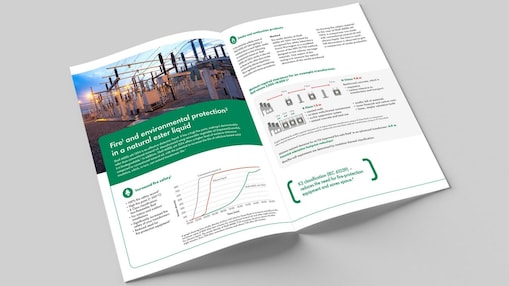
Shell MIDEL eN 1204 is a K2 Class bio-sourced3 dielectric fluid, and made from readily biodegradable base oils according to OECD 301 test criteria. Its pour point of −31°C7 makes it an effective fluid for installations in cooler climates. It has a high fire point of over 350°C,7 increasing the fire safety of transformers, and can reduce the need for fire protection equipment. Like all natural ester transformer fluids, Shell MIDEL eN 1204 is best suited for use in non-breathing equipment.
3 Shell MIDEL eN 1204 and Shell MIDEL eN 1215 each have 100% biobased carbon content. Both are tested according to the ASTM D6866-21 method. Reported results are accredited to ISO/IEC 17025:2017 Testing Accreditation PJLA #59423 standards, and all chemistry was performed at Beta Analytic testing laboratory and counted in its accelerators in Miami, Florida, August 2021.
7 Shell MIDEL natural esters meet IEC 62770, IEEE C57.147 and ASTM D6871 standards.

Shell MIDEL eN 1215
Soybean natural ester fluid
Shell MIDEL eN 1215 is formulated from soybean oil. This product is an efficient general-purpose fluid, ideal for a wide range of transformers located indoors or outdoors. Shell MIDEL natural esters meet IEC 62770, IEEE C57.147 and ASTM D6871 standards.
Shell MIDEL Regen
Regenerated synthetic ester fluid
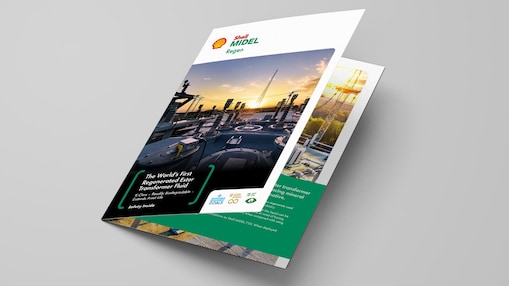
Derived from in-service Shell MIDEL 7131 synthetic ester fluid, Shell MIDEL Regen delivers the same proven transformer performance and fire-resistant properties as Shell MIDEL 7131, with base oils that meet ready biodegradability criteria, as determined by OECD 301 test methods.