Shell Liquid Cooling Fluids: Improving efficiency in high-performance computing
Discover how Shell’s innovative Liquid Cooling Fluids can help data centres and other facilities meet the growing demands of artificial intelligence (AI) and high-performance computing while achieving their operational and environmental goals.
Shell Achieves NVIDIA DSX Ready Coolant Qualification for Direct Liquid Cooling, Advancing High-Performance AI Computing
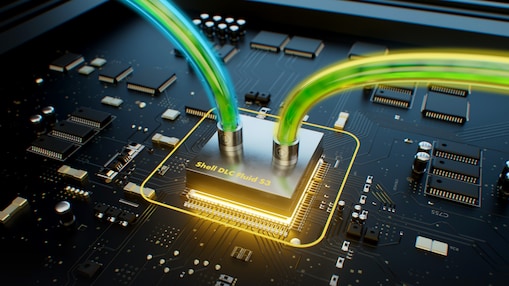
Shell has reached a significant milestone in its data centre liquid cooling journey, announcing it has received NVIDIA DSX Ready Coolant qualification for its direct liquid cooling (DLC) fluid as demand accelerates for AI-ready infrastructure.
NVIDIA is the first to announce qualification of Shell's DLC Fluid and comes just over a year after Shell launched the product.
Shell’s DLC Fluid is a propylene glycol-based PG25 fluid designed for direct-to-chip liquid cooling applications. The fluid is engineered to deliver excellent heat transfer performance, long-term corrosion protection and extended operational life.
As AI workloads continue to accelerate, so does the need for advanced cooling technologies. This validation reinforces Shell's continuing role in enabling more efficient, resilient, and scalable data center operations worldwide.

What are liquid cooling fluids?
Liquid cooling fluids are an efficient way to absorb and dissipate the heat generated by electronic components – especially those used in computers and data centre hardware.
Liquid cooling fluids are dielectric, which means they do not conduct electricity and do not corrode the equipment, making it safe to submerge electrical equipment in them.
Solutions
Benefits of Liquid Cooling Fluids
Better performance
By transferring heat more efficiently than many air-cooling techniques (which use refrigerated air, fans and heatsinks), liquid cooling fluids can support overclocking and increase CPU speeds by up to 40%.1
More efficient operations
With no need for coolers, chillers, fans or evaporative cooling systems, liquid cooling fluids can help businesses cut the floor space needed to host their computing equipment by up to 80%.1
Greater energy efficiency
Liquid cooling fluids almost eliminate the need for the power-hungry air-based cooling systems, helping to reduce the energy footprint of a computing facility by up to 48.1
Increased profitability
By reducing electricity consumption and the need for intricate heating, ventilation and air conditioning systems, immersion cooling fluids can reduce a data centre’s total cost of ownership (TCO) by up to 33%.1
Easier to scale
As data centres expand to meet the growing demands of high-end computing, immersion cooling fluids offer an easier way to add scale and enable increased locational flexibility.
Supporting Operational Goals
Liquid cooling fluids are designed to support operational and energy efficiency, helping businesses address their performance and energy-management objectives. In certain applications, CO₂ emissions reductions of up to 30% have been reported.¹
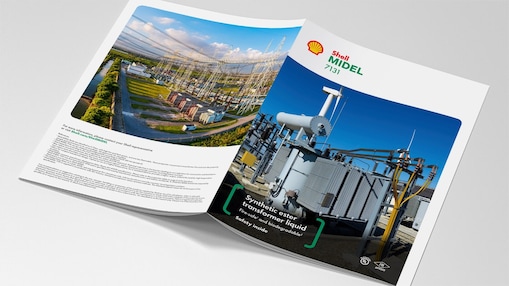
Meet Shell MIDEL
Complementing the Shell Liquid Cooling Fluid portfolio is the Shell MIDEL product range.
The Shell MIDEL portfolio includes ester transformer fluids that offer fire-safe1 and biodegradable3 properties.
What’s new

An industry first
Shell Immersion Cooling Fluids are now certified by Intel for use with 4th Gen and 5th Gen Intel Xeon processors in data centres worldwide.

Working together to lower the carbon footprint of big data
Intel, Submer and Shell are collaborating to advance immersion cooling technology.
Paving the way
Shell IT deploys immersion-cooled HPC cluster within its Houston data center, with help from AMD and Penguin.
Advancing immersion cooling with our partner Asperitas
Delivering an energy efficient HPC cluster upgrade in Amsterdam.

Future of Sustainable Data Centers
Penguin Solutions, NVIDIA, and Shell Case Study.

Featured collaborations
Shell is proud to innovate alongside and collaborate with the strongest players in the Liquid Cooling space. Learn more about the ways Shell is working with key market leaders.
Transcript
Transcript
Title: Shell Immersion Cooling Transript
Description: Cloud computing, streaming, big data, blockchain, artificial intelligence, social media. Society is demanding faster, more immediate data access.
0:16
16 seconds
This means more data centres and infrastructure growing at twenty percent a year.
0:22
22 seconds
Data centres already account for about one percent of global electricity consumption.
0:28
28 seconds
More than a third of this power is for cooling the electrical components.
0:34
34 seconds
Traditional air cooling systems are energy intensive and cannot cool powerful next-generation servers.
0:44
44 seconds
To help tackle the climate crisis we need new, more sustainable solutions.
0:51
51 seconds
The World Economic Forum has recognised immersion cooling as one of the best transformational energy innovations in the last decade.
1:01
1 minute, 1 second
High-density, high-performance server hardware is immersed in a specially designed fluid.
1:07
1 minute, 7 seconds
Compared with air cooling, single-phase immersion cooling technology, as an integrated solution, offers up to a fourty eight percent
1:16
1 minute, 16 seconds
energy footprint reduction, thirty percent lower carbon dioxide emissions,
1:23
1 minute, 23 seconds
fourty percent faster CPU performance, eighty percent less floor space and a thirty three percent lower total cost of ownership.
1:35
1 minute, 35 seconds
Immersion cooling is highly reliable with no moving parts and climate independence to work in both hot and humid environments.
1:45
1 minute, 45 seconds
Immersion cooling also provides the opportunity to recover up to ninety nine percent of the heat your servers generate as one hundred and thirty degree fahrenheit water for district heating systems.
1:58
1 minute, 58 seconds
Shell's gas-to-liquids technology has enabled it to develop a proprietary, dielectric, single-phase immersion cooling fluid made from natural gas.
2:09
2 minutes, 9 seconds
These fluids are designed to reduce energy costs and emissions through their high cooling efficiency, flow behaviour and excellent thermodynamic properties.
2:20
2 minutes, 20 seconds
They cost less to manufacture than alternative fluorocarbon and intensively engineered fluids, have proven computer component compatibility
2:29
2 minutes, 29 seconds
and are safe and easy to handle.
2:34
2 minutes, 34 seconds
Immersion cooling is part of Shell's wider integrated energy solution.
2:40
2 minutes, 40 seconds
Shell can also supply renewable energy to reduce your carbon emissions further and offset any residual footprint through carbon credits from nature-based solutions. 36 00:02:52,000 --> 00:02:27,000 Ask us how we can help you to create a more sustainable future.
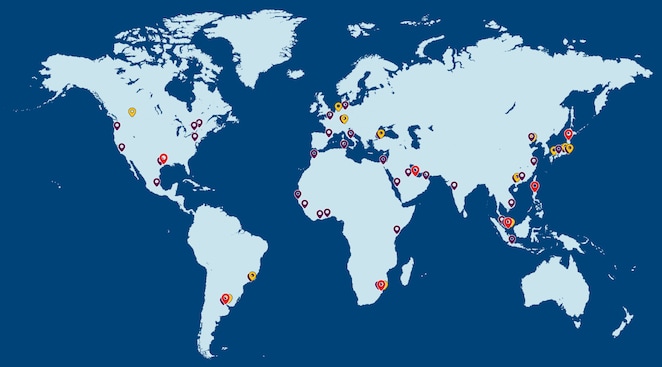
Manufacturing plants
Blending plant
Specialized manufacturing plants
Disclaimers:
1 Figures based on: Global immersion cooling market in data centres – growth, trends and forecast (2019–2024) report (Mordor Intelligence) and Shell’s internal evaluations. Benefits achieved will vary according to actual site development.
2 Than conventional methods such as coolers, chillers evaporative coolers, fans and bearings.
3 Shell MIDEL 7131 meets IEC 61099 and ASTM D8240 specifications, K3 Class. Shell MIDEL eN 1204 and Shell MIDEL eN 1215 meets IEC 61039 and ASTM D6871 specification, K2 Class. K classification transformer liquids have a high fire and flash point, and are less flammable. These properties can prevent a transformer fire and help save property, people and the surrounding environment. FM Approved, UL classified.