
Nature-based solutions
We are investing to protect and enhance natural ecosystems that capture CO₂ emissions, benefit local communities, and improve biodiversity. We use the carbon credits these projects generate to help customers decarbonise by compensating for their emissions.

Shell's strategy is to deliver more value with less emissions. As part of this, we are working to reduce emissions from our operations while providing our customers with lower-carbon energy solutions, including biofuels, hydrogen and carbon capture and storage (CCS). Where appropriate, we also use and offer high-quality carbon credits from projects that avoid, reduce or remove emissions.
Nature-based projects play an important role in this approach. We purchase carbon credits from projects that protect, restore and sustainably manage natural ecosystems. We also invest directly in nature-based projects to help increase the supply of high-quality carbon credits and support growing customer demand for credible climate solutions.
When we invest directly in projects, we make long-term commitments and work closely with project developers, local communities, governments, NGOs and independent experts. By combining local knowledge with Shell's scale and expertise, we aim to support climate action, protect and restore nature, and create lasting benefits for communities.

What are nature-based solutions?
The International Union for Conservation of Nature (IUCN) defines nature-based solutions as “actions to protect, sustainably manage, and restore natural or modified ecosystems that address societal challenges effectively and adaptively, simultaneously providing human well-being and biodiversity benefits". They recognise nature-based solutions (NBS) as an important tool in addressing societal challenges, such as climate change, biodiversity loss, and food security, and organisations such as the Intergovernmental Panel on Climate Change have highlighted the role NBS can play in limiting global warming to 1.5°C.
At Shell, we’re investing in NBS through projects that work with ecosystems such as forests, grasslands, wetlands, and coastal zones, or projects that improve agricultural sustainability. These NBS projects aim to absorb more CO2 or prevent the release of greenhouse gases into the atmosphere, while also delivering benefits to local communities and biodiversity of the area.
Carbon credits are one of the mechanisms for investing in these NBS projects; each tonne of CO2 stored or avoided by a project generates one credit, which can be sold to help fund the project as it continues to protect, sustainably manage, or restore nature.
Benefits to climate, communities, and biodiversity
We believe that high-quality nature-based solutions are those that reduce or remove CO2 while also delivering benefits for communities and the natural environment. Explore some of the NBS projects that Shell is involved in.
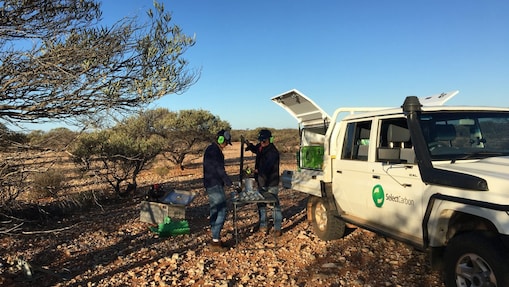
Carbon farming in Australia
In 2020, Shell acquired Select Carbon, an environmental services company that specialises in developing and aggregating carbon farming projects.
Select Carbon work with landholders across Australia to develop projects that increase carbon sequestration in vegetation and soil to reduce net carbon emissions, while improving land management and helping landowners diversify their income streams to build a more resilient business. The projects cover over 9 million hectares.
The projects work with methodologies approved by the Clean Energy Regulator to help Australian farmers and landowners create Australian Carbon Credit Units (ACCUs) from land-based carbon projects.

Regenerating mangroves in Senegal
We have invested directly in the Sine-Saloum project in Senegal, where we are working with WeForest to regenerate about 3,800 hectares of mangroves as part of one of the world's largest mangrove restoration project. The mangroves will also provide a sustainable habitat for numerous bird and fish species and provide nesting places for sea turtles and other endangered species such as the Atlantic humpback dolphin and African manatee. In 2021, we undertook an environmental-DNA study of the ecosystem to help establish a biodiversity baseline. This will help us understand the current state of biodiversity and enable the monitoring if improvements in the future.
The project works with independent standards bodies to review and certify carbon credits generated from the project.
Ensuring projects make a difference
Shell often works through partners to design and implement NBS projects and we choose our partners carefully to ensure their ways of working with communities align with ours. We also provide support to partners if we identify gaps. The community aspects of NBS projects include stakeholder engagement, understanding potential community impacts and opportunities, and designing interventions such as benefit sharing programs.
We validate our partners’ approach to ensuring that free, prior and informed consent from property rights holders is properly carried out before project activities start. We also evaluate the project’s grievance mechanism to ensure that it is in line with the UN Guiding Principles on Business and Human Rights ‘access to remedy’ pillar, checking to see that issues that might come up can be resolved in a timely, fair, and transparent way. And we evaluate benefit sharing programs to make sure they respond to community needs in a fair, transparent and equitable way. We believe that each of these elements is critical to developing a sustainable and equitable NBS project.

To help deliver quality and integrity:
We select projects that are certified under credible and independent carbon credit standards.
We only use carbon credits in our offers to customers if they have been issued by projects that are certified under an approved standard. These include the Verified Carbon Standard, Gold Standard and the American Carbon Registry. We do this to ensure that the carbon credits are real and verifiable, and that issues such as permanence, additionality, and leakage have been adequately considered.
We aim to select projects that deliver wider benefits to the environment and local communities.
We aim for all our projects to meet or exceed the threshold established by the Climate, Community and Biodiversity Standards or equivalent where applicable.
We work with project developers that can maintain appropriate health, safety, security and social governance standards.
We expect the projects to have a net positive impact. Project developers we work with must ensure they employ the necessary standards and processes to mitigate against health, safety, security, and environment risks – including human rights violations – associated with their projects. We insist on this in our contracting, as well as through due diligence on project developers before we do business with them.
Our internal project screening review and management processes are audited by an independent third-party.
Each year, we engage a third-party auditor to verify the integrity of the processes we use for screening our nature-based projects. A copy of the latest assurance statement can be found here (PDF, 128 kB).
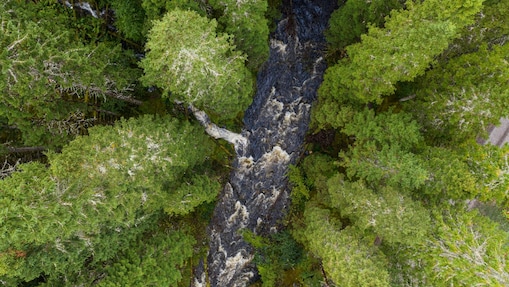
Ensuring high-quality nature-based carbon credits
This is a fast-growing sector and all participants must work to promote quality and build societal confidence in NBS as a viable, additional lever for helping reach net-zero emissions. Shell continues to work with others to do this, including NGOs, certification standards bodies, academics, and communities, and revise and update our approach to quality as we do so.
Read more about Shell's NBS policy positions
Stay informed with our latest insights
Discover how Shell is making an impact through low-carbon solutions and actionable insights to help drive progress in the energy transition.

Learn more about NBS
How does a carbon credit work?
How does a carbon credit work?
Carbon credits are generated by projects that remove, reduce, or avoid greenhouse gases.
Each tonne of CO2e removed, reduced, or avoided by a project generates one carbon credit. To ensure that the projects we work with are making a real and verifiable impact, Shell only selects projects certified under independent carbon credit standards.
Why is Shell making investments in nature-based solutions or buying carbon credits?
Why is Shell making investments in nature-based solutions or buying carbon credits?
Carbon credits can be retired by Shell to compensate for our emissions and to allow our customers to compensate their emissions in line with the mitigation hierarchy of avoid, reduce and compensate.
Shell buys carbon credits generated by projects that protect nature and restore the environment. Our Nature-Based Solutions business also invests directly in natural ecosystems to increase the supply of carbon credits and help meet demand from customers.
When it comes to the carbon credits we buy, we only select credits from projects that are certified under credible and independent carbon credit standards. These include the Verified Carbon Standard, Gold Standard and the American Carbon Registry. We do this to ensure that the carbon credits are real and verifiable, and that issues such as permanence, additionality, and leakage have been adequately considered.
Why does Shell use carbon credits?
Why does Shell use carbon credits?
We believe carbon credits are an important complement to emissions reductions. Not all technologies and energy services can be swapped out for non-emitting alternatives at the necessary pace. In some difficult to decarbonise sectors such as heavy industry, practical alternatives have yet to be developed.
For some businesses, avoiding and reducing emissions will not be enough to reach zero, or an emissions trajectory consistent with the Paris Agreement. Carbon credits can help close the gap and enable them to reach net-zero emissions.
How many carbon credits does Shell use?
How many carbon credits does Shell use?
Shell is one of the largest retirees of carbon credits globally, having retired over 57 million carbon credits between 2021 and 2025, of which around 89% were related to Shell’s net carbon intensity (NCI).
Each carbon credit reflects one tonne of CO₂ stored or avoided by the project.
Instead of carbon credits, why does Shell not invest more in renewables?
Instead of carbon credits, why does Shell not invest more in renewables?
We are absolutely clear that decarbonisation must start with avoiding and reducing emissions. Carbon credits are not a replacement for emissions reductions within Shell’s supply chains.
However, not all technologies and energy services can currently be swapped out for non-emitting alternatives at the necessary pace. In some sectors, practical alternatives have yet to be developed. Carbon credits can help compensate for emissions from those sectors right now.
You may also be interested in



Legal Disclaimer
Legal Disclaimer
The companies in which Shell plc directly and indirectly owns investments are separate legal entities. In this content “Shell”, “Shell Group” and “Group” are sometimes used for convenience to reference Shell plc and its subsidiaries in general. Likewise, the words “we”, “us” and “our” are also used to refer to Shell plc and its subsidiaries in general or to those who work for them. These terms are also used where no useful purpose is served by identifying the particular entity or entities. ‘‘Subsidiaries’’, “Shell subsidiaries” and “Shell companies” as used in this content refer to entities over which Shell plc either directly or indirectly has control. The terms “joint venture”, “joint operations”, “joint arrangements”, and “associates” may also be used to refer to a commercial arrangement in which Shell has a direct or indirect ownership interest with one or more parties. The term “Shell interest” is used for convenience to indicate the direct and/or indirect ownership interest held by Shell in an entity or unincorporated joint arrangement, after exclusion of all third-party interest.
Forward-Looking statements
This content contains forward-looking statements (within the meaning of the U.S. Private Securities Litigation Reform Act of 1995) concerning the financial condition, results of operations and businesses of Shell. All statements other than statements of historical fact are, or may be deemed to be, forward-looking statements. Forward-looking statements are statements of future expectations that are based on management’s current expectations and assumptions and involve known and unknown risks and uncertainties that could cause actual results, performance or events to differ materially from those expressed or implied in these statements. Forward-looking statements include, among other things, statements concerning the potential exposure of Shell to market risks and statements expressing management’s expectations, beliefs, estimates, forecasts, projections and assumptions. These forward-looking statements are identified by their use of terms and phrases such as “aim”; “ambition”; ‘‘anticipate’’; “aspire”, “aspiration”, ‘‘believe’’; “commit”; “commitment”; ‘‘could’’; “desire”; ‘‘estimate’’; ‘‘expect’’; ‘‘goals’’; ‘‘intend’’; ‘‘may’’; “milestones”; ‘‘objectives’’; ‘‘outlook’’; ‘‘plan’’; ‘‘probably’’; ‘‘project’’; ‘‘risks’’; “schedule”; ‘‘seek’’; ‘‘should’’; ‘‘target’’; “vision”; ‘‘will’’; “would” and similar terms and phrases. There are a number of factors that could affect the future operations of Shell and could cause those results to differ materially from those expressed in the forward-looking statements included in this content, including (without limitation): (a) price fluctuations in crude oil and natural gas; (b) changes in demand for Shell’s products; (c) currency fluctuations; (d) drilling and production results; (e) reserves estimates; (f) loss of market share and industry competition; (g) environmental and physical risks, including climate change; (h) risks associated with the identification of suitable potential acquisition properties and targets, and successful negotiation and completion of such transactions; (i) the risk of doing business in developing countries and countries subject to international sanctions; (j) legislative, judicial, fiscal and regulatory developments including tariffs and regulatory measures addressing climate change; (k) economic and financial market conditions in various countries and regions; (l) political risks, including the risks of expropriation and renegotiation of the terms of contracts with governmental entities, delays or advancements in the approval of projects and delays in the reimbursement for shared costs; (m) risks associated with the impact of pandemics, regional conflicts, such as the Russia-Ukraine war and the conflict in the Middle East, and a significant cyber security, data privacy or IT incident; (n) the pace of the energy transition; and (o) changes in trading conditions. No assurance is provided that future dividend payments will match or exceed previous dividend payments. All forward-looking statements contained in this content are expressly qualified in their entirety by the cautionary statements contained or referred to in this section. Readers should not place undue reliance on forward-looking statements. Additional risk factors that may affect future results are contained in Shell plc’s Form 20-F for the year ended December 31, 2025 (available at www.shell.com/investors/news-and-filings/sec-filings.html and www.sec.gov). These risk factors also expressly qualify all forward-looking statements contained in this content and should be considered by the reader. Each forward-looking statement speaks only as of the date of this content. Neither Shell plc nor any of its subsidiaries undertake any obligation to publicly update or revise any forward-looking statement as a result of new information, future events or other information. In light of these risks, results could differ materially from those stated, implied or inferred from the forward-looking statements contained in this content.
Shell’s net carbon intensity
Also, in this content we may refer to Shell’s “net carbon intensity” (NCI), which includes Shell’s carbon emissions from the production of our energy products, our suppliers’ carbon emissions in supplying energy for that production and our customers’ carbon emissions associated with their use of the energy products we sell. Shell’s NCI also includes the emissions associated with the production and use of energy products produced by others which Shell purchases for resale. Shell only controls its own emissions. The use of the terms Shell’s “net carbon intensity” or NCI is for convenience only and not intended to suggest these emissions are those of Shell plc or its subsidiaries.
Shell’s net-zero emissions target
Shell’s operating plan and outlook are forecasted for a three-year period and ten-year period, respectively, and are updated every year. They reflect the current economic environment and what we can reasonably expect to see over the next three and ten years. Accordingly, the outlook reflects our combined Scope 1 and 2 target, NCI target and our oil products ambition over the next ten years. However, Shell’s operating plan and outlook cannot reflect our 2050 net-zero emissions target, as this target is outside our planning period. Such future operating plans and outlooks could include changes to our portfolio, efficiency improvements and the use of carbon capture and storage and carbon credits. In the future, as society moves towards net-zero emissions, we expect Shell’s operating plans and outlooks to reflect this movement. However, if society is not net zero in 2050, as of today, there would be significant risk that Shell may not meet this target.
Forward-Looking non-GAAP measures
This content may contain certain forward-looking non-GAAP measures such as free cash flow and underlying operating expenses. We are unable to provide a reconciliation of these forward-looking non-GAAP measures to the most comparable GAAP financial measures because certain information needed to reconcile those non-GAAP measures to the most comparable GAAP financial measures is dependent on future events some of which are outside the control of Shell, such as oil and gas prices, interest rates and exchange rates. Moreover, estimating such GAAP measures with the required precision necessary to provide a meaningful reconciliation is extremely difficult and could not be accomplished without unreasonable effort. Non-GAAP measures in respect of future periods which cannot be reconciled to the most comparable GAAP financial measure are calculated in a manner which is consistent with the accounting policies applied in Shell plc’s consolidated financial statements.
The contents of websites referred to in this content do not form part of this content.
We may have used certain terms, such as resources, in this content that the United States Securities and Exchange Commission (SEC) strictly prohibits us from including in our filings with the SEC. Investors are urged to consider closely the disclosure in our Form 20-F, File No 1-32575, available on the SEC website www.sec.gov.