Direct Air Capture: from an intriguing idea to industrial-scale technology demonstration
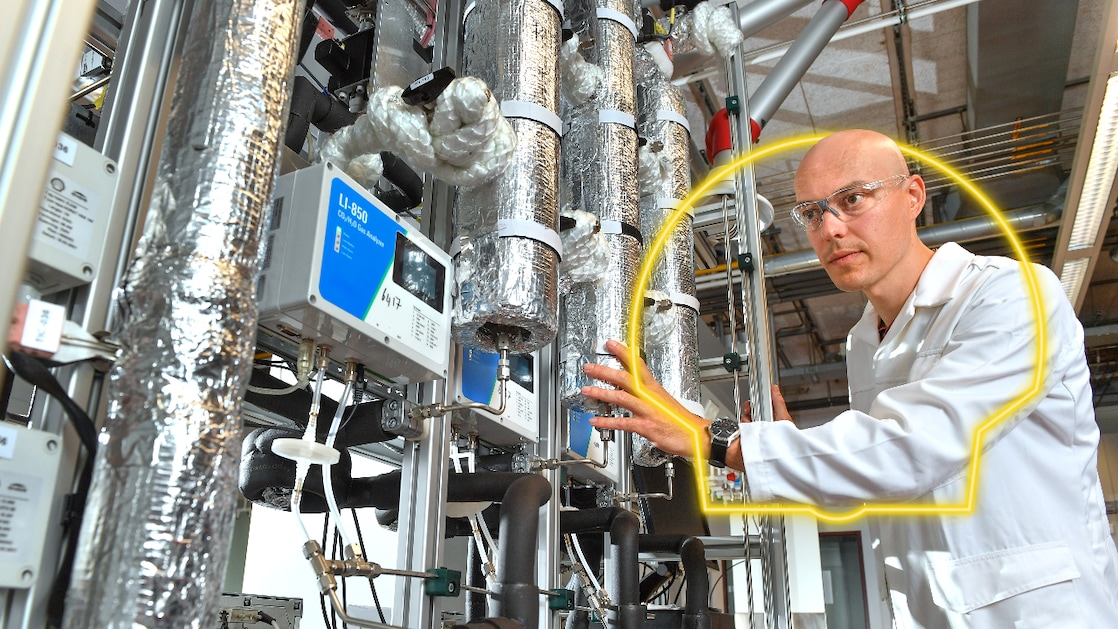
In another step towards developing technology to realise a net-zero emissions energy system, Shell took the decision to build a Direct Air Capture (DAC) demonstration unit at the Shell Technology Center Houston, in Texas, USA. With a targeted start-up in 2025, Shell aims to prove the technical viability of its solid sorbent technology, developed by a diverse team of scientists, engineers and technical experts spread across the globe.
More than a decade ago, the first academic studies appeared on the concept of capturing carbon dioxide (CO2) directly from air at scale. Today, the International Energy Agency (IEA) and the Intergovernmental Panel on Climate Change (IPCC) agree that DAC technology can play an important role in realising a net-zero emissions energy system, where the amount of CO2 in the atmosphere no longer increases, that is, the amount of CO2 is equivalent to the amount being removed.
At Shell, we are committed to delivering more value with less emissions and the development of DAC technology is one potential pathway to achieving this goal. DAC uses man-made equipment to remove CO2 from the air. Air from the atmosphere is first stripped of CO2. The CO2-depleted air is then released back into the atmosphere, while the captured CO2 could be permanently stored underground or reused as feedstock in, for instance, the production of e-chemicals or in e-fuels.
An example is synthetic kerosene, a type of Sustainable Aviation Fuel (SAF) made from CO2, water and renewable power. In 2021, in a world-first, a KLM Boeing 737 commercial passenger service flew from Amsterdam to Madrid, fuelled by 500 litres of certified synthetic kerosene, produced at Shell’s Energy Transition Campus Amsterdam (ETCA).
Read the transcript
Read the transcript
Title: VAYU July 2023
Duration: 2:24 minutes
Description:
An explanation of Direct Air Capture of carbon dioxide solutions that Shell is developing.
VAYU July 2023 Transcript
[Background music plays]
Soft, bright music.
[Animated sequence]
Shots of sunny mountain views from up in the clouds. Dark mountain outlines contrast with a bright blue sky and white clouds. This is followed by close-ups of a grey grid. Zooming out shows that it is a rectangular device. Its front side is all grid. It is floating in the sky and small particles are sucked into the grid. The front of the device shows an increasing number of CO2.
Voice-over
DAC stands for Direct Air Capture of carbon dioxide, a technology that removes CO2 from the air using a sorbent. At Shell, we're developing an efficient, robust and low-cost DAC process that is commercially deployable. The low-temperature sorbent is the heart of the direct air capture system. The active material that drives the process is deposited onto a honeycomb with thousands of air channels designed to achieve high air-to-sorbent contact. Atmospheric air is fed through the sorbent, trapping CO2 molecules and ejecting CO2-depleted air back into the atmosphere.
[Text displays]
Shell Direct Air Capture Process
100% CO2 loading
Visual transition
The rectangular device, the sorbent, is placed on a rail, and another device of similar size slides in front of it. This second device has an input and an output hole. Several more sorbents appear on the rail next to the first sorbent.
Voice-over
Steam acts as a heat carrier to release CO2 from the sorbent, as well as as a stripping gas to flush the CO2 out of the system. The movable regenerator delivers steam to the sorbent and collects steam and CO2 in the next step. A row of sorbent blocks can be regenerated by the translation of the steam regenerator. The CO2 regeneration takes five to ten minutes, while all other sorbent blocks continue to capture more CO2.
[Text displays]
Steam In – Steam & CO2Out
Visual transition
An animation of a sea container appears. The short ends look just like a regular shipping container. The long side, however, contains rows of rails with sorbents. A structure is formed with several such containers. They are connected by stairways. Rays of light flow underneath and into the container modules. On top of the container structure are two smaller, yellow containers with fans on top.
Voice-over
The gantry and sorbent array is housed in a modified 40-foot shipping container. The DAC module contains a pair of stacks where each stack is three containers wide and two containers tall. A third row of containers at the bottom is important for airflow dynamics. The total height of each stack is three containers and is positioned on a cement foundation. The outside columns of the stack are the active part of the module that contain the sorbent and regenerator units. Each stack houses a fan container at the top, designed to allow for uniform airflow throughout the system.
Visual transition
The DAC system appears in a sunny, green open field, and then in a gray mountain landscape with rain. Then, several DAC systems are connected to each other in a bigger space. Next to them are a solar farm and a wind farm.
Voice-over
The modular DAC system is designed to be utilised in any environment. For a commercial project, the system is replicated and deployed at scale. A renewable electricity source powers the system such that the direct air capture process results in a negative CO2 footprint.
[Text displays]
Steam, Electricity, Steam + CO2
Wind farm
Solar farm
Direct Air Capture farm
[Background music plays]
A short, bright piano tune.
[Animated sequence]
The Shell logo, a yellow, red-rimmed shell, appears on a white background.
Shell’s disciplined approach to innovation, which focuses on concepts that have a high potential to be successfully deployed in the energy transition, shaped the search for DAC technologies over the past decade. Initially, we established External Technology Collaborations, mainly through academic partnerships, to gain a deeper understanding of the opportunity. In 2020, researchers consolidated our learnings and embarked on a dedicated technology programme committed to developing efficient, robust, and low-cost solid sorbents, and a matching process design. In parallel, the team investigated DAC demonstration opportunities and scale-up strategies. In July 2023, the decision was made to start the construction and operation of an industrial-scale demonstration unit that will test the technical viability and performance of Shell’s DAC process. The plant will be placed at the Shell Technology Center Houston (STCH), in Texas, USA, with a targeted start-up in 2025. The demonstration will provide the data required to prove the deployability of Shell’s DAC technology at scale, which would enable the capture of larger amounts of CO2.
During the DAC research & development journey, Shell’s technology experts concluded that solid sorbent technology had a high potential to become a techno-economically competitive solution. With over a century of technological innovation in the energy industry, our strong set of technical capabilities enabled fast, in-house DAC technology development. Supported by distinguished people and an extensive global network of resources and partners, Shell is well positioned to tackle future challenges that could arise during demonstration.
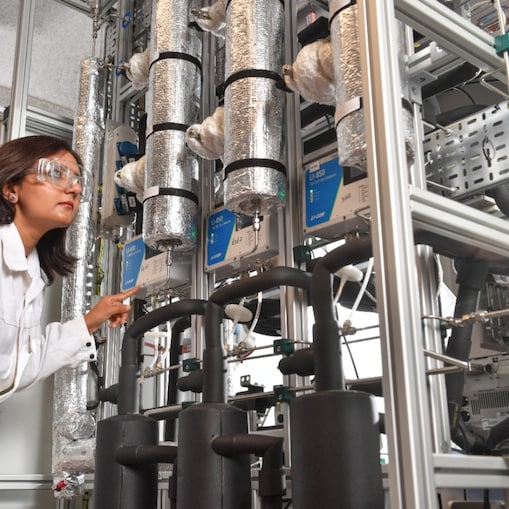
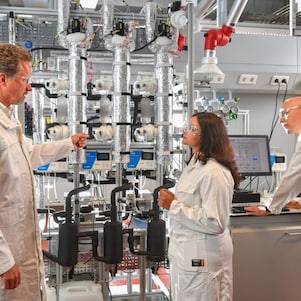
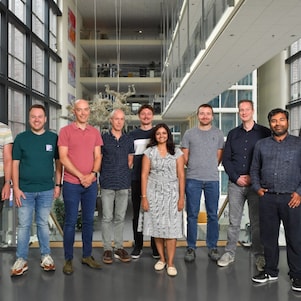
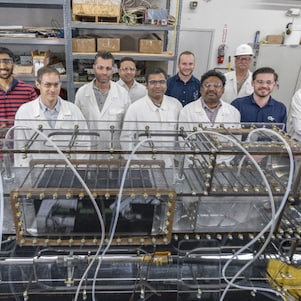
Originally initiated with a handful of scientists, engineers, and technology experts at the ETCA, in the Netherlands, Shell’s DAC programme currently spans four of Shell’s main tech hubs, including the Shell Technology Centre Bangalore (STC-B), in India; STCH, in Texas; and Shell TechWorks, in Boston, USA. “We have a diverse team of more than 50 individuals around the world, with various scientific and technical backgrounds, who are working tirelessly to make Shell’s DAC technology a feasible pathway” says Roland Spronk, Business Opportunity Manager for DAC Technology Development at Shell. “Our global footprint and the unwavering support from our people have been instrumental in reaching the decision to build the demonstration unit.”

Yuri Sebregts, Shell’s Chief Technology Officer“To make DAC technology a reality, we are committed to finding solutions that are not only technically feasible but also, ultimately, cost-competitive. We look forward to seeing this technology mature and continuing to collaborate with others to understand its future potential.”
Legal Disclaimer
Legal Disclaimer
Cautionary Note
The companies in which Shell plc directly and indirectly owns investments are separate legal entities. In this web page “Shell”, “Shell Group” and “Group” are sometimes used for convenience where references are made to Shell plc and its subsidiaries in general. Likewise, the words “we”, “us” and “our” are also used to refer to Shell plc and its subsidiaries in general or to those who work for them. These terms are also used where no useful purpose is served by identifying the particular entity or entities. ‘‘Subsidiaries’’, “Shell subsidiaries” and “Shell companies” as used in this web page refer to entities over which Shell plc either directly or indirectly has control. Entities and unincorporated arrangements over which Shell has joint control are generally referred to as “joint ventures” and “joint operations”, respectively. “Joint ventures” and “joint operations” are collectively referred to as “joint arrangements”. Entities over which Shell has significant influence but neither control nor joint control are referred to as “associates”. The term “Shell interest” is used for convenience to indicate the direct and/or indirect ownership interest held by Shell in an entity or unincorporated joint arrangement, after exclusion of all third-party interest.
Forward-Looking Statements
This web page contains forward-looking statements (within the meaning of the U.S. Private Securities Litigation Reform Act of 1995) concerning the financial condition, results of operations and businesses of Shell. All statements other than statements of historical fact are, or may be deemed to be, forward-looking statements. Forward-looking statements are statements of future expectations that are based on management’s current expectations and assumptions and involve known and unknown risks and uncertainties that could cause actual results, performance or events to differ materially from those expressed or implied in these statements. Forward-looking statements include, among other things, statements concerning the potential exposure of Shell to market risks and statements expressing management’s expectations, beliefs, estimates, forecasts, projections and assumptions. These forward-looking statements are identified by their use of terms and phrases such as “aim”, “ambition”, ‘‘anticipate’’, ‘‘believe’’, ‘‘could’’, ‘‘estimate’’, ‘‘expect’’, ‘‘goals’’, ‘‘intend’’, ‘‘may’’, “milestones”, ‘‘objectives’’, ‘‘outlook’’, ‘‘plan’’, ‘‘probably’’, ‘‘project’’, ‘‘risks’’, “schedule”, ‘‘seek’’, ‘‘should’’, ‘‘target’’, ‘‘will’’ and similar terms and phrases. There are a number of factors that could affect the future operations of Shell and could cause those results to differ materially from those expressed in the forward-looking statements included in this web page, including (without limitation): (a) price fluctuations in crude oil and natural gas; (b) changes in demand for Shell’s products; (c) currency fluctuations; (d) drilling and production results; (e) reserves estimates; (f) loss of market share and industry competition; (g) environmental and physical risks; (h) risks associated with the identification of suitable potential acquisition properties and targets, and successful negotiation and completion of such transactions; (i) the risk of doing business in developing countries and countries subject to international sanctions; (j) legislative, judicial, fiscal and regulatory developments including regulatory measures addressing climate change; (k) economic and financial market conditions in various countries and regions; (l) political risks, including the risks of expropriation and renegotiation of the terms of contracts with governmental entities, delays or advancements in the approval of projects and delays in the reimbursement for shared costs; (m) risks associated with the impact of pandemics, such as the COVID-19 (coronavirus) outbreak, regional conflicts, such as Russia’s invasion of Ukraine, and a significant cybersecurity breach; and (n) changes in trading conditions. No assurance is provided that future dividend payments will match or exceed previous dividend payments. All forward-looking statements contained in this web page are expressly qualified in their entirety by the cautionary statements contained or referred to in this section. Readers should not place undue reliance on forward-looking statements. Additional risk factors that may affect future results are contained in Shell plc’s Form 20-F for the year ended December 31, 2022 (available at www.shell.com/investors/news-and-filings/sec-filings.html and www.sec.gov). These risk factors also expressly qualify all forward-looking statements contained in this web page and should be considered by the reader. Each forward-looking statement speaks only as of the date of this web page, 29 February 2024. Neither Shell plc nor any of its subsidiaries undertake any obligation to publicly update or revise any forward-looking statement as a result of new information, future events or other information. In light of these risks, results could differ materially from those stated, implied or inferred from the forward-looking statements contained in this web page.
Shell’s net carbon intensity
Also, in this web page we may refer to Shell’s “Net Carbon Intensity”, which includes Shell’s carbon emissions from the production of our energy products, our suppliers’ carbon emissions in supplying energy for that production and our customers’ carbon emissions associated with their use of the energy products we sell. Shell only controls its own emissions. The use of the term Shell’s “Net Carbon Intensity” is for convenience only and not intended to suggest these emissions are those of Shell plc or its subsidiaries.
Shell’s net-Zero Emissions Target
Shell’s operating plan, outlook and budgets are forecasted for a ten-year period and are updated every year. They reflect the current economic environment and what we can reasonably expect to see over the next ten years. Accordingly, they reflect our Scope 1, Scope 2 and Net Carbon Intensity (NCI) targets over the next ten years. However, Shell’s operating plans cannot reflect our 2050 net-zero emissions target and 2035 NCI target, as these targets are currently outside our planning period. In the future, as society moves towards net-zero emissions, we expect Shell’s operating plans to reflect this movement. However, if society is not net zero in 2050, as of today, there would be significant risk that Shell may not meet this target.
Shell expects to publish its 2024 Energy Transition Strategy on March 14, 2024, which will include an update on Shell’s energy transition strategy and set out Shell’s climate targets and ambitions for the future.
Forward Looking Non-GAAP measures
This web page may contain certain forward-looking non-GAAP measures such as cash capital expenditure and divestments. We are unable to provide a reconciliation of these forward-looking Non-GAAP measures to the most comparable GAAP financial measures because certain information needed to reconcile those Non-GAAP measures to the most comparable GAAP financial measures is dependent on future events some of which are outside the control of Shell, such as oil and gas prices, interest rates and exchange rates. Moreover, estimating such GAAP measures with the required precision necessary to provide a meaningful reconciliation is extremely difficult and could not be accomplished without unreasonable effort. Non-GAAP measures in respect of future periods which cannot be reconciled to the most comparable GAAP financial measure are calculated in a manner which is consistent with the accounting policies applied in Shell plc’s consolidated financial statements.
The contents of websites referred to in this web page do not form part of this web page.
We may have used certain terms, such as resources, in this web page that the United States Securities and Exchange Commission (SEC) strictly prohibits us from including in our filings with the SEC. Investors are urged to consider closely the disclosure in our Form 20-F, File No 1-32575, available on the SEC website www.sec.gov.