Building a better energy tomorrow starts with the solutions of today
The world faces an urgent challenge: to balance the interconnected needs of ensuring energy security of supply, achieving environmental sustainability and providing energy equity (energy that is affordable and accessible to all).
Known as the ‘energy trilemma’1, this challenge impacts all of us and increasingly shapes the strategies of governments, policymakers and business leaders. All three elements of the trilemma are made more difficult by the ongoing backdrop of geopolitical uncertainty and trade tensions. So how can businesses navigate these, sometimes conflicting, objectives?
Connected thinking
Crucially, the energy trilemma will not be resolved by tackling the three elements in isolation from each other. A cleaner, fairer, safer energy future relies on addressing all three elements of the trilemma at once because they are deeply interconnected and any imbalance can lead to significant risks, energy shortages, price volatility, increased carbon emissions, social inequality, and geopolitical instability. This is a complex balancing act – one that is felt deeply by companies in Europe’s industrial sector, many of which are intensive consumers of energy.
Progress therefore requires not just long-term energy technologies, such as carbon capture and storage (CCS) and hydrogen, but also commercially viable solutions that are ready-to-go. The good news is there are various options already available, especially for businesses able to take a sophisticated portfolio approach, which leverages multiple energy solutions at the same time.
Max Mannino, General Manager B2B Europe at Shell Energy“At a time of uncertainty, businesses may be looking to decarbonise, manage their exposure and protect themselves against supply shocks. We see significant benefits for business customers across Europe who choose to work with a provider with the scale to offer a wide range of energy solutions that customers and companies can tailor to their unique operational needs.”
Power portfolio
Our extensive power portfolio enables us to structure supply agreements, virtual/financial and physical Power Purchase Agreements (PPAs), and renewable power certificate contracts. In addition, we work with investors and battery park owners to optimise their battery storage assets.
Renewable power in focus
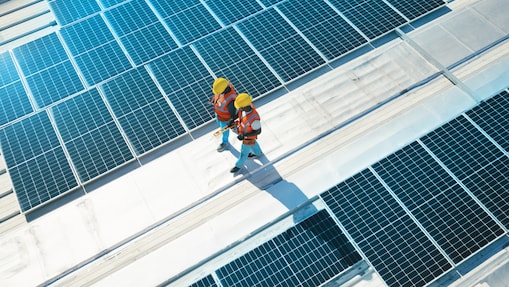
Core to this portfolio approach, are renewable technologies, such as solar and wind, which can help to decarbonise power supply. Corporate Power Purchase Agreements (cPPAs) offer a useful way for businesses to secure long-term access to renewable energy and support their decarbonisation goals. These act as a long-term contract (usually between 5 and 15 years) between a renewable generator and a customer. During that time, the power purchaser buys energy at a pre-negotiated price, reducing their exposure to market volatility. In addition, cPPAs include renewable energy certificates to certify the origin of their renewable energy and report reduced carbon emissions.
For some businesses, there is the option to generate their own renewable power onsite. By producing electricity directly at their own facilities, typically through solar PV systems, battery energy storage and microgrid integration, industrial businesses in Europe can optimise their consumption to help reduce costs, boost resilience and mitigate exposure to grid disruptions.
Flexible solutions for success
The possibilities do not end there. Flexible energy solutions such as battery energy storage systems (BESS) can help businesses better manage exposure and extract more value from intermittent renewable power generation, especially those with long-term solar cPPAs. By charging up when energy prices are low and then selling power when they are high, businesses can also hedge against market fluctuations and better balance energy demand with real-time supply.
As Mitch Gorman, General Manager Power Trading at Shell Energy Europe, explains: “Combining solar and wind cPPAs with battery flexibility can help industrial businesses purchase renewable energy in the right volumes to align to their consumption needs. These renewable sources and flexible assets can either be physically co-located or bundled virtually by companies like Shell to offer the profile required. It also adds flexibility to meet changing customer requirements over time.”
A recent collaboration between Shell and Google highlights how cross sector partnerships can advance this opportunity. Under the agreement, Shell Energy will use its advanced trading capabilities and access to battery energy storage systems to deliver reliable, renewable energy to meet Google’s varying power needs at any hour of the day, even during times when renewable power generation in the UK is low. This initiative is also part of Shell’s broader efforts to scale flexible assets across the grid, building on strategic investments in companies like Next Kraftwerke and EGO Srl.
Similarly, virtual power plants (VPPs) and small generation aggregation (SGA) are effective tools for further optimising and managing renewable portfolios. VPPs are designed to aggregate multiple smaller, distributed energy resources to function collectively as a single, large power plant. This allows them to offer the same services as traditional power plants – including grid support, trading in energy markets and increased integration of renewables – but without the need to invest in a single large operating facility.
As both become more common, energy-intensive industries could extract more value from their on-site generation assets by participating in aggregation schemes. In this way, industrial businesses can use flexible generation to better manage energy demand and reduce risk through on-site optimisation or virtual solutions, such as VPP participation.
The vital role of gas
The future energy mix is not all about renewable power. By having a partner capable of taking a more holistic view of the solutions available, industrial businesses can begin turning their diverse energy needs into a strategic opportunity.
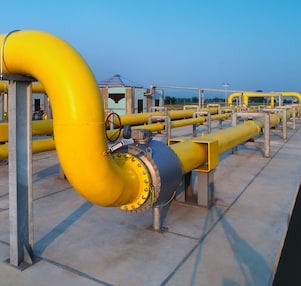
This diversity includes natural gas and liquefied natural gas (LNG), which industry leaders such as Shell believe will play a foundational role in the energy transition, displacing coal and supporting the deployment of renewables. Natural gas currently meets a quarter of the world’s power needs and plays an important role in reducing carbon emissions from coal and other oil-based fuels.2 LNGis both easier to store and transport than natural gas, is an effective way to supplement gas supply in countries without secure domestic or pipeline imports.3 Biomethane, which is made from organic waste like food scraps, manure and agricultural residues, can be used in the same way. With the same infrastructure as natural gas, it can save up to 202% of greenhouse gas (GHG) emissions compared to EU fossil fuels.4
As Jemima Jowett-Ive, Head of RNG Origination at Shell Energy Europe & Africa, explains:
Jemima Jowett-Ive, Head of RNG Origination at Shell Energy Europe & Africa“Biomethane is a key renewable fuel capable of underpinning the energy transition and may even qualify businesses for government subsidies, tax credits and green gas certificates.⁵ That’s why Shell has invested $2 billion to become one of the largest biomethane producers in Europe.”⁶
Whatever the combination of solutions, a diverse gas supply portfolio, including equity production, long-term contracts and robust infrastructure, provides industrial operators with the energy security needed to maintain consistent production, avoid costly downtime and adapt to market fluctuations with confidence. This, in partnership with natural gas trading, can make it easier for businesses to capitalise on competitive, transparent market prices and manage risk.
The trading opportunity
As energy markets become more complex and dynamic, European industrial businesses can explore ways to take a more strategic view of their energy portfolio. Through the strategic buying and selling of energy through their provider – including environmental products and renewable electricity and certificates – businesses can secure supply, manage exposure to energy market volatility and optimise their energy portfolios by looking at them as a collective asset as opposed to a set of individual energy solutions.
Being able to trade across multiple markets and energy types 24 hours a day also diversifies the range of sources and regions customers are able to access, reducing dependency on specific locations and suppliers. This helps directly address energy security while mitigating localised disruption.
The market insights and access gained from establishing more extensive trading networks may also make it easier for firms to manage risk, strengthen supply reliability and align energy procurement with their decarbonisation objectives.
Beyond today
As we have seen, there are many elements to consider in managing exposure to the core challenges of the energy trilemma – and many potential solutions too. No single government, business or individual can solve these challenges alone. Nor, for that matter, can they control the ongoing complexity and uncertainty surrounding today’s global energy markets.
However, what business leaders can do is choose how they respond. For the European industrial sector, this means taking steps now to diversify their energy supply, drawing on a combination of renewables, traditional fuels, battery storage and trading solutions to boost resilience, increase security and broaden access to cleaner energy. Above all, it means finding a partner with the size, access and expertise to help them unlock those solutions at scale.

Ask our Shell Energy Europe team
We welcome all your enquiries and feedback on our products and services. Once your request is received, we will try to reply as soon as possible. To make it easier for us to assist you, please kindly provide as much information as possible when completing this form.
Disclaimers
1 World Energy Council, “Evolving the World Energy Trilemma to develop more resilient energy systems.” April 2024.
2 Shell, “Natural gas portfolio.” N.D.
3 Shell, “Liquified natural gas (LNG).” N.D.
4 European Commission Joint Research Center, Solid and gaseous bioenergy pathways: input values and GHG emissions (PDF).” 2017
5 UK Government. “Green Gas Support Scheme (GGSS)” June 2024
6 Shell. “Delivering more with biomethane.” N.D.