Technology to tackle the energy challenge
You can be a part of the future of energy. At Shell, you power your progress as we tackle the energy challenge together.
We recognise the important role that technology plays in our Power Your Progress strategy, delivering the energy needed for today whilst focusing on the energy transition. Built on more than 125 years of technological innovation, our company’s future performance depends on the successful development and deployment of new technologies and new products.
With over 3.300 highly-skilled people in our Shell Technology community, we invest over $1bln yearly in Research & Development (R&D) for evolving new solutions that support energy activities, both in digital and physical technologies – or a combination of both – and in a variety of scientific fields such as chemistry, physics, engineering, electronics, and computational sciences. Through this organisation, we’re able to leverage human ingenuity not only to unlock more, cleaner energy on an ongoing basis, but also to deliver more value through enhanced processes that strengthens our performance in already operating assets.
Our technologies are crucial to growing a competitive Renewables and Energy Solutions portfolio. Therefore, we research and develop disruptors that can radically unleash new business opportunities in the future. In 2022, our R&D expenditure on projects that contributed to decarbonisation was around 41% of our total spend.
But we also work on technology improvements that keep our products, services, and business operations competitive in the short and in the mid-terms. Together with the relevant lines of businesses, we work to determine the content, scope, and budget of these developments, ensuring a constant alignment of our technology portfolio with Shell’s strategic ambitions and project’s funnel to deliver the energy challenge of today, whilst preparing for energy transtion.
Read the Transcript
Read the Transcript
Title: Shell Moonshot Hydro V6
Duration: 4:19 minutes
Description:
Several Shell employees talk about developments in the hydrogen supply chain at Shell.
Shell Moonshot Hydro Transcript
[Background music plays]
Bright music
[Animated sequence]
The Shell logo, a yellow red-rimmed shell, appears before a white background. This is followed by several shots of the earth, people working in a lab and office, trees, seas and animals.
Voice-over
Advancing cutting-edge technology plays a critical role in addressing the urgent challenge of climate change. It requires action from a variety of stakeholders, including companies, governments and individuals. Committed to Shell's Climate Targets, we launched four of our largest research and development programmes in the areas we foresee as key for energy transition technology.
[Animated sequence]
Animated drawings of four topics form a circle on a yellow background. The hydrogen value chain is portrayed as a drop of water, windmills are used to portray electrification of demand, grassy hills for nature-based solutions and a plastic water bottle in front of a sunflower for circular and bio-products.
[Text displays]
Climate Targets
Hydrogen Value Chain
Electrification of Demand
Nature-Based Solutions
Circular and Bio-Products
Visual transition
Shots of a Shell gas station where you can tank hydrogen and people working in sea transport environments and in offices and labs.
Voice-over
Hydrogen can be a game changer in the future energy mix. To develop hydrogen into an accessible, affordable, low-carbon energy solution, we are bringing together a vast global network of tech resources and partners with the ambitious goal of developing large-scale commercial projects.
[Text displays]
Hydrogen Value Chain
Shell Hydrogen
POWERED BY HYDROGEN
Visual transition
Catherine Smura, a woman with half-long, straight, brown hair, is seated at the Energy Transition Campus Amsterdam.
[Text displays]
Energy Transition Campus Amsterdam - ETCA
[Title]
Technology Liaison Manager Hydrogen
Catherine Smura
To be ready for the adoption and growth of hydrogen as a renewable energy carrier, we need to close gaps with respect to the feasibility and the affordability of certain underlying technologies at scale. And that's exactly why we have the technology programme.
Visual transition
At the Shell Technology Centre Bangalore, Harshvardhan Choudhari speaks directly into the camera. He has short, dark hair, a beard and black-rimmed glasses.
[Text displays]
Shell Technology Centre Bangalore
[Title]
Process Technologist Renewable Hydrogen
Harshvardhan Choudhari
We work with the different teams within Shell and our technology partners to develop solutions for hydrogen generation, primarily via electrolysis. And our aim is to deliver an economically viable solution in the longer term for commercial deployment in line with Shell's energy transition strategy.
[Text displays]
Megawatt-scale Solide Oxide Electrolyser (SOEC) development with Ceres Power.
Decarbonising via low-cost, high-efficiency hydrogen.
Visual transition
Jeff Martin, a man with short, dark blonde hair, is at the ETCA. When he speaks into the camera, he uses hand gestures. There are also shots of him at work, wearing a white safety helmet.
[Title]
SME Renewable Hydrogen Production
Jeff Martin
So being able to test and demonstrate these technologies is very important. For example, here at the Energy Transition Campus, Amsterdam, we have a renewable hydrogen supply chain demonstration where we have solar panels on the roof connected to an electrolyser and to two customers. With this, we can really understand the intermittencies and the dynamics at play, whether that's the day and night cycle of the renewable power generation, the continuous demand of an industrial customer, or the very discontinuous intermittent demand of a mobility customer. And how we can tie these together into one fully functioning system. And so a key driver for Shell is when we scale these technologies: how can we improve energy efficiency? How can we reduce the space? How can we reduce the cost? And overall, how can we get the technology ready for gigawatt-scale deployment to support society's growth?
Catherine Smura
As the demand for hydrogen grows, so does the need to be able to move it from countries that have abundant cost- effective renewables for its production to those that don't, but do have a high energy demand. And by liquifying hydrogen and moving it, we have an effective means to do that.
[Text displays]
World’s first liquified hydrogen carrier development with key players.
Shell Technology Center Houston
Visual transition
Large, white, metal structures at sea. Then, Neeharika Rajagiri at Shell Technology Center Houston. She has long, black hair.
[Title]
Liquid Hydrogen Supply Chain Engineer
Neeharika Rajagiri
That brings us to the need of developing technology in the area of liquid hydrogen storage, where we formed a consortium between Shell, NASA, CB&I, GenH2 and the University of Houston.
[Text displays]
Demonstrating feasibility and cost-competitiveness of large scale liquified hydrogen tanks.
Visual transition
Charudatta Patil is a man with glasses and short, dark, curly hair.
[Title]
Renewable Hydrogen Manager
Charudatta Patil
We are piloting and demonstrating the technologies. Both low-temperature electrolysis and the novel technologies such as SOECs and AEM in different parts of the world. In our technology centres in Amsterdam and Bangalore but also with vendors in California and Northern China.
[Text displays]
Holland Hydrogen 1 will be Europe’s largest renewable hydrogen plant: producing 60,000 kg per day.
Visual transition
Aerial shots of the future Holland Hydrogen 1. It’s an area by the sea that now looks sandy. An animation draws a circular building on the lot.
Jeff Martin
So in realising a project like Holland Hydrogen 1, there are many novelties to deal with from the very small scale through to the macro scale.
Neeharika Rajagiri
I feel privileged to work as part of such a complex and impactful programme. There are not many places where you get this opportunity to work with leading, pioneering engineering organisations and top-notch universities to solve one common problem together towards a cleaner energy future.
Catherine Smura
It feels good and definitely exciting to be working on something today that will have an impact on the energy future.
Visual transition
One by one, Catherine, Charudatta, Neeharika and Harshvardhan appear smiling into the camera.
[Animated sequence]
The Shell logo, a yellow red-rimmed shell, appears before a white background.
[Background music plays]
A short, bright piano tune.
[Text displays]
Shell.com/tech
Read the Transcript
Read the Transcript
Title: Shell EoD
Duration: 4:51 minutes
Description:
Shell employees talk about the energy transition programmes they are working on.
Shell EoD Transcript
[Background music plays]
Exciting music.
[Animated sequence]
People working in an industrial lab. Then an aerial shot of a forest on which a yellow shell shape appears. Inside the shape in white and yellow letters, text appears.
[Text displays]
Climate targets.
Key areas for energy transition technology.
Voice-over
We have launched some of our largest R&D programmes in support of Shell's climate targets, covering some of the key areas for energy transition technology.
[Text displays]
Industrial electrification.
[Animated sequence]
An animation of several ways of industrial electrification, using solar panels, windmills, and water. This is followed by shots of solar farms, factories, a forest, and a shell employee on a boat.
Voice-over
Electrifying industrial processes is one of them. Using renewable electricity to produce consumer goods, steel or cement is paramount to achieving net zero emissions. We are developing end-to-end solutions for the electrification of Shell's own assets and those of our customers.
[shot change]
Panthita Boonchou appears on the screen. She is a woman with dark, straight hair that reaches her shoulders. She is wearing a white shirt and a green jacket. She sits before a calm brown and green background at the Energy Transition Campus Amsterdam.
[Title]
Electro-Thermal Programme Lead.
Panthita Boonchou
Electrification of processes that require heat is an important step of the decarbonization efforts for the industry.
It is estimated that today with the fuel consumed in industry today as energy about half can be replaced with electricity.
[Text displays]
Energy Transition Campus Amsterdam (ETCA).
About half can be replaced with electricity. Source: McKinsey.
[shot change]
Jeremy Pearce is at the Shell Technology Center Houston. He is a man with short, dark hair with a shaved face. He is wearing a light pink shirt with a black suit jacket.
[Title]
Electrification of Demand Programme Manager
Jeremy Pearce
The Electrification of Demand Technology programme is one of Shell's largest technology programmes. It has the ambition to decarbonise industrial sites through electrification. The industry represents about 30% of total global energy demand and about 90% of that is currently supplied through fossil fuels. The EOD technology programme is looking at new innovative solutions to help decarbonise our assets by using low-carbon renewable power.
[Text displays]
Industry = 30% of global energy demand. 90% of that is supplied through fossil fuels. Source: International Energy Agency.
[shot change]
A moving shot through a terrain with white shipping containers lined up. On the shipping containers it says ‘ENERGY STORAGE’ in blue letters. Elizabeth Endler is at the Shell Technology Center Houston. She is a woman with half-long brown hair, and she is wearing glasses with a fine, brown rim. She is wearing black clothes.
[Title]
Chief Scientist Energy Storage and Integration
Elizabeth Endler
Energy storage is a central part of the energy transition. And we need energy storage to be able to fill in the gaps when the wind is not blowing, and the sun is not shining. This becomes increasingly important as more wind and solar come online and fuel-fired generation is retired. In fact, over 475 gigawatts of battery energy storage is predicted to come online by 2030.
[Text displays]
475+ gigawatts of battery energy storage is predicted to come online by 2030.
[shot change]
A wide shot of the Energy Transition Campus Amsterdam, a set of modern red-brick buildings. Ilsa Maria Sillekens appears. She is a woman with light brown, straight hair that reaches her shoulders. She is wearing a bright pink shirt with long sleeves; glasses with a slim, silver rim; golden hoop earring; a golden chain necklace. She is speaking directly into the camera at first. Then, she appears in meetings with other people. This is followed by shots of data in numbers on a screen.
[Title]
Digital Electricity Management Programme Lead
Ilsa Maria Sillekens
In the changing energy system with renewable energy sources and all its intermittency, we have an opportunity to operate our industrial processes to react to that intermittency. Digital technologies really play a crucial role in enabling this, so they enable real-time decision making, and control at the site as well as integrate with, for example, the trading services to optimally integrate the entire power value chain.
[Text displays]
optimally integrate the entire power value chain.
[shot change]
Panthita Boonchou is speaking straight into the camera. Shots of her are alternated with shots of an industrial lab where Panthita is at work with colleagues in white coats.
Panthita Boonchou
Collaboration is extremely important for innovation. For example, we're working closely together with Dow to develop electrification technologies for e-cracking process. E-cracking furnaces with renewable power has the potential to reduce scope 1 emission by about 90% compared to conventional furnaces. So at the Nanterre lubricants plant in Paris the site is installing an e-boiler at the end of this year. The subsequent system will allow the site to operate on both fuel and electricity to generate steam.
[shot change]
Elizabeth Endler reappears. This is followed by an aerial shot of the lubricants plant in Zhuhai, China. It is a light, industrial terrain set in a green landscape. White smoke comes from one of the chimneys.
Elizabeth Endler
We also are demonstrating thermal energy storage at our lubricants plant in Zhuhai, China.
[shot change]
Mark Klokkenburg appears speaking directly into the camera. He is a man with short, dark hair and he is wearing a light shirt.
[Title]
Electro-Chemical Programme Lead.
Mark Klokkenburg
So we're closely working together with the National Renewable Energy Lab who have a lot of expertise in this field. By closely working together, we can really tackle some of these challenges.
[Text displays]
we can really tackle some of these challenges.
[shot change]
Andrea Watson appears at the National Renewable Energy Laboratory in Denver. It consists of buildings amidst a hilly landscape. Andrea has long, straight, dark hair. She is wearing a beige suit jacket.
[Title]
Office Director-Innovation, Partnering & Outreach
Andrea Watson
At NREL, partnerships are fundamental to our ability to address challenges that are of global significance. We work together with Shell in a number of strategically aligned areas including green hydrogen, e-mobility, offshore wind and carbon utilisation. In addition, through their knowledge, infrastructure, and capital, they are an ideal partner for us to make a bigger impact.
[shot change]
People working on several industrial sites.
Jeremy Pearce
In industry, we're looking to decarbonise really difficult, hard-to-abate sectors such as cement, steel, chemicals, refining, and they need solutions that can offer abundant, low-carbon energy. Renewable power offers that opportunity, but it comes with challenges.
[shot change]
Ilsa Maria walking down a hallway with Panthita Boonchou and other colleagues. Then they are in a conference room.
Ilsa Maria Sillekens
So our team is really a multidisciplinary team. So we really have a diverse blend of experts ranging from data scientists to product leads and from electrical engineers to utility and process engineers. But we also work very collaboratively across our technology hubs in Bangalore, Amsterdam, and Houston.
[Text displays]
Shell Tenchnology Center Bangalore.
Energy Transition Campus Amsterdam.
Shell Technology Center Houston.
[shot change]
Elizabeth Endler speaks directly into the camera.
Jeremy Pearce
For me, as an engineer, working on problems at this scale, with this level of impact, that’s a lot of times just a really key thing. Because you want to know that what you do has impact.
[shot change]
Ilsa Maria Sillekens discusses things with colleagues in a conference room. Then she speaks directly into the camera.
Ilsa Maria Sillekens
It's so much new stuff we need to learn every day. And working on the big puzzle that is going to connect all these technological elements whilst being able to potentially deliver such an impact is really exciting. So, I think it's a dream come true.
[shot change]
Panthita Boonchou speaks directly into the camera.
Panthita Boonchou Sillekens
It's really exciting. It’s an interesting challenge and it's fun to be working with talented people who are passionate about the space.
[shot change]
Quick shots of Elizabeth Endler, Jeremy Pearce, Mark Klokkenburg, Panthita Boonchou, and Ilsa Maria Sillekens. They are all smiling.
[Background music plays]
A short, bright piano tune.
[Animated sequence]
The Shell logo, a yellow, red-rimmed shell, appears before a white background. The appearance of the shell creates a ripple effect in the white background. ‘shell.com/tech’ is depicted in dark grey letters underneath the Shell logo.
Welcome to our three capability areas: Research & Development, Process Engineering and Technology Commercialisation. Learn more what we do at Shell and in which area you can grow as we work on the energy transition together.
Research & Development
Read more
Read more
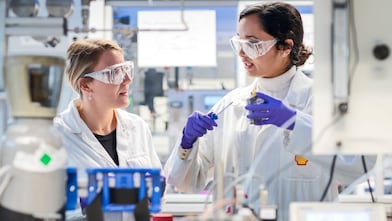
Technology is critical for Shell’s success. We research & develop technologies that make the company competitive today and help build the future of energy, including R&D around the areas of industrial electrification, hydrogen value chain & bio-circular feedstock, for example.
Read more: www.shell.com/net-zero-tech
Powering Progress is a powerful framework for the whole organisation to rally around clearly defined and measurable strategic objectives for generating shareholder value, achieving net-zero emissions, powering lives and respecting nature. All of these may require technology solutions. Our ability to develop cutting-edge technology and innovate at scale is often the differentiator that sets Shell apart from the competition.
Innovation is the DNA of this skill pool. What we do is exciting and makes a difference. This function is responsible for developing deep scientific and technical expertise, novel process development, product development and experimentation capability. We blend this with commerciality, collaboration and programme management.
Learn more about the role technology plays at Shell: https://www.shell.com/tech
Process Engineering
Read more
Read more
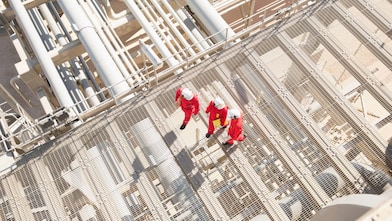
The Process Engineering function is at the heart of Shell’s business, and it directly contributes to Shell’s strategy.
Process Engineering plays a key role in the rapid development, commercialisation, and implementation of differentiated technology in existing lines of businesses and in the energy transition. Process safety is a the core of everything we do, and our versatile professionals are involved from the identification of best available technologies, to front-end development of projects and technology deployment in assets.
Technology Commercialisation
Read more
Read more
Technology Commercialisation is the process of transforming innovative ideas into solutions that deliver real-world customer value.
It includes identifying customer needs and market opportunities, and scaling up, de-risking and deploying the technology. It also involves ongoing optimisation in response to operational feedback. At Shell Catalysts & Technologies, we are commercialising technologies to to help decarbonise Shell’s own assets and those of our customers. The technologies are in areas such as: renewable fuels, carbon capture and storage, hydrogen and they require collaboration from experts in areas as diverse as, for example, surface science, high-throughput experimentation, process engineering, digitalisation, data analytics or technical services.
The world’s pursuit of a net-zero future requires creative, game-changing solutions. That is why we continue to innovate, to push boundaries and to commercialise the new technologies that can transform the energy landscape. In 2023, we took the decision to build a direct air capture demonstration unit at the Shell Technology Center Houston, USA, to prove the technical viability of our solid sorbent technology, which removes carbon dioxide from the air.
Learn more: https://catalysts.shell.com/en/memm
What is a Catalyst Video
Decarbonisation Value Chain Video
Disclaimer
Disclaimer
Cautionary Note
The companies in which Shell plc directly and indirectly owns investments are separate legal entities. In this content “Shell”, “Shell Group” and “Group” are sometimes used for convenience to reference Shell plc and its subsidiaries in general. Likewise, the words “we”, “us” and “our” are also used to refer to Shell plc and its subsidiaries in general or to those who work for them. These terms are also used where no useful purpose is served by identifying the particular entity or entities. ‘‘Subsidiaries’’, “Shell subsidiaries” and “Shell companies” as used in this content refer to entities over which Shell plc either directly or indirectly has control. The terms “joint venture”, “joint operations”, “joint arrangements”, and “associates” may also be used to refer to a commercial arrangement in which Shell has a direct or indirect ownership interest with one or more parties. The term “Shell interest” is used for convenience to indicate the direct and/or indirect ownership interest held by Shell in an entity or unincorporated joint arrangement, after exclusion of all third-party interest.
Forward-Looking statements
This content contains forward-looking statements (within the meaning of the U.S. Private Securities Litigation Reform Act of 1995) concerning the financial condition, results of operations and businesses of Shell. All statements other than statements of historical fact are, or may be deemed to be, forward-looking statements. Forward-looking statements are statements of future expectations that are based on management’s current expectations and assumptions, including (without limitation) those concerning Shell’s strategy and operating plans, macroeconomic conditions, future energy demand, supply and product mix, commodity prices, demand for Shell’s products, production results and reserve estimates, development, execution and management of projects, energy transition and climate change, management of safety and environmental risks, costs, cash capital expenditures, technology advancements, legislative, judicial, fiscal and regulatory developments, regional conflicts and trading conditions, and involve known and unknown risks and uncertainties that could cause actual results, performance or events to differ materially from those expressed or implied in these statements. Forward-looking statements include, among other things, statements concerning the potential exposure of Shell to market risks and statements expressing management’s expectations, beliefs, estimates, forecasts, projections and assumptions. These forward-looking statements are identified by their use of terms and phrases such as “aim”; “ambition”; ‘‘anticipate’’; “aspire”, “aspiration”, ‘‘believe’’; “commit”; “commitment”; ‘‘could’’; “desire”; ‘‘estimate’’; ‘‘expect’’; ‘‘goals’’; ‘‘intend’’; ‘‘may’’; “milestones”; ‘‘objectives’’; ‘‘outlook’’; ‘‘plan’’; ‘‘probably’’; ‘‘project’’; ‘‘risks’’; “schedule”; ‘‘seek’’; ‘‘should’’; ‘‘target’’; “vision”; ‘‘will’’; “would” and similar terms and phrases. There are a number of factors that could affect the future operations of Shell and could cause those results to differ materially from those expressed in the forward-looking statements included in this content, including (without limitation): (a) price fluctuations in crude oil and natural gas; (b) changes in demand for Shell’s products; (c) currency fluctuations; (d) drilling and production results; (e) reserves estimates; (f) loss of market share and industry competition; (g) environmental and physical risks, including climate change; (h) risks associated with the identification of suitable potential acquisition properties and targets, and successful negotiation and completion of such transactions; (i) the risk of doing business in developing countries and countries subject to international sanctions; (j) legislative, judicial, fiscal and regulatory developments including tariffs and regulatory measures addressing climate change; (k) economic and financial market conditions in various countries and regions; (l) political risks, including the risks of expropriation and renegotiation of the terms of contracts with governmental entities, delays or advancements in the approval of projects and delays in the reimbursement for shared costs; (m) risks associated with the impact of pandemics, regional conflicts, such as the Russia-Ukraine war and the conflict in the Middle East, and a significant cyber security, data privacy or IT incident; (n) the pace of the energy transition; and (o) changes in trading conditions. No assurance is provided that future dividend payments will match or exceed previous dividend payments. All forward-looking statements contained in this content are expressly qualified in their entirety by the cautionary statements contained or referred to in this section. Readers should not place undue reliance on forward-looking statements. Additional risk factors that may affect future results are contained in Shell plc’s Form 20-F for the year ended December 31, 2025 (available at www.shell.com/investors/news-and-filings/sec-filings.html and www.sec.gov). These risk factors also expressly qualify all forward-looking statements contained in this content and should be considered by the reader. Each forward-looking statement speaks only as of the date of the publication mentioned in this website. Neither Shell plc nor any of its subsidiaries undertake any obligation to publicly update or revise any forward-looking statement as a result of new information, future events or other information. In light of these risks, results could differ materially from those stated, implied or inferred from the forward-looking statements contained in this content.
Shell’s net carbon intensity and net-zero emissions target
In this content we may refer to Shell’s “net carbon intensity” (NCI), which includes Shell’s carbon emissions from the production of our energy products, our suppliers’ carbon emissions in supplying energy for that production and our customers’ carbon emissions associated with their use of the energy products we sell. Shell’s NCI also includes the emissions associated with the production and use of energy products produced by others which Shell purchases for resale. Shell only controls its own emissions. The use of the terms Shell’s “net carbon intensity” or NCI is for convenience only and not intended to suggest these emissions are those of Shell plc or its subsidiaries.
Shell’s operating plan and outlook are forecasted for a three-year period and ten-year period, respectively, and are updated every year. They reflect the current economic environment and what we can reasonably expect to see over the next three and ten years. Accordingly, the outlook reflects our combined Scope 1 and 2 target, NCI target and our oil products ambition over the next ten years. However, Shell’s operating plan and outlook cannot reflect our 2050 net-zero emissions target, as this target is outside our planning period. Such future operating plans and outlooks could include changes to our portfolio, efficiency improvements and the use of carbon capture and storage and carbon credits. In the future, as society moves towards net-zero emissions, we expect Shell’s operating plans and outlooks to reflect this movement. However, if society is not net zero in 2050, as of today, there would be significant risk that Shell may not meet this target.
The information provided above regarding Shell’s NCI and net zero emissions target are not intended, nor should they be construed as introducing, suggesting or making any claim, target or representation thereof other than what is included in the content.
Forward-Looking non-GAAP measures
This content may contain certain forward-looking non-GAAP measures such as free cash flow and underlying operating expenses. We are unable to provide a reconciliation of these forward-looking non-GAAP measures to the most comparable GAAP financial measures because certain information needed to reconcile those non-GAAP measures to the most comparable GAAP financial measures is dependent on future events some of which are outside the control of Shell, such as oil and gas prices, interest rates and exchange rates. Moreover, estimating such GAAP measures with the required precision necessary to provide a meaningful reconciliation is extremely difficult and could not be accomplished without unreasonable effort. Non-GAAP measures in respect of future periods which cannot be reconciled to the most comparable GAAP financial measure are calculated in a manner which is consistent with the accounting policies applied in Shell plc’s consolidated financial statements. These forward-looking non-GAAP measures are provided to assist readers in understanding management’s use and expectations of such measures and may not be appropriate for other purposes.
The contents of websites referred to in this content do not form part of this content.
We may have used certain terms, such as resources, in this content that the United States Securities and Exchange Commission (SEC) strictly prohibits us from including in our filings with the SEC. Investors are urged to consider closely the disclosure in our Form 20-F, File No 1-32575, available on the SEC website www.sec.gov.

Discover Technology Jobs at Shell
Explore opportunities to take your career to the next level.
About working at Shell
Discover what makes working at Shell unique, learn more about our values-led culture, meet some of our people working in the organisation and get valuable tips to guide your application.
Find out more about working at Shell