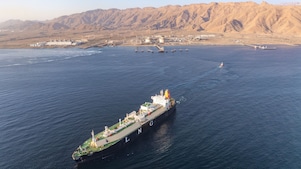
Cruise ship sailing north

LNG, bio-LNG and synthetic LNG

Explore Shell’s low carbon solutions in the shipping industry.

Thumbnail of the From Compliance to Competitive Edge: The Case for the Methane Pathway report

From Compliance to Competitive Edge: The Case for the Methane Pathway

Discover how the methane pathway can offer a compliant, scalable, and commercially viable route to net zero.

Download the insights study

Extensive LNG infrastructure across the globe

Shell operates the world’s largest LNG bunkering network, supplying LNG and bio-LNG to vessels at key locations along major international trade routes. This growing network is underpinned by Shell’s global LNG business, which includes a sizeable portfolio, extensive shipping and storage assets, and access to regasification plants.

Transcript

This map illustrates global LNG (liquefied natural gas) and bio-LNG bunkering locations, highlighting key maritime ports where ships can refuel with cleaner energy alternatives. Red diamonds represent ports offering LNG only, while blue circles indicate facilities that provide both LNG and renewable Bio-LNG. The specific locations are listed below:

US Gulf Coast (Calcasieu, Galveston, Freeport, Corpus Christi)

US East Coast (Savannah, Jacksonville, Canaveral, Everglades, Miami)

Caribbean (Freeport Bahamas, Jamaica)

Europe – South (La Spezia, Marseilles, Barcelona, Málaga, Algeciras, Gibraltar, Tenerife)

Europe – North (Skaw, Gothenburg, Bremerhaven, Eemshaven, Flushing, Antwerp, Southampton, Portland, Rotterdam, Zeebrugge)

Asia (Singapore)

13

countries

14 + 4NB*

bunker vessels

29

locations

3000+

operations
Aerial view of Hapag Lloyd container ship

Powering ships with waste? | Discover bio-LNG with Hapag Lloyd

Could waste coffee and cow manure power ships? It already does.
In the journey to decarbonise the shipping sector, every lever counts. And bio-LNG is a promising renewable fuel, supporting shipping companies like Hapag-Lloyd to lower emissions.

Watch on YouTube

The methane pathway

Liquefied methane fuels presents a viable route for decarbonising shipping. Start with LNG and blend bio-LNG (and the future synthetic LNG) in any proportion to meet voluntary or regulatory carbon intensity targets.

All methane based fuels can be supplied through the existing and expanding LNG infrastructure and gas grid, enabling a scalable approach to decarbonisation.

LNG

  • Emits up to 23% fewer GHG emissions compared to very low sulphur fuel oil, depending on engine type2
  • Outperforms conventional marine fuels in air pollutants, with near-zero sulphur oxides and reduced particulate matter. Nitrogen oxide emissions can be reduced or be similar depending on engine type3
  • Abundant supply and available along key trading routes

Bio-LNG

  • Significant volumes of biomethane are produced from biomass feedstock such as agricultural and food waste, manure
  • Can be efficiently supplied through mass balanced within the gas grid where regulation permits
  • Shell is a leading producer and trader of biomethane in Europe, and has access to a sizeable biomethane portfolio in the US.

Synthetic LNG

  • Made from renewable hydrogen and CO2
  • Production is being developed 

LNG: Handling this supercool fuel with Eastern Pacific Shipping

Transcript

Title: LNG: Handling this supercool fuel with Easten Pacific Shipping

Duration: 4:30 minutes

Description:

This dynamic explainer follows science journalist Dallas Campbell as he explores how Eastern Pacific Shipping and Shell are advancing LNG-powered dual-fuel vessels, highlighting the fuel’s emissions benefits, safety considerations and growing role in decarbonising global shipping.

MARINE LNG SINGAPORE MASTER subtitled Transcript

[Background music plays]

A brief synthesised fanfare leads into a rhythmic, funk-infused groove punctuated by stylised record scratches.

Explainer Segment - Dallas Campbell

Dallas Campbell

Global shipping needs to decarbonise. And with the International Maritime Organisation’s regulations to get shipping…

Video footage

In a close-up shot, Dallas Campbell addresses the camera while wearing a yellow hard hat and a red Shell-branded uniform. He stands confidently on a dock, with the imposing blue hull of a ship towering behind him and industrial equipment dispersed in the background.

Dallas Campbell

To net zero by 2050, the momentum to use lower-emission fuels has never been greater.

[Text displays]

Net zero by 2050

Video footage

From a high aerial perspective, the camera captures a massive cargo ship gliding through calm waters, its deck neatly stacked with colourful containers and a frothy wake trailing behind. Bold text fades in at the upper right of the frame. The shot moves closer as the ship passes below, then shifts to a higher vantage point, with the vessel positioned in the lower frame, moving upward.

Dallas Campbell

I'm Dallas Campbell, science reporter and journalist.

Video and split-screen footage

From a front-facing angle, the camera captures Dallas on a vessel’s bridge in his Shell-branded overalls, binoculars raised to his eyes, with monitors and shelves of binders in the background. The scene shifts left as the screen splits with a bold white line. In the right frame, medium front-facing footage shows Dallas wearing a VR headset and holding two controllers in a brightly lit indoor space, fluorescent lights overhead and a cluttered bulletin board behind him. The split-screen then wipes upward to exit at the top, transitioning to low-angle tracking footage of Dallas in a black leather jacket walking through a sleek, modern corridor framed by horizontal beams overhead and vertical grids interrupted by glass windows. Profile-view footage follows, showing Dallas riding an electric scooter across a Parisian bridge, dressed in a blue shirt, brown pants, and helmet, against the Seine River dotted with boats, the Eiffel Tower rising behind him and classic Parisian buildings lining the horizon. Next, medium front-view footage presents Dallas in a yellow safety vest inspecting a glass of clear liquid, with a large truck featuring a bold grille and industrial structures looming behind. Finally, from a low foreground angle aboard a smaller vessel, Dallas, clad in a red jacket, stands near ropes and railings, turning his gaze toward the towering Queen Mary 2 cruise ship dominating the calm, softly lit waters.

Dallas Campbell

Vessels powered by liquefied natural gas, like this…

Video footage

In a close-up shot, Dallas Campbell addresses the camera while walking along the dock. He wears the red Shell-branded jacket, yellow hard hat, and full safety gear that is his consistent attire throughout the remainder of the video. Behind him, the ship’s imposing blue hull looms large as he turns and gestures toward it with both arms outstretched.

Dallas Campbell

Are actually becoming more common around the globe.

Split-screen footage

With the frame split into three sections, divided by white and yellow lines, the left panel shows low side-angle footage of the hull of EPS’s LNG dual-fuel PCTC (Pure Car and Truck Carrier), Lake Herman, where the phrase “Powered by LNG: A Cleaner Alternative” is painted prominently along the upper section, accompanied by a green-and-blue leaf logo. In the upper right panel, aerial footage captures the vessel’s deck with a circular helipad bordered by green and yellow safety zones. The lower right panel presents a bird’s-eye view of the massive vehicle carrier docked at port, its broad deck stretching toward the distant Singapore city skyline beneath a cloudy sky. The left panel then transitions to aerial time-lapse footage of a vehicle carrier with helipad docked beside a port’s vehicle storage yard, where hundreds of neatly arranged cars form a geometric grid and a steady stream of vehicles moves in and out.

Dallas Campbell

And with good reason.

Video footage

A bird’s-eye view captures Lake Herman docked in a bustling port, its sleek hull accented in blue and yellow and marked with a stylized plug logo, while distant ships drift across shimmering waters beneath a partly cloudy sky bathed in soft sunlight.

Dallas Campbell

LNG produces fewer greenhouse gas emissions, as well as lower nitrogen oxide and sulphur oxide emissions, compared to fuel oil.

[Text displays]

2nd Life Cycle GHG Emission Study on the Use of LNG on Marine Fuel by Sphera

GHG NOx Sox

Split-screen footage

The scene transitions to split-screen footage divided into three sections by white and yellow lines. In the left panel, a high aerial angle captures a massive LNG bunker cutting through deep blue waters, its dark hull and red underbelly trailing a white wake, with intricate deck piping and distant ships beneath a pale, hazy sky. A bold yellow downward-pointing arrow appears over the sea to the right of the ship, pulsating as successive text appears above it. The top right panel shows high-angle footage of a cargo ship’s upper deck and superstructure, smoke rising from the funnel, stacked containers in the foreground, and a bridge with a hazy coastline of mountains and city buildings in the background, with centred text displayed in the upper portion. The bottom right panel features high-angle footage of a massive cargo ship ploughing through open ocean, its stacked containers forming a multicoloured grid, smoke billowing from the smokestack, and the wake fanning out beneath a hazy sky.

Dallas Campbell

These ships can also use bio-LNG and, in the future, e-LNG to achieve even lower emissions, charting a path to net zero. But there is a catch.

Video footage

A panning bird’s-eye view captures EPS’s Mount Tourmaline, a red and blue bulk carrier with large LNG tanks on deck, floating on calm seas as distant ships dot the horizon beneath a clear sky. Aerial footage captures a smaller LNG bunker alongside a massive EPS tanker, whose twin white tanks display “Powered by LNG,” as the two vessels conduct a mid-sea refuelling operation. In time-lapse footage over open water, we see the red and blue EPS bulk carrier aligning alongside a vessel with a white topside.

Dallas Campbell

It has to be kept really, really cold, minus 162°C. And that raises all kinds of concerns about the practicalities of storing it and handling it safely.

[Text displays]

-162°C

Video footage and animated sequence

Low-angle close-up footage captures Dallas walking along the dock in front of the towering blue-hulled vessel, speaking directly to camera, as an animated thermometer graphic appears at frame-left, its blue mercury dropping while the temperature above the bulb counts down to -162°C. The graphic then contracts and fades out as Dallas continues speaking.

[Background music plays]

A subdued, oscillating synth tone alternates largely between two notes in a steady pattern, creating a low-level sense of suspense beneath the scene.

[Text displays]

Singapore

Video footage

A wide, tranquil view of the sea reveals dozens of cargo ships and tankers scattered across golden-hued waters beneath a partly cloudy sky, as bold white text pops into the centre of the upper frame.

Dallas Campbell

But here in Singapore, the world's largest bunkering port…

Video footage

A wide aerial view reveals the sprawling Port of Singapore along the ocean’s edge, with multicoloured rows of shipping containers, towering cranes, and PSA Singapore’s refuelling stations in the foreground, while the city skyline rises in the distance. High-angle time-lapse footage captures the port’s constant activity, as yellow cranes lift containers amid weaving trucks, all set against a backdrop of modern skyscrapers beyond the industrial sprawl. Additional high-angle time-lapse footage highlights the scale of the port complex, where rows of colourful containers stretch across the docks, flanked by cargo ships and cranes, with distant buildings and greenery lining the horizon beyond the shimmering expanse of water.

Dallas Campbell

Demand for LNG has quadrupled between 2023 to 2024…

[Text displays]

Source: Maritime and Port Authority of Singapore

Video footage

Once again, aerial footage, followed by a sweeping bird’s-eye pan, captures a smaller LNG bunker vessel positioned alongside a massive LNG-powered Eastern Pacific Shipping tanker in open ocean waters. In a separate scene, point-of-view footage from the upper deck of a vessel, overlooking a network of pipelines and platforms, shows a red and blue LNG-powered bulk carrier in profile as it slowly pulls away. Source text remains visible in the upper left of the frame throughout this sequence.

Dallas Campbell

Suggesting these concerns are being resolved with more ship crew gaining experience.

Video footage

Point-of-view footage from multiple angles within the bridge captures a high-ranking officer at the controls, accompanied by uniformed crew members observing as the red and blue LNG-powered bulk carrier sails across the open ocean, visible through the expansive bridge windows.

Dallas Campbell

And that’s reinforcing LNG as a safe, practical option to decarbonise.

Video footage

Close-up footage captures a crew member’s gloved hand gradually opening a valve. A bird’s-eye view reveals the red and blue bulk carrier prominently in the foreground, with the bunkering tanker positioned slightly aft on the port side, framed to the left.

Dallas Campbell

Eastern Pacific Shipping, EPS, is just one of those fleets helping to drive adoption.

Video footage

Tight aerial footage shows EPS’s vehicle carrier, Lake Herman, in calm waters beside an LNG bunkering vessel distinguished by its green deck. This transitions to an extreme wide-angle shot, where Lake Herman appears in full profile, gliding across the rippling surface and filling the frame. A high aerial view then reveals an LNG-powered EPS tanker set against the serene backdrop of the port and coastline.

Interview with Nishudhan Ravi

[Title]

EPS Gas & Projects Operations Manager

Nishudhan Ravi

LNG has been in the industry for almost two decades. It has been transported by LNG carriers.

[Text displays]

Nishudhan Ravi EPS Gas & Projects Operations Manager

Video footage

A medium close-up captures Nishudhan Ravi speaking directly to camera, dressed in a crisp white uniform featuring the Eastern Pacific Shipping logo. He stands on a vessel’s bridge, with softly blurred equipment and windows in the background. A text box in the lower left corner identifies his name and role.

Nishudhan Ravi

It has a very good safety record.

Video footage

From a high aerial angle, the scene shows a massive yellow LNG carrier with spherical deck tanks cutting through calm, sunlit ocean waters, leaving a gentle wake behind, while distant ships dot the horizon beneath a partly cloudy sky.

Nishudhan Ravi

We have similar safety systems on board our dual-fuel vessels, so we don't see any concern about it.

Split-screen footage

The scene transitions to split-screen footage divided into three sections by white and yellow lines. In the top left panel, two crew members in red protective uniforms and yellow helmets carefully handle a large white LNG bunkering hose support frame aboard a vessel, preparing for the bunkering process. The bottom left panel features a high-angle close-up of a crew member’s blue-gloved hands turning a blue valve wheel connected to a large white pipe. The right panel presents a wide shot of two crew members in full safety gear, including harnesses, as they carefully manoeuvre thick suspended hoses along the upper metal structures of the vessel.

Nishudhan Ravi

Our people are confident with it.

Video footage

From a slightly elevated wide angle, time-lapse footage shows an LNG bunker vessel on the right swinging its crane arm, with suspended hoses, toward an LNG-powered bulk carrier on the left. The transfer operation unfolds beneath a pale sky, framed by distant port infrastructure. A wide shot encompassing both sea and sky reveals the two vessels in profile as they carry out the bunkering operation.

Explainer Segment - Dallas Campbell

[Background music plays]

The music shifts into a subtly more animated synth piece, with keyboard tones rising and falling rhythmically across a broader melodic range.

Dallas Campbell

LNG must be kept really cold in order for it to maintain its liquid form.

Video footage

The scene shifts dramatically to a profile view of the previously mentioned high-ranking officer at the bridge controls, flanked by uniformed crew members observing his actions. This is followed by close-up footage of large white pipes and numerous valves aboard a vessel, with two crew members in full safety gear working in the background. A low-angle close-up then highlights a massive valve as the crew engages with it. The sequence continues with a low-angle close-up of Dallas walking along the ship’s open deck while speaking to camera, framed by crisp blue skies and industrial railings.

Dallas Campbell

So onboard, the engineers are trained to maintain optimum fuel temperature and tank pressure, all of which can be remotely managed from the control room.

Video footage

Wide-angle footage captures two crew members standing attentively at a control panel in the ship’s control room, where glowing screens, labelled gauges and clipped documents line the console, with yellow hard hats and communication gear resting nearby. A close-up then shows a hand holding a two-way radio, gesturing toward a complex schematic that fills the frame. Medium-angle footage follows, showing three crew members in red protective uniforms continuing bunkering preparations between the two vessels, whose decks appear side by side, as they work together to pull a suspended hose down toward the bunkering hose support frame. Finally, a close-up of a screen in the control room reveals a bird’s-eye view of the crew standing beside the connected hoses as the vessel refuels.

Dallas Campbell

If it starts to warm up, then it begins to evaporate. Now ships actually manage this by capturing the boil-off gas…

Video footage

Dallas appears once again in a low-angle close-up, walking along the ship’s open deck and speaking directly to camera, framed by clear blue skies. This is followed by a close-up of a computer screen displaying a detailed Wärtsilä fuel system schematic, with color-coded vertical lines and labelled tanks presenting real-time temperatures, pressures, and flow rates, each data point precisely arranged to reflect the active bunker mode and manifold operations.

Dallas Campbell

In order to use it as fuel again. It’s a really clever way to avoid energy wastage.

Split-screen footage

The scene transitions to split-screen footage divided into two sections by white and yellow lines, with both the upper and lower panels showing aerial views of an LNG-powered bulk carrier on the open ocean.

Dallas Campbell

For Chief Engineer, Volodymyr, the process of handling LNG safely has now become routine. He trained on EPS’s very first LNG-powered ship.

Video footage

Low-angle close-up footage captures Volodymyr Nyezhelsky and a colleague, both in red Eastern Pacific Shipping–branded uniforms, engaged in discussion inside the vessel’s control room, with Volodymyr in the foreground. Intercut are profile shots of him gesturing with a two-way radio toward the screens ahead.

Interview with Volodymyr Nyezhelsky

[Title]

EPS LNG vessel Chief Engineer

Volodymyr Nyezhelsky

Since the first vessel delivered by EPS in 2020, for me, it was the future, actually, from the beginning.

[Text displays]

Volodymyr Nyezhelsky EPS LNG vessel Chief Engineer

Video footage

Close-ups capture Volodymyr speaking to the off-screen interviewer, set against the backdrop of the control room. A text box in the lower left corner briefly displays his name and role.

Volodymyr Nyezhelsky

Now I know how to deal with all the machinery. Everything is manageable.

Video footage

A low-angle panoramic shot captures Eastern Pacific Shipping’s Mount Tai bulk carrier navigating calm waters beneath a cloudy sky, with smaller ships scattered along the distant horizon. Profile footage then shows Volodymyr working alongside a colleague in the control room, before returning to a close-up of him speaking to the off-screen interviewer.

Volodymyr Nyezhelsky

Going forward, I was promoted on the dual-fuel vessel to Chief Engineer position.

Video footage

Another close-up of a screen shows Volodymyr holding a two-way radio and gesturing toward a complex schematic filling the frame. Additional profile footage captures him and his colleague working together at a screen in the control room.

Volodymyr Nyezhelsky

And now I am Technical Superintendent in the office, and I am handling our fleet.

Video footage

A low-angle close-up shows Volodymyr speaking to an off-screen interviewer from inside the control room. This is followed by a bird’s-eye view of EPS’s Mount Tourmaline in calm port waters, its bow thrusters discharging water as it manoeuvres. Another bird’s-eye view then captures EPS’s LNG-powered Greenway cruising through a bustling industrial port.

Explainer Segment - Dallas Campbell

[Background music plays]

The music shifts to orchestral tones, with a low string instrument playing an oscillating pattern that follows the melody, before merging into an orchestral rendition of The Sound of Shell.

Dallas Campbell

Volodymyr now helps engineers new to handling LNG, building up a pool of skilled crew to service EPS’s expanding fleet.

Video footage

A series of shots from various angles captures EPS crew members operating the vessel’s control room systems. A panning side view of an LNG-powered vessel at sea follows, with emphasis on its LNG tanks. A bird’s-eye view then reveals an EPS tanker navigating shimmering waters in a busy port.

Interview with Nishudhan Ravi continued

Nishudhan Ravi

Every month, for the next three years, we are going to have one vessel each month delivered.

Video footage

Medium close-up of Nishudhan Ravi speaking to camera from the bridge. Time-lapse bird’s-eye footage follows, capturing a large vessel under construction in a busy shipyard, surrounded by cranes and scaffolding.

Nishudhan Ravi

And by three years, we will have about 100 dual-fuel vessels added in the fleet.

Video footage

A zooming wide shot captures multiple vessels undergoing work in dry dock. This is followed by a wide shot of workers on a hydraulic lift spray-painting a large vessel, and then another wide shot of an EPS tanker in dry dock, where workers suspended on a lift apply paint to the hull.

Explainer Segment - Dallas Campbell

Dallas Campbell

To support customers like EPS with LNG dual-fuel fleets…

Video footage

A low-angle close-up captures Dallas walking along the lower deck of a vessel, safety signage lining the wall behind him as he speaks directly to the camera. This transitions to another bird’s-eye view of EPS’s Mount Tourmaline in calm port waters, with numerous vessels scattered along the horizon.

Dallas Campbell

Shell has developed the largest LNG network in the world, with bunkering locations and vessels spread across the globe.

[Text displays]

As of 2025

[Animated sequence]

A luminous Earth spins into view, surrounded by the blackness of space, its curved surface revealing sunlit swaths of Africa, Europe, and the Americas, rimmed by a delicate blue halo of atmosphere and encircled by deep oceans. The sequence zooms in, centring on North and Central America, with pulsating yellow rings marking key locations beneath a soft cloud cover. The globe continues its rotation, smoothly centring on Europe, where additional yellow rings flash in a rhythmic sequence. Finally, the focus shifts to Southeast Asia, pausing over Malaysia, highlighted by a hovering yellow ring. Text remains visible in the upper-left corner throughout the sequence.

Dallas Campbell

This fuel availability is enabling EPS to adopt LNG across a range of vessels…

Video footage

A wide shot, spanning both sea and sky, once again frames the LNG bunker vessel and the LNG-powered bulk carrier in profile as the bunkering operation unfolds. The sequence cuts to medium footage of Dallas walking past a control panel crowded with gauges, switches and warning lights while addressing the camera.

Dallas Campbell

Everything from container ships, tankers and bulk carriers to cruise ships and pure car and truck carriers like this one.

Video footage

A front-facing view captures a massive container ship cutting through open waters, its towering stacks of multi-coloured cargo rising above a dark hull beneath a partly cloudy sky that stretches to the horizon. The sequence shifts to a high aerial shot, where an LNG bunker glides through deep blue seas, its dark hull trailing a white wake, with distant ships fading beneath a pale, hazy sky. A panoramic view follows, revealing a vast ocean where cargo ships and smaller boats crisscross beneath shifting clouds, while a lone vessel in the foreground carves a foamy wake. The perspective then lifts to a bird’s-eye view of a towering white cruise ship drifting across calm waters, framed by a coastal city nestled against hazy mountains under a lightly clouded sky. Finally, a high-angle shot of a bustling port shows the LNG-powered Lake Herman PCTC docked beside the bunker vessel FueLNG Venosa, with a smaller craft tucked alongside, as distant ships dot the horizon beneath a lingering haze.

Dallas Campbell

And with dual-fuel modern engines, there’s another benefit. They’re able to run on multiple fuels.

Split-screen footage

With the frame split into three sections, divided by white lines, the right panel features a row of teal-coloured, labelled electrical control panels lining the wall of a brightly lit control room, each fitted with switches, meters and digital displays. In the top left panel, a dense network of silver pipes, valves and structural supports weaves together, with teal metal stairs and railings providing access across multiple levels. The bottom left panel centres on a gleaming turbine, surrounded by insulated pipes, valves and precision components.

Interview with Nishudhan Ravi continued

Nishudhan Ravi

A dual fuel vessel offers the charterers or the owners the flexibility to use options…

Video footage

A panning bird’s-eye view captures the Lake Herman vehicle carrier resting dockside in port, its towering hull bordered by rows of parked vehicles and framed by Singapore’s distant high-rise skyline beneath a hazy sky.

Nishudhan Ravi

Like LNG, VLSFO, MGO and bio-fuels. In addition, we can get onboard bio-LNG, and for future, e-LNG.

[Text displays]

LNG VLSFO MGO Bio-fuels Bio-LNG e-LNG

Video footage

Time-lapse aerial footage captures the activity of a bustling shipping port, where a large cargo vessel is docked beside orderly stacks of colourful containers and towering cranes. In the adjacent waterway to the right, another cargo vessel speeds across the frame, while successive rows of text appear in its path.

Nishudhan Ravi

Alternative fuel has been part of the main decarbonisation journey for EPS. LNG forms a main pillar in it.

Video footage

A wide low-angle shot captures a massive cargo ship docked beneath towering cranes at a busy port, framed by stacks of freight and industrial structures on the horizon, while a red buoy floats in the calm foreground waters beneath a lightly clouded sky. The scene cuts to a medium close-up of Nishudhan Ravi speaking to camera from the bridge.

Nishudhan Ravi

In the last two years, we were able to achieve our emission targets well ahead of time.

Video footage

From above, a high-angle view presents the red-and-blue bulk carrier filling the foreground against a wash of pale sea and sky, before the camera pivots to a high side view of the same tableau.

Nishudhan Ravi

LNG is here today, and it will help us lower the emissions…

Video footage

A medium close-up shows Nishudhan Ravi speaking directly to camera from the bridge, with navigation equipment and windows framing the background.

Nishudhan Ravi

And be more responsible environmentally.

Split-screen footage

The scene transitions to a split-screen layout, divided into three sections by white and yellow lines. Each panel features drone footage from varying heights, capturing the Lake Herman PCTC docked beside orderly rows of parked vehicles. The vessel is flanked by the bunker ship FueLNG Venosa and a tug nestled alongside, while the top left panel also reveals ships scattered across the distant horizon.

[Animated sequence]

The scene transitions out of frame in the shape of a contracting Pecten, giving way to a white background.

[Audio]

Brand mnemonic played on keys.

[Text displays]

Find out more on shell.com/marine/LNG

©Shell International Limited 2025

[Animated sequence]

The small iconic red and yellow Pecten transitions in to display at frame-centre against a white background, with text displaying below it and along the lower part of the frame.

Methane emissions

Methane (CH4) is the primary component of LNG. To deliver the full GHG benefits of LNG, methane emissions must be minimised.

Reducing upstream methane emissions

Virtually eliminating methane emissions from our operations by 2030 is a priority for Shell.

Methane abatement innovations on ships

This is the unburned natural gas that is not fully combusted in ship engines. Shell is collaborating with industry to develop and deploy innovative methane abatement technologies on ships.

You may also be interested in

Memberships

Sea-LNG

Together with the industry-leading companies we promote our commitment to LNG as a cleaner marine fuel for shipping.

Visit the Sea-LNG website

SGMF

Along with more than 150 industry players, we are advocating for net-zero emissions solutions for marine transport. LNG fuel pathway is the most viable today and tomorrow.

Visit the SGMF website

Getting to Zero

We are a part of the Getting to Zero Coalition - a powerful alliance of more than 150 companies within the maritime, energy, infrastructure, and finance sectors, supported by key governments and IGOs.

Visit the Getting to Zero website

European Biogas

EBA is committed to the deployment of sustainable biogas and biomethane production and use in the EU. At Shell we see liquefied biomethane as one of the steps in achieving net zero by 2050.

Visit the European Biogas website

Connect with us

Footnotes

1GHG refers to CO₂, CH₄, N₂O.

2Based on Sphera's “2nd Life Cycle GHG Emission Study on the Use of LNG as Marine Fuel.” The benefit is highly dependent on the engine technology installed, with the 23% reduction referring to a high-pressure, 2-stroke slow speed diesel dual-fuel engine compared to very low sulphur fuel oil.

3Based on Sphera's “2nd Life Cycle GHG Emission Study on the Use of LNG as Marine Fuel”. The SOx and PM percentage savings are dependent on engine technology. NOx emissions are highly dependent on the combustion cycle, and is shown to reduce significantly compared with very low sulphur fuel oil if the engine is running on an Otto-cycle.