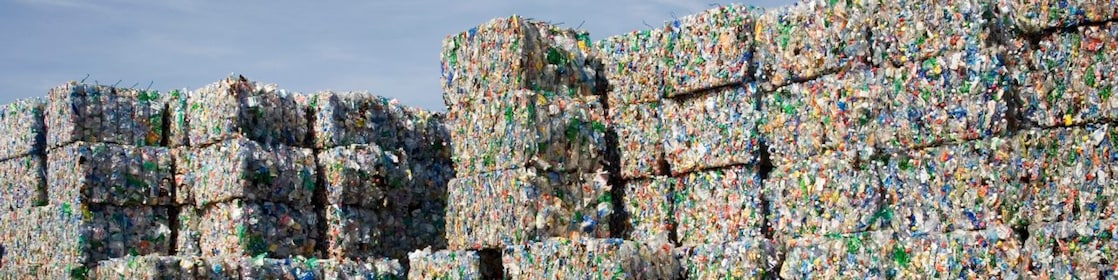
CHEMICAL RECYCLING: TACKLING PLASTIC WASTE
Shell Chemicals is working to utilise plastic waste as feedstock in our global chemical plants.
Plastic products have many benefits – they help improve living standards, are present in almost every part of modern healthcare, and are used in many of the products we rely on every day. Plastic waste however is a global issue, and in places where waste management infrastructure or plastic waste is not managed appropriately, it can end up as litter.
It is estimated that of the plastic waste generated, 353 million tonnes, only 9% is recycled, and the remainder goes to landfill, incineration or unmanaged after use. Plastic recycling rates vary widely by region and are far below the global recycling rates for products like paper (60%) and iron and steel (~80%).
Plastic waste comes in all shapes and forms, from mattresses to furniture, to drink bottles, to construction pipes; it varies in quality and quantity and no single recycling technology can deal with all the different varieties of waste. In addition to initiatives to reduce and reuse plastic, using a combination of technologies is needed to achieve higher recycling rates for plastic and help divert plastic waste from landfill, incineration, or leakage into the environment.

Chemical recycling helps transform plastic waste into circular chemicals
Mechanical recycling is best suited for recycling lightweight plastics like drink bottles or milk jugs; however, alternatives are needed for other plastics that cannot be mechanically recycled and are currently destined for incineration or landfill. Chemical recycling technologies can expand the types of plastics that can be recycled. Shell is working on several technologies to utilize waste in the circular economy but is focusing particularly on chemical recycling through pyrolysis, where hard-to-recycle plastic waste like snack bags, ready meals, or plastic film, that are not suitable for mechanical recycling, are turned into pyrolysis oil, a liquid that replaces hydrocarbons to produce circular chemicals. These circular chemicals are used by our customers to make a wide variety of products found in everyday life like cleaning products, textiles, food packaging and others.
The circular process of recycling plastic waste
Read the transcript
Read the transcript
Title: The circular process of recycling plastic waste
Duration: 2:09 minutes
Description:
This video explains how Shell is using plastic waste to produce circular chemicals
Shell Adapt Plastic Waste – Transcript
[Background music plays]
Piano led Sound of Shell music fades in
[Animated sequence]
Illustrations of every day items such as headphones, shoes, cleaning products, light bulb, tins of paint, kettle, clothing etc along with solar panels, wind turbines, e-charging point appear around the screen
[Text displays]
Plastic is a material that has revolutionized our world.
[Animated sequence]
Illustrations and text disappear, and a blue outline circular diagram appears whilst 2 circles revolve around it – one holding fruit and a loaf of bread and the other a plane and a car
[Text displays]
From keeping food fresh for longer to making products more durable and lighter, plastics benefit our lives in many ways.
[Animated sequence]
Illustrations and text disappear to be replaced by an illustration of earth with intersecting circles revolving around it
[Text displays]
Disposing of plastic, however, is a global problem and it needs global solutions.
[Animated sequence]
Text disappears and the globe illustration slides off screen to the right whilst 2 lines of blue arrows slide in from the left. The top arrows animate to create a revolving cycle
[Text displays]
At Shell, we are working to close the loop: helping to transform the plastic value chain from linear to circular.
[Animated sequence]
Text disappears and blue arrows transition into a light blue circle on the right of the screen with a green recycle icon within it as illustrations of household products including cleaning spray, fruit, bread, laundry detergent and a car wheel appear in front of it
[Text displays]
Reducing the need for raw materials and introducing more recycled products into everyday life.
[Animated sequence]
Text disappears and household products and green recycle icon fade off whilst the blue circle evolves into a circular chart in the centre of the screen with dark blue clock wise arrows. Each of the 5 sections of the chart feature illustrations:
- Paint tins, crisps and a ready meal
- A green garbage truck
- Recycling plant
- Shell Chemicals plant
- Final products made from the recycled plastic chemicals
[Text displays]
Shell is transforming hard- to-recycle plastic waste into circular chemicals.
[Text displays]
How does the process work?
[Animated sequence]
Animated sequence then zooms in on the first section of the circular chart at the top featuring the paint cans, crisps and read meal
[Animated sequence]
Illustrations transitions to a new illustrated scene of people against a backdrop that includes houses, skyscraper, plane
[Text displays]
Plastics are used in many places like homes, hospitals, transportation, construction, agriculture and electronics.
[Animated sequence]
The scene then transitions to the next section of the circular chart where a green garbage truck lifts and empties an orange bin into the back of the truck and then drives off to the right of the screen
[Text displays]
Plastic waste is collected and sorted.
[Animated sequence]
The scene transitions to the green garbage truck driving from the left of the screen to the recycling plant on the right of the screen
[Text displays]
The plastic waste is chemically recycled…using a special heating process called pyrolysis, turning it into a liquid.
[Animated sequence]
Dotted blue arrows appear pointing to the right and the animation transitions to a Shell Chemicals plant in the centre of the screen
[Text displays]
This liquid is then upgraded at one of Shell's chemical plants
[Text displays]
Recycling many different plastic items and objects can cause the liquid to have impurities reducing how much can be used.
[Text displays]
By upgrading the liquid…Shell is able to increase the amount that can be used to make circular chemicals at our facilities.
[Animated sequence]
The animation transitions to a blue strip across the screen with red rotating chemical icons
[Text displays]
These circular chemicals are used by our customers to make thousands of final products we see every day, including plastics.
[Animated sequence]
On the right of the screen, one of the red rotating chemicals pauses with dotted lines to illustrations of recycled products eg. Clothing, drinking bottle, paint, car tyre and laptop
[Animated sequence]
Scene transitions back to circular chart positioned to the right of the screen
[Text displays]
Chemical recycling reduces the need for new raw materials, diverts plastic waste from landfill and is vital to building a circular economy for plastics.
[Background music plays]
Music fades
[Animated sequence]
Animation fades to white until Shell Pecten logo appears
[Background music plays]
Shell mnemonic plays alongside Pecten
At Shell, we believe chemical recycling offers a valuable and viable way to complement reduce, reuse and mechanical recycling measures, and is needed to achieve higher recycling rates. Industry collaboration and the right policy frameworks are vital to scale chemical recycling technologies, introduce more recycled products to everyday life and achieve a more circular economy for plastics.
COMMONLY ASKED QUESTIONS ABOUT CHEMICAL RECYCLING:
What is the plastic circular economy?
What is the plastic circular economy?
A circular economy seeks to minimize waste by making materials flow in a “closed loop” system rather than a linear one, where materials are used once and then discarded. In the case of plastic, this means keeping the value of plastics in the economy while maximizing their life span so that these are reused or recycled instead of becoming waste and polluting our environment.
How does chemical recycling contribute to the circular economy?
How does chemical recycling contribute to the circular economy?
In recent decades, recycling plastics has mostly been limited to plastic waste that is relatively easy to collect and recycle through mechanical recycling. However, alternatives are needed for other plastics that cannot be mechanically recycled and are currently destined for incineration or landfill. Chemical recycling expands the types of plastics that can be recycled thus filling a void in the plastics recycling loop. Chemical recycling helps divert plastic waste from the environment while also lowering dependence on virgin fossil raw materials.
How does chemical recycling through pyrolysis work?
How does chemical recycling through pyrolysis work?
The process begins with the collection and sorting of plastic waste. The plastic waste is then chemically recycled using a special heating process called pyrolysis turning it into a liquid without burning it. The liquid is delivered to a Shell Chemicals Park for upgrading, which is a process that treats the liquid (pyrolysis oil) to remove impurities, therefore increasing useable quantities. This liquid is fed to one of Shell’s crackers, replacing hydrocarbons in the production of a variety of chemicals used by our customers to make thousands of products we see every day, including plastics
Does chemical recycling compete with mechanical recycling for plastic waste?
Does chemical recycling compete with mechanical recycling for plastic waste?
Chemical recycling does not compete with mechanical recycling, it is complimentary. Chemical recycling uses hard-to-recycle plastic waste that cannot be mechanically recycled and would otherwise go to landfill or incineration.
What makes plastic “hard to recycle” and therefore suitable for chemical recycling processes?
What makes plastic “hard to recycle” and therefore suitable for chemical recycling processes?
Chemical recycling uses post-consumer and industrial plastic waste that cannot be mechanically recycled and would otherwise go to landfill or incineration. This includes plastics that are contaminated with food, for example, the packaging of ready meals; plastics that have special properties, like nonstick cooking trays and silicone oven mitts; and plastics that have multiple layers that are difficult to separate, like crisps or chips bags.
Does chemical recycling of plastic waste produce lower-quality products?
Does chemical recycling of plastic waste produce lower-quality products?
Circular products produced from plastic waste offer the same performance, quality and specifications as equivalent products produced from hydrocarbons. This makes chemicals produced from pyrolysis oil suitable for use in applications that have high demands on quality, hygiene, and performance such as food packaging or medical applications.
What is needed to grow recycling rates through chemical recycling?
What is needed to grow recycling rates through chemical recycling?
Industry collaboration is key to driving solutions across the whole plastics value chain. This must be combined with a recognition of chemical recycling as a complementary measure to current reduce, reuse and mechanical recycling measures and as part of the solution to plastic waste. The right policy frameworks are vital to scale chemical recycling technologies to profitable levels, drive demand for recycled products and achieve a more circular economy for plastics.
Is chemical recycling of plastic waste a safe process?
Is chemical recycling of plastic waste a safe process?
Shell’s Goal Zero ambition to achieve no harm and no leaks across our operations underpins all our work. Process safety starts at the early design phase of building facilities and continues throughout their life cycle, making sure they are operated safely, well maintained and inspected regularly.