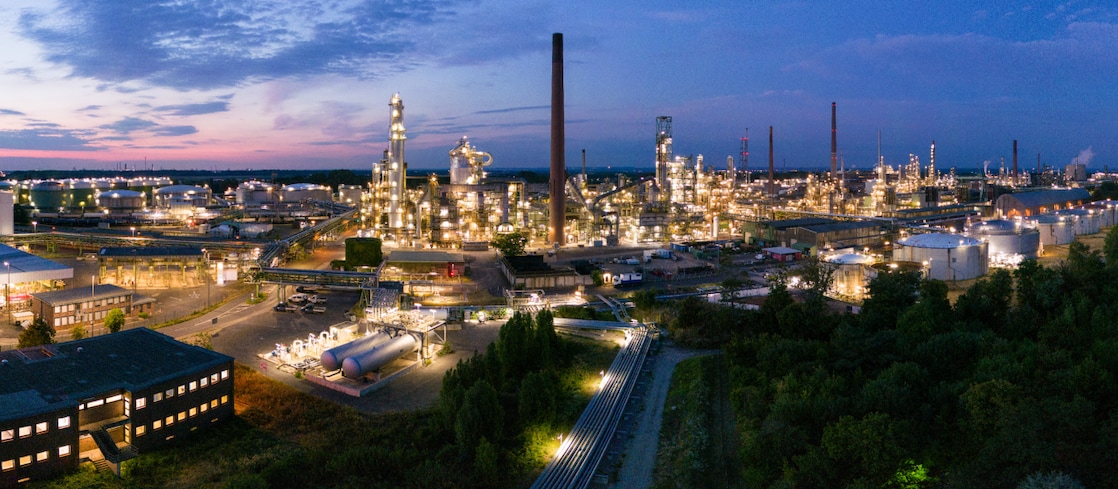
Blue Hydrogen Production
Our Residue and Natural Gas Gasification process upgrades the bottom-of-the-barrel and other low-value streams into synthesis gas, allowing heavy industries and refiners to monetise residues, asphaltenes, heavy oils, gas or biomass via refinery consumption, power generation or other methods.
Shell Blue Hydrogen Process
The Shell Blue Hydrogen Process is an end-to-end lineup that enables affordable responsible hydrogen production. By applying proven carbon capture technologies, natural gas operators and those in the chemical and refining sectors can diversify their product mix and become low-carbon energy producers.
Read the transcript
Read the transcript
Title: The Shell Blue Hydrogen Process
Duration: 2:26 minutes
Description:
Blue hydrogen presents an efficient, low-carbon fuel option.
The Shell Blue Hydrogen Process Transcript
[Background music plays]
Subtle, uplifting background music.
[Visuals]
Video begins with Shell Catalysts & Technologies logo, transitions to Hydrogen molecule animation on yellow background.
[Presenter]
Hydrogen as a source of clean-burning fuel is gaining momentum.
[Visuals]
Quick frames of hydrogen fuel cell, car driving to hydrogen pump, overhead view of highway traffic
[Presenter]
With eyes on a future of more and cleaner energy, affordable blue hydrogen production in the short term can catalyse long-term decarbonisation.
[Visuals]
Quick frames of refinery plant, US capitol, Shell facility
[Presenter]
Natural gas producers are under regulatory, economic, and societal pressure to limit the climate impact of their supply chains.
[Visuals]
Refinery plant, conference room meeting, various forms of transportation.
[Presenter]
In order to thrive through the energy transition, resource holders will need to make smart investments that reduce their emissions footprint. This challenge is not just to control emissions from operations, but also to provide consumers with low carbon fuels. A majority of greenhouse gas emissions stem from energy use rather than energy production.
[Visuals]
‘Enter Hydrogen’ graphic. Person using a hydrogen pump, transitions to clean-burning hydrogen animation on a blue and yellow background. Hydrogen fuel cell truck, transition to water vapor animation, high-speed vehicle traffic.
[Presenter]
Enter hydrogen. Hydrogen fuel is referred to as clean-burning because its combustion does not produce CO2, particulate, or sulphur emissions. Hydrogen fuel cell electric vehicles, for example, only emit water vapor and warm air in contrast with vehicles powered by gasoline or diesel.
[Visuals]
World map with “Growing Demand” text graphic. Transition to various refinery shots. “Sustainable Hydrogen Production” text graphic.
[Presenter]
With growing demand internationally and over 90% of hydrogen supply today coming from carbon-intensive processes, producers must adopt more sustainable hydrogen production technologies.
[Visuals]
Various refinery shots continue, “1,000 tonnes per day” text graphic.
[Presenter]
The Shell Blue Hydrogen Process is an end-to-end lineup that enables affordable responsible hydrogen production.
[Visuals]
Various refinery shots
[Presenter]
By applying proven carbon capture technologies, natural gas operators and those in the chemical and refining sectors can diversify their product mix and become low-carbon energy producers.
[Visuals]
“The Shell Blue Hydrogen Process” text graphic, “Shell Gas Partial Oxidation” text graphic, “ADIP Ultra Technologies” text graphic, transition to molecule animations on blue background. “Cost optimisations”, “Improved Margins” text graphic on green background side by side with molecule animation on white background.
[Presenter]
The Shell Blue Hydrogen Process integrates Shell gas partial oxidation and ADIP ULTRA technologies to maximise carbon capture efficiencies and simplify lineup design. Both results translate to cost optimisations and improved nitrogen production margins for resource holders.
[Visuals]
Refinery shots white white buble animations across screen. “The Shell Blue Hydrogen Process” text graphic. “10-25% lower levelised cost of hydrogen compared to ATR” text graphic.
[Presenter]
Compared to conventional hydrogen manufacturing processes, The Shell Blue Hydrogen Process has been proven better on a levelised cost of hydrogen basis of their blue variants.
[Visuals]
Red and yellow transition screen. Refinery shot, dump truck drives across screen followed by “Make Every Molecule Matter” and “catalysts.shell.com/MEMM” text graphics. CTA remains on screen, transition to overhead view of highway traffic.
[Presenter]
Learn more about The Shell Blue Hydrogen Process by visiting the Make Every Molecule Matter website. Join our mission to catalyse a more and cleaner energy future.
[Visuals]
Shell logo on white background with violin music playing.
What is Blue Hydrogen?
Blue hydrogen is a common term for decarbonised hydrogen, which is hydrogen that is manufactured by natural gas reforming coupled with carbon capture and storage (CCS).
The main processes used for this are the Shell Blue Hydrogen Process (SBHP), steam methane reforming (SMR) and autothermal reforming (ATR).
By capturing and storing the carbon dioxide (CO2) that is generated as a by-product, the carbon intensity of hydrogen produced in these ways can be mitigated substantially; the SBHP can capture up to 99% of the CO2, for example. Because of that, blue hydrogen (which Shell refers to as decarbonised hydrogen) is often described as being a form of low-carbon hydrogen.
Note: The International Energy Agency has suggested that colour-based terminology for describing different types of hydrogen technologies has proved impractical. Instead, Shell refers to renewable hydrogen (in place of “green hydrogen”), decarbonised hydrogen (in place of “blue hydrogen”) and traditional hydrogen (in place of “grey hydrogen”).
Advantages over steam methane reforming (SMR) and autothermal reforming (ATR)
The Shell Blue Hydrogen Process offers significant advantages over alternative technologies, which include steam methane reforming (SMR) and autothermal reforming (ATR).
For example, compared with SMR, it saves money by maximising carbon-capture efficiency and simplifying the process line-up, which offsets the oxygen production costs.
And, compared with ATR, it has a simpler line-up, with no need for substantial feed gas pretreatment, and does not require a fired heater that emits CO2. Another advantage is that the Shell Blue Hydrogen Process generates, rather than consumes, steam to satisfy the demands of the process.
These benefits translate to 22% lower levellised cost of hydrogen for SGP technology compared with ATR, and even greater benefits when compared with SMR.
Shell also has carbon capture and storage (CCS) experience through its involvement in multiple projects in different phases of development and can offer key experience and insights into CO² capture, compression, transport and storage.
Blue hydrogen technologies and real-world experience
Heavy industries and refiners can produce blue hydrogen from natural gas with applied carbon capture and storage (CCS) technologies. Although green hydrogen (from the electrolysis of water using renewable power) is likely to be a long-term solution, analysts suggest it may not achieve cost parity with blue hydrogen until about 2045.
The Shell Blue Hydrogen Process integrates proven technologies – Shell gas partial oxidation (SGP) and ADIP ULTRA.
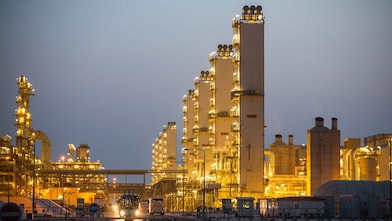
SGP technology is an oxygen-based system with direct firing in a refractory-lined reactor. It requires little or no feed-gas pretreatment, is a non-catalytic process that produces high-pressure steam from waste heat rather than consuming it and has no direct carbon dioxide (CO2) emissions. SGP has more than 30 active gas and residue gasification licensees, and there are more than 100 SGP gasifiers worldwide, including at the Pearl gas-to-liquids plant in Qatar, and Pernis refinery in the Netherlands.
ADIP ULTRA is a proven solvent technology for capturing CO2 from high-pressure process streams.
Frequently Asked Questions
What are the different types of hydrogen?
What are the different types of hydrogen?
Pure hydrogen is a colourless gas under normal conditions that does not occur naturally in our atmosphere in any great quantity. Hydrogen must therefore be manufactured, and the different processes used have varying levels of sustainability and use different sources of energy. In some discussions, these are referred to as different “colours” of hydrogen. Although there is no official guide, here are some common descriptions.
Grey hydrogen is a common term for traditional hydrogen, which is currently the most common type of hydrogen produced. It is manufactured by converting natural gas, a fossil fuel composed mainly of methane, into hydrogen and carbon dioxide (CO2), and the CO2 is released to the atmosphere. Industrially, this is referred to as natural gas reforming, and the two most common processes are steam methane reforming (SMR) and autothermal reforming (ATR).
Blue hydrogen is a common term for decarbonised hydrogen. This is produced in a similar way to traditional hydrogen, but instead of being released to the atmosphere the CO2 is captured and then permanently stored underground. This additional step, using dedicated industrial schemes, is known as carbon capture and storage (CCS). The Shell Blue Hydrogen Process captures up to 99% of the CO2 generated.
Green hydrogen is a common term for renewable hydrogen. This is produced using an electrolysis process in which electricity from renewable sources is used to decompose water in a specially designed electrolytic cell. Examples of renewable electricity sources include solar and wind power.
Hydrogen can also be made from the gasification of coal. In this case, the hydrogen is sometimes referred to as black hydrogen or brown hydrogen.
The term pink hydrogen has been used to describe hydrogen produced in a similar way to renewable hydrogen (green hydrogen), through the electrolysis of water, the distinction being that the electricity originates from a nuclear power station.
Note: The International Energy Agency has suggested that colour-based terminology for describing different types of hydrogen technologies has proved impractical. Instead, Shell refers to renewable hydrogen (in place of “green hydrogen”), decarbonised hydrogen (in place of “blue hydrogen”) and traditional hydrogen (in place of “grey hydrogen”).
What is grey hydrogen?
What is grey hydrogen?
Grey hydrogen is a common term for traditional hydrogen. It is currently the most common type of hydrogen produced. It is manufactured by converting natural gas, a fossil fuel composed mainly of methane, into hydrogen and carbon dioxide (CO2), and the CO2 is released to the atmosphere. Industrially, this is referred to as natural gas reforming, and the two most common processes are steam methane reforming (SMR) and autothermal reforming (ATR).
Note: The International Energy Agency has suggested that colour-based terminology for describing different types of hydrogen technologies has proved impractical. Instead, Shell refers to renewable hydrogen (in place of “green hydrogen”), decarbonised hydrogen (in place of “blue hydrogen”) and traditional hydrogen (in place of “grey hydrogen”).
What is traditional hydrogen?
What is traditional hydrogen?
Traditional hydrogen (grey hydrogen) is currently the most common type of hydrogen produced. It is manufactured by converting natural gas, a fossil fuel composed mainly of methane, into hydrogen and carbon dioxide (CO2), and the CO2 is released to the atmosphere. Industrially, this is referred to as natural gas reforming, and the two most common processes are steam methane reforming (SMR) and autothermal reforming (ATR).
What is blue hydrogen?
What is blue hydrogen?
Blue hydrogen is a common term for decarbonised hydrogen, which is hydrogen that is manufactured by natural gas reforming coupled with carbon capture and storage (CCS).
The main processes used for this are the Shell Blue Hydrogen Process (SBHP), steam methane reforming (SMR) and autothermal reforming (ATR).
By capturing and storing the carbon dioxide (CO2) that is generated as a by-product, the carbon intensity of hydrogen produced in these ways can be mitigated substantially; the SBHP can capture up to 99% of the CO2, for example. Because of that, blue hydrogen (which Shell refers to as decarbonised hydrogen) is often described as being a form of low-carbon hydrogen.
Note: The International Energy Agency has suggested that colour-based terminology for describing different types of hydrogen technologies has proved impractical. Instead, Shell refers to renewable hydrogen (in place of “green hydrogen”), decarbonised hydrogen (in place of “blue hydrogen”) and traditional hydrogen (in place of “grey hydrogen”).
What is decarbonised hydrogen?
What is decarbonised hydrogen?
Decarbonised hydrogen (blue hydrogen) is hydrogen that is manufactured by natural gas reforming coupled with carbon capture and storage (CCS).
The main processes used for this are the Shell Blue Hydrogen Process (SBHP), steam methane reforming (SMR) and autothermal reforming (ATR).
By capturing and storing the carbon dioxide (CO2) that is generated as a by-product, the carbon intensity of hydrogen produced in these ways can be mitigated substantially; the SBHP can capture up to 99% of the CO2, for example. Because of that, decarbonised hydrogen (blue hydrogen) is often described as being a form of low-carbon hydrogen.
What is green hydrogen?
What is green hydrogen?
Green hydrogen is a common term for renewable hydrogen, which is hydrogen produced using an electrolysis process in which electricity from renewable sources is used to decompose water in a specially designed electrolytic cell. Examples of renewable electricity sources include solar and wind power.
Note: The International Energy Agency has suggested that colour-based terminology for describing different types of hydrogen technologies has proved impractical. Instead, Shell refers to renewable hydrogen (in place of “green hydrogen”), decarbonised hydrogen (in place of “blue hydrogen”) and traditional hydrogen (in place of “grey hydrogen”).
What is renewable hydrogen?
What is renewable hydrogen?
Renewable hydrogen (green hydrogen) is produced using an electrolysis process in which electricity from renewable sources is used to decompose water in a specially designed electrolytic cell. Examples of renewable electricity sources include solar and wind power.
What is blue hydrogen used for?
What is blue hydrogen used for?
Blue hydrogen is a common term for decarbonised hydrogen, which can be used in the same way as traditional hydrogen is used today. This includes, for example, in refining processes for hydrocracking and desulphurisation of fuels, and for making chemicals. Industrially, hydrogen is an important raw material for the Haber process, which produces ammonia. A small amount is used for iron and steel production.
How does blue hydrogen work?
How does blue hydrogen work?
Blue hydrogen is a common term for decarbonised hydrogen, which is hydrogen that is manufactured by natural gas reforming coupled with carbon capture and storage (CCS).
This means that, first, hydrogen is produced from the reaction between natural gas and steam. Carbon dioxide (CO2) is generated as a by-product and is captured chemically using special solvents. The solvent carrying the CO2 is then regenerated to release the gas, which is compressed for transport to underground storage. In this way, only a small percentage of the CO2 produced in the process is dispersed into the atmosphere.
How is blue hydrogen produced?
How is blue hydrogen produced?
Blue hydrogen, a common term for decarbonised hydrogen, is derived from the reaction between natural gas and steam. Examples of the processes used for this are the Shell Blue Hydrogen Process (SBHP), steam methane reforming (SMR) and autothermal reforming (ATR).
The SBHP integrates Shell gas partial oxidation (SGP), in which a reaction between methane and oxygen produces high-pressure steam, and ADIP ULTRA, a carbon capture solvent technology.
Unlike the SMR and ATR processes, which use very hot steam along with a catalyst, the SBHP is non-catalytic. This reduces the need to pre-treat the natural gas and reduces complexity.
In the SGP process, the chemical reaction makes hydrogen and carbon monoxide. By adding steam, the carbon monoxide is converted to carbon dioxide, which can be removed, transported and permanently stored. Hydrogen is produced not only from the methane (CH4) feed but also from the steam (H2O) that is also used in the process. Hydrogen produced in this way can be viewed as a low-carbon energy carrier. The technologies and building blocks for creating blue hydrogen (decarbonised hydrogen) are already tested and proven, and they have been used in various industries for many decades.
What is the difference between blue hydrogen and green hydrogen?
What is the difference between blue hydrogen and green hydrogen?
Blue hydrogen, a common term for decarbonised hydrogen, is hydrogen produced from natural gas. This is coupled with carbon capture and storage (CCS).
The process for green hydrogen, which is a common term for renewable hydrogen, is different in that it is created through electrolysis and does not use natural gas as a raw material. Water is decomposed by electrolysis powered by electricity from renewable sources such as hydro, wind or solar power. The only products are hydrogen and oxygen, so there is no need to capture carbon dioxide and CCS is not required.
What is the difference between grey hydrogen and blue hydrogen?
What is the difference between grey hydrogen and blue hydrogen?
Grey hydrogen, which is a common term for traditional hydrogen, is produced from natural gas, and the carbon dioxide (CO2) that is generated as a by-product is released to the atmosphere.
When carbon capture and storage (CCS) is applied and the CO2 is captured and stored, the hydrogen is in turn ‘decarbonised’. Shell’s Blue Hydrogen Process captures up to 99% of the CO2 generated.