Hydrotreating Technology
Shell Catalysts & Technologies’ hydrotreating process combines advanced process technology, high-performance catalyst systems, and efficient reactor internal designs. This hydrating technology has helped many refiners to rise to the clean fuels challenges facing their businesses; as operators around the world have licensed new units for their grass-roots facilities.
Advanced process technology and high-performance catalysts
Our hydrotreating technology is based on extensive research and design in catalysts and processes over many decades, combined with lessons learned from our affiliates’ operational experience.
In Shell Catalysts & Technologies’ hydrotreating process, oil fractions are reacted with hydrogen in the presence of a catalyst to produce high-value clean products. The operating conditions will depend on the final application.
The heart of our hydrotreating process is the reactor section, which features a high-pressure reactor vessel and state-of-the-art catalyst and reactor internals technology. The process configuration is tailored and optimised for each application to suit operating requirements and customer-specific project economics, which provides clear and sustained advantages.
Past experience supports the potential for better mechanical availability, on-stream factor, and utilisation. The turnaround duration can be reduced by as much as 8-16 days.
Conventional trickle phase units for distillate hydrodesulphurisation units are based on the two- or four-separator design concept. Shell Catalysts & Technologies’ designs have improved heat integration, which can help to reduce energy costs. Charge heaters in Shell hydrotreating units have up to 25°C lower temperature differentials across them, which is a direct measurement of energy efficiency. Moreover, Shell Catalysts & Technologies’ designs have helped to reduce the total equipment count and the capital and operating costs.
Processing heavier feeds with hydrotreating technology
Refiners are often under pressure to enhance the margins from their distillate units by processing heavier and more refractory feeds such as light cycle oil (LCO) or light coker gas oil (LCGO). They are also often evaluating options to make more (and cleaner) diesel from difficult, high margin crudes while extending catalyst cycle life. A recent development has provided refiners with crucial flexibility with which to respond to these challenges.
Shell’s current second generation CENTERATM catalysts, such as DN-3636 and DC-2635, are well-proven and have delivered significant gains to refiners. CENTERA GTTM incorporates enhancements to the impregnation chemistry and structure of the active metal sites. These enhancements have created further activity improvements in hydrodesulfurisation (HDS), and hydrodenitrogenation (HDN).
Aromatic saturation (HDA) is measurably higher, providing enhanced volume swell while maintaining excellent stability even when processing the toughest feeds.
Bring value to your refinery with an owner and operator partner
Our hydrotreating technology is designed to operate reliably and efficiently to help improve the return on investment throughout the life cycle of a unit. Shell Catalysts & Technologies leverages our wide experience of operating hydrotreating units around the world.
Shell Catalysts & Technologies leverages Shell affiliates’ heritage as the owner and operator of refining facilities to bring value to your refinery.
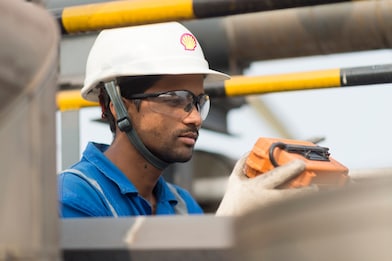
Our technology is designed to operate reliably and efficiently to help improve the return on investment throughout the life cycle of a unit. Shell affiliates’ hydrotreating units allow Shell Catalysts & Technologies to incorporate Shell’s wide experience base as a major operator of hydrotreating capacity in the world.
Hydrotreating technology frequently asked questions
Hydrotreating technology includes the process configuration, the catalyst system and reactor internals. Hydrotreating is a vital refinery process that involves the removal of impurities such as sulphur, nitrogen and other contaminants from petroleum feedstocks. It employs hydrogen under high temperature and pressure conditions, and catalysts, to convert oil fractions into clean, valuable products. Hydrotreating technology therefore enables refiners to produce cleaner fuels and plays a vital role in improving the quality and performance of gasoline, diesel and jet fuel.
What are the catalysts for hydrotreating?
What are the catalysts for hydrotreating?
Common catalysts for hydrotreating processes include cobalt–molybdenum (CoMo) catalysts and nickel–molybdenum (NiMo) catalysts. The former are ideal for the hydrodesulphurisation of low-severity feeds under hydrogen-constrained conditions, and the latter, with their increased hydrodenitrogenation and hydrogenation activity levels, provide clear advantages for more challenging feeds. Stacked systems containing both CoMo and NiMo catalysts are also commonly used.
What is the difference between hydrotreating and hydrocracking?
What is the difference between hydrotreating and hydrocracking?
Hydrotreating is a refining process primarily focused on the removal of impurities from petroleum feedstocks, whereas hydrocracking is more severe and involves breaking down heavier hydrocarbon molecules into lighter ones. Although hydrotreating and hydrocracking both consume hydrogen, use catalysts, and produce gasoline and diesel, hydrocracking also produces a broader range of lighter and more valuable products, including petrochemical feedstocks.
What is the hydrotreating process in a refinery?
What is the hydrotreating process in a refinery?
The hydrotreating process in a refinery involves reacting oil fractions with hydrogen in the presence of a catalyst to produce high-value clean products. The operating conditions will depend on the
final application. For instance, temperatures could range between 350 and 390°C, and pressures between 60 and 90 barg for the production diesel. A wide range of process configurations are available.
What hydrogen is used for hydrotreating?
What hydrogen is used for hydrotreating?
The hydrogen used for hydrotreating is typically sourced from dedicated hydrogen production units within the refinery. These include steam methane reforming, where natural gas is reacted with steam in the presence of a catalyst to produce hydrogen and carbon monoxide, though some refineries use other methods, such as electrolysis and partial oxidation.
What is the hydrotreating process used for?
What is the hydrotreating process used for?
The hydrotreating process is used for removing impurities such as sulphur, nitrogen and other contaminants from petroleum feedstocks. The hydrotreating process therefore enables refiners to produce cleaner fuels and plays a vital role in improving the quality and performance of gasoline, diesel and jet fuel.
What are the products of hydrotreating?
What are the products of hydrotreating?
The products of hydrotreating include middle distillates and naphtha, which serve as feedstocks for the production of diesel, gasoline and jet fuel. Some products of hydrotreating may require additional treatment or blending to meet specific product specifications or desired quality standards, whereas others that come off the unit may be considered finished products.