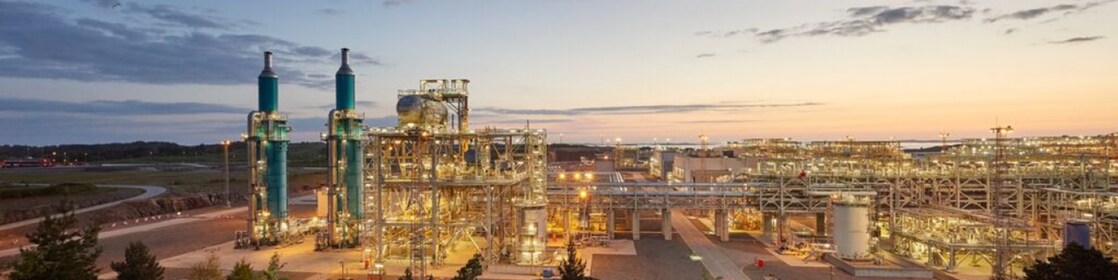
Claus Process
We provide leading catalysts, technical services and licensed process technologies that enable more and cleaner energy solutions today and for the future.
Meet Sulphur Emission Mandates with Claus Process
Well-operated Claus tail-gas units are increasingly important as operators strive to meet their sulphur emissions mandates. Tighter standards mean gas plants need to achieve deeper levels of sulphur removal in order to meet these environmental mandates.
Sulphur recovery efficiencies of over 99.9% are being specified on some projects. In order to be positioned to achieve this, the Claus section is generally followed by a tail gas treating section.
Shell Catalysts & Technologies offers a portfolio of sulphur recovery technologies catering for the full range of sulphur removal capacities that can be integrated parts of complex gas cleaning line-ups to provide safe, reliable and easy-to-operate systems, and that are economically attractive and environmentally responsible.
Customers are looking for solutions that:
- Can meet the required emission standards. Sulphur recovery efficiencies of over 99.9% are being specified on some projects.
- Lessen capital and operating costs. Simplified process line-ups can help to keep costs down.
- Reduce process line-up complexity.
- Offer high flexibility. The ability to operate over a wide range of sulphur intakes can be advantageous.
- Increase reliability.
Gas plants and refineries worldwide have reported lower operating costs, extended cycle lengths and reduced pressure drop as a result of installing state-of-the-art technologies and catalysts in their Claus tail-gas treating units.

Integrate the Clause Process to keep operating costs low while enabling Enhanced Oil Recovery to reduce emissions.
The pure CO2 and SO2 captured avoid landfill and legacy environmental issues and can be sold or reused as marketable co-products. Consistent with Shell Catalysts & Technologies’ approach across our holistic services, we emphasise sustainability, reusability, and profitable processes at every point. This highly adaptable technology can be added to an existing plant or incorporated in a new installation across a wide range of industries.
Claus Process Frequently Asked Questions
The Claus process is highly efficient in recovering elemental sulphur from hydrogen sulphide (H2S) gas streams and is employed in the sulphur recovery units of refineries, natural gas processing plants and other facilities where H2S gas is present. The Claus process is crucial for reducing sulphur emissions, maintaining environmental compliance and producing valuable elemental sulphur. Here we address commonly asked questions about this catalytic sulphur recovery process. We explore the catalysts involved and how an efficient sulphur recovery is achieved.
What is the catalyst in the Claus process?
What is the catalyst in the Claus process?
The catalyst used in the Claus process is typically alumina based and often made up of aluminium oxide mixed with other substances, such as titanium oxide, that help desired chemical reactions in the Claus process. Careful selection of the catalyst is necessary to ensure optimum performance and process economics.
What is the Claus process for sulphur recovery?
What is the Claus process for sulphur recovery?
The Claus process is commonly used to extract elemental sulphur from gas streams containing hydrogen sulphide (H2S) that come from natural gas processing or oil refining. The Claus process includes two main stages: partial oxidation of H2S to create sulphur dioxide (SO2), and the catalysis-driven reaction of the remaining H2S with the SO2 to produce elemental sulphur.
How does the Claus process work?
How does the Claus process work?
The first step of the Claus process involves the partial oxidation or combustion of a portion of the hydrogen sulphide (H2S) in the gas stream to produce sulphur dioxide (SO2). The SO2 gas is then mixed with the remaining H2S and passed over a catalyst bed where H2S and SO2 are converted into elemental sulphur and water vapour.
What is the function of the Claus process in refineries?
What is the function of the Claus process in refineries?
Refineries use the Claus process to extract elemental sulphur from gas streams containing hydrogen sulphide (H2S) that result from refining crude oil. The Claus process converts H2S into elemental sulphur, which can be sold as a valuable by-product. By doing so, refineries can manage and minimise H2S emissions and meet environmental regulations.
Sulphur Recovery
Our reliable and robust operations with Claus, SCOT, sulphur degassing and THIOPAQ O&G sulphur recovery technologies secure gas production.

Claus Off-Gas Treating (SCOT) Process
Refineries have lowered operating costs and extended cycle lengths by installing our technologies and catalysts in Claus tail-gas treating units.
Contact Shell Catalysts & Technologies
Contact Shell Catalysts & Technologies to meet the challenges petrochemical plants face with confidence.