Specialty and Custom Catalysts
With many decades of catalyst development expertise in a broad range of speciality applications, Shell Catalysts & Technologies delivers a full slate of proprietary and custom catalysts to our customers.
Speciality Catalysts
Recommending and sharing our views on the best catalysts to function under the specific conditions prevailing within a specific petrochemical application requires considerable technical experience and understanding. With a proven reputation for enabling results for customers from across the petrochemical sector, Shell Catalysts & Technologies offers a diverse range of Specialty catalyst solutions including:
| Applications | Description |
|---|---|
| Hydrogenation of nitro compounds to amines | Shell Catalysts & Technologies offers multiple catalyst solutions for the reduction (hydrogenation) of aliphatic nitro compounds to their corresponding amines. The types of catalyst available include nickel, copper, cobalt, and combinations thereof on a wide variety of carriers. |
| Hydrogenation of glucose to sorbitol | Shell Catalysts & Technologies offers catalysts for the hydrogenation of glucose to sorbitol. The bulk nickel catalysts are available in tablet or extrudate form on a variety of carriers suited for the specific working environment. |
| Hydrogenation of phenylacetylene to styrene | Shell Catalysts & Technologies offers catalyst solutions such as VAM catalysts which are designed to meet two important performance characteristics: stability and activity. These catalysts have maintained commercial performance with life cycles greater than three years even at very high space time yields (STY’s) of 850 or greater. Shell Catalysts & Technologies has a VAM catalyst to achieve your high activity and production goals. |
| Vinyl acetate monomer (VAM) catalysts | Shell Catalysts & Technologies offers catalysts for VAM catalysts which are designed to meet two important performance characteristics: stability and activity. These catalysts have maintained commercial performance with life cycles greater than three years even at very high space time yields (STY’s) of 850 or greater. CRI has a VAM catalyst to achieve your high activity and production goals. |
| Nylon production chain catalysts | Shell Catalysts & Technologies offers several catalysts used in the nylon production process with catalyst solutions to hydrogenate phenol to cyclohexanone, convert alpha methyl styrene (AMS) to cumene, and saturate benzene to cyclohexane. |
Custom Catalysts
Customers are continuously striving to create competitive advantage by improving their production processes, providing better products, developing leading-edge technologies and maintaining consistent operating results. In many cases, a key to achieving these goals is the development of custom catalyst products, designed specifically for individual customer applications/processes. Shell Catalysts & Technologies works with customers to create or identify specific catalysts to help achieve their program goals.
With many decades of research and development (R&D), catalyst scale-up, manufacturing and surface and materials science capabilities Shell Catalysts & Technologies, is a highly desirable partner in custom catalyst development. Providing the tools to develop and progress your custom catalyst project from lab scale to full commercialisation.
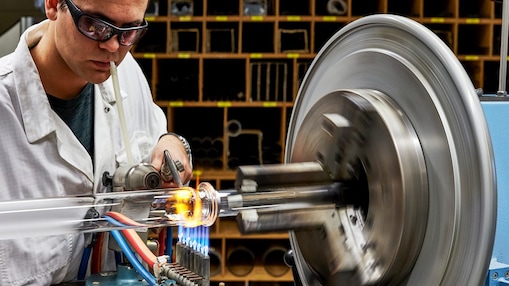
Delivering Value with First Hand Experience and World Class Expertise
Shell Catalysts & Technologies understands that speed to market on new technology advances is critical. Without the proper global support, catalyst expertise, research skill sets, and close collaboration with a trusted partner, deadlines can extend and opportunities can be lost. Employing the latest technologies/tools for catalyst development and testing Shell Catalysts & Technologies bring an experienced workforce, from the lab technician to the Ph.D. research chemist. Along with these assets, Shell Catalysts & Technologies adds the ability to understand customers’ needs working closely and securely with them to develop a catalyst that reaches their goals. Our knowledgebase adds value and our resources provide the desired speed to market. This is where Shell Catalysts & Technologies delivers value for custom catalyst customers.
To compliment custom catalyst development, Shell Catalysts & Technologies affiliates operate manufacturing plants in Europe and the United States, offering a full range of base and noble metal catalyst and zeolite production capabilities. Shell Catalysts & Technologies also utilises its global resources, talented scientists and advanced analytical tools to not only develop individualised catalyst solutions but to offer our customers the opportunity to explore catalyst improvements. Shell Catalysts & Technologies is also able to investigate potential operational problems through post-mortem analysis of spent catalysts samples with the goal to continuously improve catalyst life, selectivity and efficiency.
Catalysts Frequently Asked Questions
When selecting speciality catalysts for petrochemical processes, activity and selectivity are key criteria to consider. Activity refers to the catalyst's ability to enhance reaction rates, while selectivity determines its capability to produce desired products with minimal undesired by-products. Other important properties include stability, resistance to deactivation, and compatibility with process conditions. Moreover, the development of custom catalysts, tailored to address specific requirements, enables efficient and effective achievement of desired product outcomes through precise property optimisation.
What are the criteria for selecting catalysts?
What are the criteria for selecting catalysts?
The criteria for selecting catalysts include activity and selectivity. Activity refers to the catalyst's ability to speed up the desired chemical reaction, while selectivity refers to its ability to produce the desired product with minimal undesired by-product. Some companies commission custom catalysts to be developed, in which the catalyst's properties are tailored to address their specific challenges.
How does a catalyst affect the rate of a reaction?
How does a catalyst affect the rate of a reaction?
A catalyst affects the rate of a reaction in petrochemical processes by enabling more efficient and selective conversion of feedstocks into desired products. This enhanced reactivity allows for higher conversion rates and improved product quality. Some companies require the development of a custom catalyst to enhance the rate of reaction based on their specific needs and challenges.
What properties are important to catalysts?
What properties are important to catalysts?
Properties that are important to catalysts include activity, selectivity, stability, and resistance to deactivation. Catalysts should also have good high surface area, and be compatible with the process conditions. Some companies commission custom catalysts to be developed, in which the catalyst's properties are tailored to address their specific challenges.
How can you improve catalyst selectivity?
How can you improve catalyst selectivity?
Catalyst selectivity can be improved by controlling reaction conditions such as temperature, pressure, and residence time, which can influence selectivity. Catalyst activity can also be enhanced by optimising its composition, structure, and active sites. Some companies commission custom catalysts to be developed, in which their properties are tailored for specific selectivity requirements, thereby achieving desired product outcomes efficiently and effectively.
What are the three unique properties of catalysts?
What are the three unique properties of catalysts?
Three unique properties of catalysts in petrochemicals are their ability to facilitate chemical conversions, exhibit selectivity, and maintain stability under demanding conditions. Catalysts lower energy barriers, promote desired reactions and minimise undesired by-products. Some companies commission custom catalysts to be developed, in which their properties are tailored to address their specific challenges.
What are the 3 elements that are used for catalysts?
What are the 3 elements that are used for catalysts?
Three elements that are commonly used for catalysts in petrochemical applications include nickel, copper, and cobalt. These elements play a vital role in catalyst solutions for processes like hydrogenation of nitro compounds, glucose hydrogenation, and custom catalyst development. Their presence enhances the catalytic performance and facilitates efficient conversion of feedstocks into desired products in the petrochemical industry.