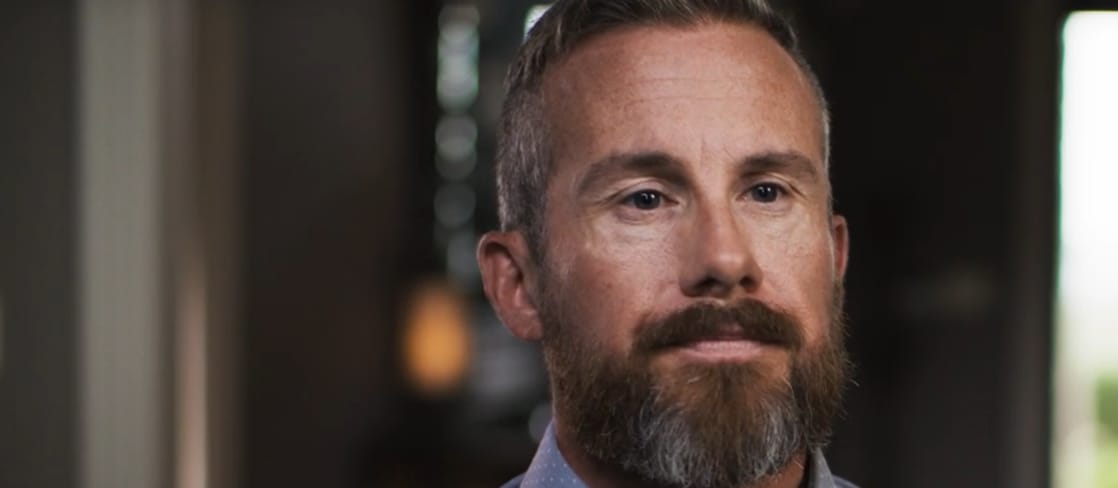
Watch: How technology can make aviation fueling more efficient and cost effective
Elevating the aviation industry’s understanding of new technologies is key to realising the next generation of processes and improving operations. Shell Aviation’s Compliance Lead for the Americas, Mark Boyd, talks about embracing remote and digital inspections that will make airline operations more efficient and cost-effective.
Shell is bringing together leading voices for aviation’s technical and digital transformation. Get updated through our Flightpath newsletter.
Digital technology can replace current paper-based systems to collect data, build databases, and analyze trends. For example, an operator might find that certain equipment routinely fails after a particular number of hours, then draw up a preventative maintenance plan to help avoid critical breakdowns, Boyd said.
How technology can make aviation fueling more efficient and cost-effective
Read the transcript
Read the transcript
Description:
Aviation industry expert Mike Farmery interviews Mark Boyd, Shell Aviation’s Compliance Lead – Americas Shell Aviation. Mark will inform about Shell Aviation’s adoption of remote and digital inspections that will make airline operations safer, more efficient, and cost-effective.
Title: How Technology Can Make Aviation Fueling Safer and More Efficient
Duration: 6:58
[Background music plays]
Bright, uplifting music
[Animation]
The Shell™ pecten logo appears, then fades. A three dimensional model of Earth rotates while white silhouettes of planes fly across the globe. On the right side of the screen, a shot of Mark Boyd talking with no audio.
[Text Displays]
This episode: How Technology Can Make Aviation Fueling Safer and More Efficient
{Mike Farmery sits onscreen. Facing him is Mark Boyd. The camera alternates between speakers.}
[Text Displays]
Mike Farmery
Aviation Fuel Expert
Mike Farmery:
Hello, I'm Mike Farmery, and I'm excited today to be talking with Mike Boyd, about the new introduction of new technology into the world of aviation fueling.
[Text Displays]
Mark Boyd
Compliance Lead - Americas
Shell Aviation
Mike Farmery:
So Mark, you've had to really change your game when it comes to dealing with the pandemic. Could you tell us a little bit about what those challenges have been and how you've had to respond to them?
Mark Boyd:
The aviation industry, especially the fuel-services side of things and the below-the-wing services, have been primarily paper-based and a very face-to-face operation. It is a human based business and we've relied in the past on individuals visiting locations to provide assurances that our operations are within the industry and business standards. When the pandemic came about, we ran into the travel bans that prevented us from having face-to-face visits at our locations and conducting these inspections. We were challenged with using current technology and leveraging the systems we already have in play to try and continue providing that assurance to the business without skipping a beat.
This essentially had us utilizing an intrinsically safe tablet, along with a Bluetooth intrinsically safe headset that would allow us to connect with a virtual room where we were able to have an inspector and an operator in the same virtual room with the inspector being able to see the operation and watch operators conduct various QC tasks as well as take a look at equipment and ensure that all of the practices were within the standards that we were following at the operation.
Mike Farmery:
How do digital inspections create a more positive experience? Can you give an example?
Mark Boyd:
I liken it to something like a telehealth option. In this day and age, with the pandemic and with the technology we have available to us, we have the ability to go on our smartphones or our home computers and consult with a doctor or a registered nurse before going to the hospital. And this ability allows us to speak with somebody about the issues that we're dealing with. And then we can make a decision based on that information as to what our next step was going to be.
The same thing I think holds true with the virtual inspection programme. It's an ability for us to send a piece of equipment to a remote location, to troubleshoot issues, or to get an initial look at the operation to determine risk levels and what our challenges are on location, and then determine the best course of action for resources moving forward.
Mike Farmery:
How has this technology changed the culture of inspection?
Mark Boyd:
With the use of things like self-assessments and virtual inspections, we've had the ability to shift to a risk-based scenario where we're able to look at multiple different streams of information that are coming from our operations.
So the implementation of a risk-based approach has allowed us to focus our resources where they need to be, and perhaps have a lighter touch at locations that don't necessarily need our attention at the time. So I would say that the biggest change to our inspection programme has been the focus to move from a time-based frequency to a risk-based frequency.
Mike Farmery:
Mark, where do you see this going? Do you think industry will adopt this sort of technology going forward?
Mark Boyd:
We need to consistently be looking forward and watching the technology on the horizon and using it and leveraging it to the best of our abilities. Right now we're using a tablet and a headset. There's definitely the ability to use smaller, less cumbersome pieces of equipment with better connectivity, better definition cameras. There's the ability to use augmented reality where we can help operators conduct their operations, and do their jobs with that additional level of support. And with the record keeping side of things, I think there is growth from technology using cloud-based servers that can store information versus scratching everything down on paper and making that more readily available for inspectors and operators and site managers. So, I definitely think there is growth opportunities and you know we are only scratching the surface right now in terms of what we have found with the virtual inspection program.
Mike Farmery:
Mark, aviation is both a very innovative industry it’s also very conservative at times. How do you see this getting adopted within the industry in general?
Mark Boyd:
Where I think the industry will be very welcoming of it is that something like a self-assessment is very, very common in our industry, where a document or a checklist is sent to a location and they review that document internally, they answer the questions and send them back to an inspector. The problem with self-assessments is they require the individual filling out the assessment to share the same perspective as the individual conducting the inspection. So, we have an operator that says yes, we do think we are doing that job correctly, I believe this check is done properly. Whereas me being able to see that test being done real-time, will allow me to determine whether or not, form my prospective, it is. And I think there really isn't a downside. Because we're not talking about removing the onsite inspection, we're talking about supplementing that with a programme that's going to help make the risk analysis a much cleaner process.
Mike Farmery:
So what you're saying is that, from your perspective, you believe this is actually going to really improve safety in the industry.
Mark Boyd:
Absolutely, Mike. The closer touch we have with our locations and the more information we have available to us, the more we can understand the trend analysis. If we see that pieces of equipment are routinely failing after a certain amount of hours or there is some sort of trend in terms of their use, we can be better prepared to manage those and to maintain so that we can avoid critical breakdowns. The same goes with any safety-critical equipment on our units. Again, these are very closely monitored to ensure that we can deliver our product safely, and if we are monitoring these digitally in a virtual environment where we have real-time information, we can limit the amount of downtime and the exposure to risk that our operators face every day.
The more time flying, everybody’s happy whether that’s the passengers, the customers, or the flight crew. Everyone wants to be doing what they are supposed to be doing. So the less amount of time we can spend on the ground the better. The more reliable our fueling and service equipment is and the more prepared we are prepared to deliver to our customers demands the better off we’re set to ensure that we are keeping our customers in the air where they want to be.
Mike Farmery:
Well, thank you very much, Mark.
Mark Boyd:
Thanks for having me, Mike. Great conversation. I’m really looking forward to our next phase of our growth.
[White screen with Shell pecten logo]
[Text Displays]
Hear from more industry experts in our Flightpath conversation series.
Follow us at:
Remote and digital aviation fuel inspections, necessitated by the pandemic, have the potential to make the industry more efficient even after the health crisis has receded by giving operators another tool to augment traditional in-person visits, according to a Shell Aviation expert.
“The aviation industry, especially the fuel-services side of things and the below-the-wing services, have been primarily paper-based and a very face-to-face operation,” said Mark Boyd, Compliance Manager for the Americas at Shell Aviation.
But the pandemic – and the travel restrictions that followed – brought those on-site inspections and assessments to a grinding halt.
The experts at Shell made a rapid pivot to virtual inspections by using existing technology and systems such as the SkyPad tablet that connects operators and personnel on the apron, Boyd said in an interview with aviation fueling consultant Mike Farmery.
“This is an intrinsically safe tablet, which had the ability to have video and audio, and it had a very, very short learning requirement,” said Boyd. “Operators were already very familiar with it, and it was easy to add the application on to it. It was just taking our existing equipment and tweaking the programmes that were already in place to bring them together.”
Another tool in the toolbox
Although virtual inspections won’t replace in-person touchpoints, they are emerging as an important supplementary tool for Shell customers, Boyd said.
“I liken it to something like a telehealth option,” said Boyd. “We have the ability to go on our smartphones or our home computers and consult with a doctor or a registered nurse before going to the hospital. This allows us to speak with somebody about the issues that we're dealing with. And then we can make a decision based on that information as to what our next step is going to be.”
The same holds true with virtual inspections.
“It’s an ability for us to send a piece of equipment to a remote location, to troubleshoot issues, or to get an initial look at the operation to determine risk levels and what our challenges are on location, and then determine the best course of action for resources moving forward,” said Boyd.
New technology such as mixed or augmented reality could make things even more efficient, Boyd said.
“Right now we’re using a tablet and a headset,” said Boyd. “It’s almost like a film crew. We have one person holding the tablet, showing the environment with an operator on camera that’s conducting all the tasks or doing all the work. With advances in technology, we could look at using a single piece of equipment, not unlike a body cam or a set of glasses, that could be placed on the operator directly.”
Identifying additional efficiencies with data
According to Boyd, the most significant promise of digital and cloud technology will be a shift from time-based inspections to risk-based ones.
“In previous years, we have managed our inspection programmes based on a typical time frequency. Inspections were rated, outcomes were rated, and based on those ratings, a timeframe would be applied for the next inspection,” said Boyd.
But virtual inspections give the ability to shift to a risk-based scenario. This is because experts are able to look at multiple different streams of real-time information to help them focus resources on locations that need more support while giving a lighter touch to those that don’t need as much attention, Boyd said.
Digital technology can replace current paper-based systems to collect data, build databases, and analyze trends. For example, an operator might find that certain equipment routinely fails after a particular number of hours, then draw up a preventative maintenance plan to help avoid critical breakdowns, Boyd said.
“It’s just about collecting information,” said Boyd. “The more information we can have, the better off we are in terms of our path forward and setting our goals and knowing where we need to focus our resources.”
Ultimately, it’s about making aviation even safer and more efficient, Boyd said.
“We know that time on the ground is money lost. The more time flying, everybody's happy, whether that's the passengers, the customers, or the flight crew,” Boyd said. “The more reliable our fueling and service equipment is, and the more prepared they are to deliver to our customer's demands, the better off we're set to ensure that we're keeping our customers in the air where they want to be.”


Questions? Need more information? Contact us.
Get more information about Shell Aviation, the future of sustainable flying and how we can help make this happen for your organization. Tell us a little about you and we’ll get in touch.