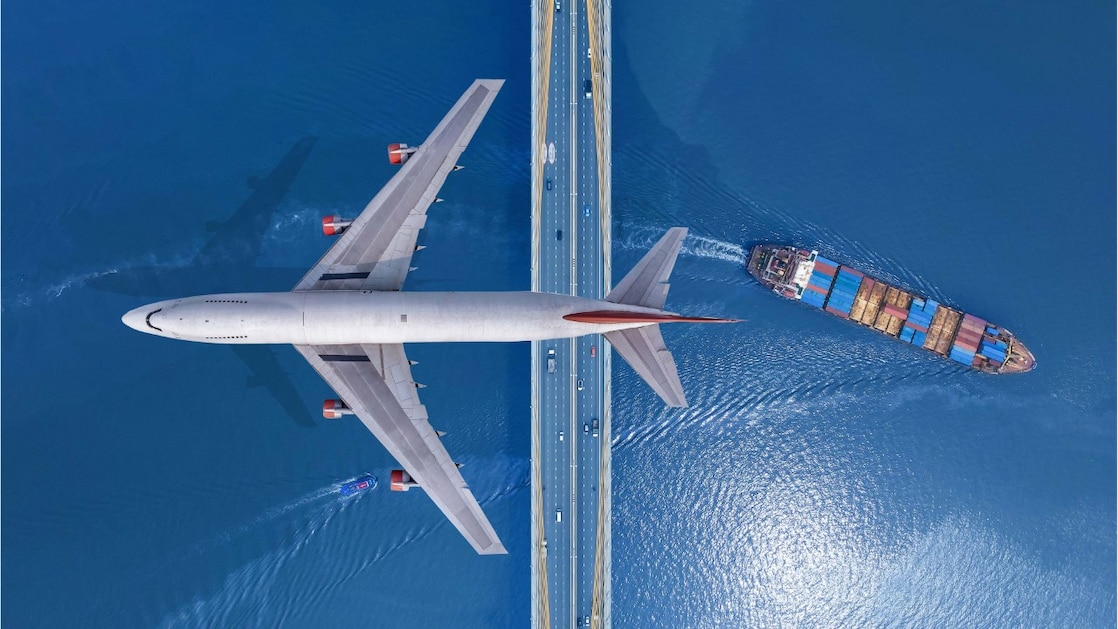
Watch: Powering sustainable flight for the next generation
There is no singular answer to reduce aviation emissions— the key lies in several methods being implemented at scale by multiple stakeholders, simultaneously.
As the aviation industry focuses on recovery from the effects of COVID-19, it must continue its efforts to deliver a sustainable future for the industry.
There is no singular answer to reducing aviation emissions. Instead, the key lies in several methods being implemented at scale by multiple stakeholders simultaneously, according to the former President of Shell Aviation, Anna Mascolo.
“Today, our priority remains to work with our customers on the recovery from COVID-19,” Mascolo said. “It is very clear is that society, individuals, and companies also feel an obligation to make sure that we look at long-term targets and ambitions like sustainability.”
“Funnily enough, even for a sector so significantly taken back by this crisis, it feels that we are ready to accelerate the sustainability transition,” Mascolo said in a recent interview to discuss critical issues facing the industry with Joel Makower, Executive Editor of GreenBiz.com.
Watch: Powering sustainable flight for the next generation
Read the transcript
Read the transcript
Title: Watch: Powering sustainable flight for the next generation
Duration: 5:54 minutes
Description:
Joel Makower interviews Anna Mascolo on how to make aviation sustainable—and why it must be a collaborative effort.
Watch: Powering sustainable flight for the next generation Transcript
[Background music plays]
Bright, uplifting music
[Animation]
The Shell™ pecten logo appears, then fades. A three-dimensional model of Earth rotates while white silhouettes of planes fly across the globe. On the right side of the screen, a shot of Anna Mascolo talking with no audio.
[Text displays]
Flightpath: Navigating the Route to Sustainable Aviation
[Text displays]
This episode
Everyone needs to play a role in confronting the barriers to sustainable aviation
{Joel Makower sits onscreen. Facing him is Annie Petsonk. The camera alternates between speakers.}
[Text displays]
Joel Makower
Executive Editor
GreenBiz.com
Joel Makower:
I'm Joel Makower. Talking about what will it take to make aviation sustainable with Anna Mascolo, the President of Shell Aviation. Anna, the industry is suffering right now and mapping out its route to recovery, why should we be talking about sustainability now?
[Text displays]
Anna Mascolo
President – Global Aviation
Shell
Anna Mascolo:
We have all seen that with the world stopping because of COVID, there has been a reduction in CO2 emissions. But at the cost of basically the whole globe stopping. And as we move forward, the general opinion, individuals and companies, we all feel that actually the balance needs to be different. We need to be able to reduce emissions. And at the same time, continue to provide energy, continue to respond to growth, but do that in a sensible way.
Joel Makower:
One key part of the aviation sustainability toolkit are sustainable aviation fuels. What are the conversations you're having in the industry about what it will take to bring those fuels to market in a way that's cost competitive with traditional fuels?
Anna Mascolo:
Indeed, sustainable aviation fuels is one of the tools we have that we can use to reduce emissions for the aviation industry. I think there are a few hurdles to pass. There is a feedstock component. How are you going to make the product? There is a component around understanding the technology you have in place. But also, once you have all of this, how are you going to serve your customers? All of these biofuels can only be truly sustainable if the feedstock is sustainable.
Anna Mascolo:
And when you're trying to bring a very complex feed into molecules that produce high energy, the process is at times known. And that's where the technology piece comes in. There are some types of feedstocks where the first-generation biofuels, where we actually know the process, know the technology. But there are some others like transforming waste, municipal waste into bio-jet, the technology is still not fully tested.
Anna Mascolo:
So you can say that biofuels and SAF, they are drop-in fuels. So they can be put together with the rest of the jet and they can be mixed. Reality is that where production sits, where airports are, there is a piece of logistics that still need to happen. You need pipelines. And they need to be able to transport SAF. You need blending facilities. You need quality assurance. So again, the role of Shell here is to play along the value chain to make sure that we work with producers, with manufacturers, with logistic providers and with the technology that is required in all of this to provide SAF to our customers.
Joel Makower:
This is an incredibly complex value chain that requires all of the different parties to come together. Who needs to be at the table who isn't yet part of these conversations?
Anna Mascolo:
I think we need to look at the whole ecosystem. We need to look at airlines. We need to look at producers. We need to look at logistics providers. We need to look at manufacturers. We need to look at airports. We need to look at governments, regulators. Everybody needs to play a role, because the challenge is too big to be tackled by one single company on its own.
Joel Makower:
In mid-2020, Shell signed a landmark agreement with Amazon to provide sustainable aviation fuel for some of its fleet. Talk a little bit more about what Shell learned from this about producing at scale or partnering with airlines.
Anna Mascolo:
It goes back to the first question you asked. Can you tackle COVID and reduce sustainability? In many ways, this is not a company's challenge, but it's an industry challenge. The way Shell sees sustainability agenda for the aviation sector is really a 30-year journey where we are looking to move towards net zero emissions.
Anna Mascolo:
And this really means for us, making sure that our own emissions are net zero. But also working with customers to make sure that we help them with their own roadmap towards net zero emissions. So when we look at collaboration like Amazon, we really look at collaboration with that light.
Joel Makower:
As you look forward three or four years, what's the story you hope to be able to tell about Shell and sustainable aviation fuels and the market in general?
Anna Mascolo:
So we have been here for a hundred years helping the industry move forward in a safe way. Where I want to go one step further, however, is to make sure that we are the catalyst for the change of the next generation. I would like to make sure that we are leading the industry through the change and again, being a catalyst of the change and also making sure that we go a little bit above and beyond what a normal fuel supplier would do and not just supplying fuels, but really making sure we are changing the industry forever and for the future.
Anna Mascolo:
I feel that if it is not a company like Shell, who is going to do this? We have a duty to make things change and we have a duty to lead the industry in a collaborative way towards a sustainable path forward.
Joel Makower:
Thank you, Anna.
Anna Mascolo:
Thank you, Joel.
Key takeaways

The aviation industry remains committed to halving CO2 emissions by 2030 and achieving net-zero emissions by 2050.

Sustainable aviation fuel (SAF) is a reality today but needs more support from customers, investors, and policymakers to scale more rapidly.
After the pandemic grounded most of the world’s passenger aircraft, the aviation industry has focused on returning to the skies safely and efficiently. Nonetheless, airlines face mounting pressure from corporate customers, governments, and the public to address their carbon footprint.
The aviation industry remains committed to halving CO2 emissions from international flights by 2050 relative to 2005 levels. But that remains a daunting target.
All parties, all measures
There is no simple solution to this challenge. Much as international agencies, local governments, and businesses teamed up to fight the pandemic, the transition to sustainable aviation requires multiple parties to work together to adopt a wide variety of measures. Those include scaling up production of sustainable aviation fuels (SAF), boosting operational efficiencies, adopting nature-based carbon offsets, and investing in entirely new technologies, Mascolo said.
“We need to look at the whole ecosystem; airlines, producers, logistics providers, manufacturers, airports, government, regulators. Everybody needs to play a role, because the challenge is too big to be tackled by one single company on its own,” Mascolo said.

SAF: A safe bet for sustainability today
Ultimately, the industry needs to move to sustainable fuels and, eventually, carbon-free ones such as hydrogen, Mascolo said. Using SAF at scale means overcoming a range of challenges, like ensuring that feedstock crops for SAF are themselves sustainable and building out infrastructure to produce and deliver SAF to customers.
Mascolo pointed to Shell’s recent deal with Amazon Inc. to supply the online retail giant’s cargo aviation operations with up to six million gallons of SAF as an example of the kind of high-profile commitment needed to build confidence and momentum in sustainable fuels. Yet such deals are just the start and hurdles must be addressed.
While SAF is considered a “drop in” fuel, Mascolo added that “the reality is that, given where production sits and where the airports are, there is a logistical piece that still needs to happen. You need pipelines that can transport SAF, blending facilities, and quality assurance, and that is a different set up from traditional jet fuels.”
Anna Mascolo, Former President of Shell AviationWe need to look at the whole ecosystem; airlines, producers, logistics providers, manufacturers, airports, government, regulators. Everybody needs to play a role, because the challenge is too big to be tackled by one single company on its own.
Fueling the next century of flight
For over 100 years, Shell has collaborated with aviators and visionaries to overcome challenges and enable progress. This spirit of collaboration and problem solving will be crucial to securing the benefit of flight for the next century.
“In the short term, we will keep on working with our customers on the recovery from COVID and doing so safely,” Mascolo said. “Where we want to go one step further, however, is to be the catalyst for change in the next generation, where the industry moves together to tackle sustainability. ”We want to see investment in existing solutions like reforestation projects and future technologies like hydrogen-powered flight, all while driving collaboration throughout the industry, Mascolo said.
“This is a global challenge that needs everybody to move at the same time,” Mascolo said. “That's where I compare it to the pandemic response, where everybody had to move and is moving in the same direction, with some actionable insights and ideas to move forward.”

Anna Mascolo, Shell Aviation
Anna serves as Executive Vice President of Emerging Energy Solutions at Shell, focusing on the actions required to build Hydrogen, Carbon Capture & Storage, Nature-Based Solutions and Shell Ventures businesses at scale in the coming decade. Anna is based in London with her husband and their two children.
More from Flightpath

Watch: How Can Aviation Usher in a “Low Emissions Age”?
The aviation industry is running out of time to deploy carbon-mitigation tools, such as sustainable aviation fuel, and consumers are increasingly demanding that airlines take action today. The short window in which to act poses a risk that the sector will fail to hit its goal to halve CO2 emissions by 2050 relative to 2005, Shell’s top climate adviser has warned.

Watch: Creating Sustainable Supply Chains
Companies looking to decarbonise their supply chains should explore the idea of carbon “insets” to help spur production of sustainable aviation fuel (SAF), according to Alexis Bateman, former Director of the Sustainable Supply Chain Lab at the Massachusetts Institute of Technology and a leading expert on supply chain sustainability.
Shell is proud to bring together leading voices for aviation’s sustainable future. Subscribe to get updated through our Flightpath newsletter.Stay up to date with Flightpath

Watch: How Airlines Can Build Sustainability into Their Strategy
Airlines and other corporations need to make sustainability an integral part of their business strategies and not treat it as an afterthought so they can address growing concerns by investors and employees about their climate impact.

Meeting Rising Demand for Sustainable Business Travel
Facing growing pressure from investors, customers and regulators, American Express Global Business Travel’s Vice President of Global Sustainability Nora Lovell Marchant discusses why corporations must move swiftly to decarbonize their corporate travel.
Questions? Need more information? Contact us.
Get more information about Shell Aviation, the future of sustainable flying and how we can help make this happen for your organization. Tell us a little about you and we’ll get in touch.