Sketch: Paris Metropole - becoming carbon-neutral by 2050
The Paris Climate Action Plan sets an ambitious target for an inclusive and resilient carbon-neutral city by 2050. Leonard and Shell have developed scenarios exploring what it might take to get there. Key lessons emerge that could help drive change.
Cities connect global dilemmas with local realities. They have powerful levers to guide transitions.
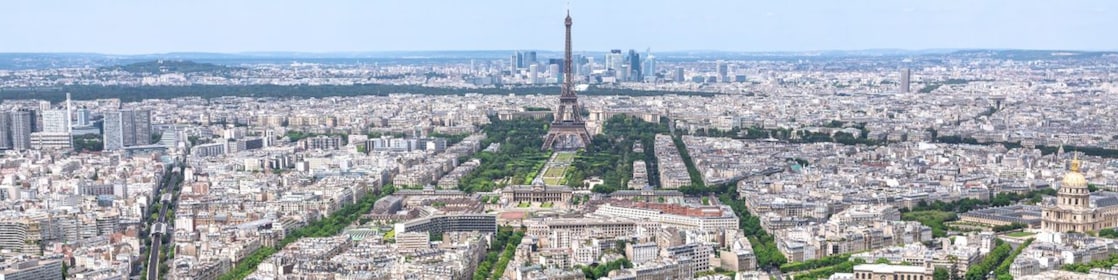
The City of Paris has embraced this responsibility and set an admirable and ambitious objective to be carbon-neutral by 2050. To achieve the goals of the Paris Climate Action Plan, transformation must be broad – extending beyond the city to include neighbouring departments.
The Paris Metropole will need to tackle multiple social and environmental challenges over the next two decades. The scale of adaptation is immense. Equally, there is cause for enthusiasm and optimism, as the work that lies ahead could be an inspiration for others.
This sketch explores three scenarios: Green Tech Evolution, The Blame Game and Paving the Way. Each describes different visions of the future for the Paris Metropole – considering shifting socioeconomic, political and technological forces.
Explore how the Paris Metropole might navigate the decades ahead as it works to become carbon-neutral by 2050.

Green Tech Evolution
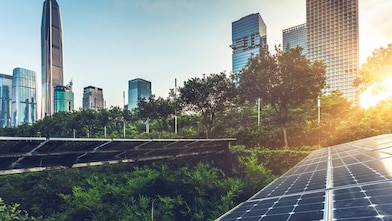
France vigorously pursues its ambitious plans to become Europe’s leading technology innovation and start-up nation, which eventually opens up a greener economic future. The main driver in pursuing climate friendly innovation is the economy. But change is only incremental, so coordinated government policy is required to speed up the energy transition to become climate neutral by 2050.
The Blame Game
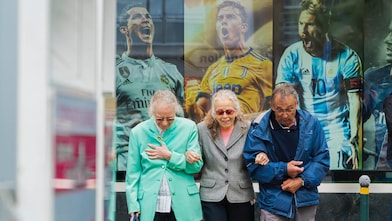
Longer-term climate-related policy decisions are placed on hold as immediate social and economic problems take priority. Inevitable extreme weather events increasingly hurt the most vulnerable in the Paris Metropole. Growing mistrust turns to anger and activism. Eventually, demands for action to address equality and climate change result in a sustainable and inclusive economic growth model.
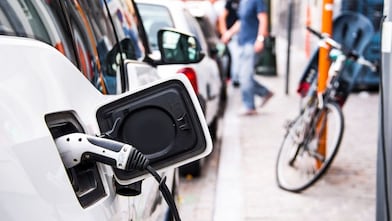
Paving the Way
Local city mayors and communities collaborate to design evidence-based policy options that address climate change within the Paris Metropole. Choices are spurred by citizens’ concerns over climate and an awareness that connects well-being, health, climate and inequality, drawing all segments of society into the debate that results in steady and effective progress.
Definitions & cautionary note
Definitions & cautionary note
On 6 July 2017, Paris published the new climate action plan outlining its goal for carbon neutrality by 2050. We believe meeting this goal will be extremely challenging but possible. This report is not intended to be proscriptive - there are other pathways for the of the Paris Metropole to follow to reach its target.
This sketch, which is a collaboration between Leonard and Shell, contains insights from Shell’s new Scenarios Sketch “Paris Metropole: Becoming Carbon-Neutral by 2050”. The New Lens Scenarios and Scenario Sketches are a part of an ongoing process used in Shell for 50 years to challenge executives’ perspectives on the future business environment.
Scenarios don’t describe what will happen, or what should happen, rather they explore what could happen. We base them on plausible assumptions and quantification, and they are designed to stretch management’s thinking and even to consider events that may only be remotely possible. Scenarios, therefore, are not intended to be predictions of likely future events or outcomes or a strategy. Investors should not rely on them when making an investment decision with regard to Royal Dutch Shell plc securities.
It is important to note that the suggestions contained in this report are those to be taken by the of the Paris Metropole, and not necessarily by Shell. While Shell is supportive of the Paris Metropole target of carbon neutrality by 2050, our current business plan is not consistent with the proposed EU target. However, as announced on April 16, 2020, Shell aims to be a net-zero emissions energy business by 2050. Accordingly, we expect that over time, our business plan will change as society and our customers move towards meeting the goals of the Paris Agreement.
The companies in which Royal Dutch Shell plc directly and indirectly owns investments are separate legal entities. In this sketch “Shell”, “Shell Group” and “Royal Dutch Shell” are sometimes used for convenience where references are made to Royal Dutch Shell plc and its subsidiaries in general. Likewise, the words “we”, “us” and “our” are also used to refer to Royal Dutch Shell plc and its subsidiaries in general or to those who work for them. These terms are also used where no useful purpose is served by identifying the particular entity or entities.
This “Paris Metropole: Becoming Carbon Neutral By 2050” scenarios sketch contains forward-looking statements that may affect Shell’s financial condition, results of operations, and businesses of Royal Dutch Shell. All statements other than statements of historical fact are, or may be deemed to be, forward-looking statements. Forward-looking statements are statements of future expectations that are based on management’s current expectations and assumptions and involve known and unknown risks and uncertainties that could cause actual results, performance or events to differ materially from those expressed or implied in these statements. Forward-looking statements include, among other things, statements concerning the potential exposure of Royal Dutch Shell to market risks and statements expressing management’s expectations, beliefs, estimates, forecasts, projections and assumptions. These forward-looking statements are identified by their use of terms and phrases such as “aim”, “ambition”, ‘‘anticipate’’, ‘‘believe’’, ‘‘could’’, ‘‘estimate’’, ‘‘expect’’, ‘‘goals’’, ‘‘intend’’, ‘‘may’’, ‘‘objectives’’, ‘‘outlook’’, ‘‘plan’’, ‘‘probably’’, ‘‘project’’, ‘‘risks’’, “schedule”, ‘‘seek’’, ‘‘should’’, ‘‘target’’, ‘‘will’’ and similar terms and phrases. There are a number of factors that could affect the future operations of Royal Dutch Shell and could cause those results to differ materially from those expressed in the forward-looking statements included in this sketch including (without limitation): (a) price fluctuations in crude oil and natural gas; (b) changes in demand for Shell’s products; (c) currency fluctuations; (d) drilling and production results; (e) reserves estimates; (f) loss of market share and industry competition; (g) environmental and physical risks; (h) risks associated with the identification of suitable potential acquisition properties and targets, and successful negotiation and completion of such transactions; (i) the risk of doing business in developing countries and countries subject to international sanctions; (j) legislative, fiscal and regulatory developments including regulatory measures addressing climate change; (k) economic and financial market conditions in various countries and regions; (l) political risks, including the risks of expropriation and renegotiation of the terms of contracts with governmental entities, delays or advancements in the approval of projects and delays in the reimbursement for shared costs; and (m) risks associated with the impact of pandemics, such as the COVID-19 (coronavirus) outbreak, and (n) changes in trading conditions. No assurance is provided that future dividend payments will match or exceed previous dividend payments. All forward-looking statements contained in this sketch are expressly qualified in their entirety by the cautionary statements contained or referred to in this section. Readers should not place undue reliance on forward-looking statements. Additional risk factors that may affect future results are contained in Royal Dutch Shell’s Form 20-F for the year ended December 31, 2019 (available at www.shell.com/investor and www.sec.gov). These risk factors also expressly qualify all forward-looking statements contained in this sketch and should be considered by the reader. Each forward-looking statement speaks only as of the date of this sketch, 15th October 2020. Neither Royal Dutch Shell plc nor any of its subsidiaries undertake any obligation to publicly update or revise any forward-looking statement as a result of new information, future events or other information. In light of these risks, results could differ materially from those stated, implied or inferred from the forward-looking statements contained in this sketch.
We may have used certain terms, such as resources, in this sketch that the United States Securities and Exchange Commission (SEC) strictly prohibits us from including in our filings with the SEC. Investors are urged to consider closely the disclosure in our Form 20-F, File No 1-32575, available on the SEC website www.sec.gov.