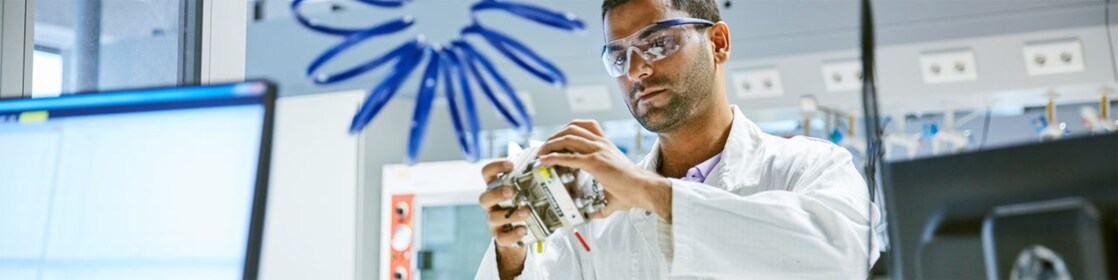
Technology and innovation
Built on more than 125 years of technological innovation, our company’s future performance depends on the successful development and deployment of new technologies and new products.
Our global network of research and development (R&D) centres seeks to deliver innovative, cost-competitive solutions that meet global energy demands while reducing emissions. In 2025, we invested over $1,170 million in R&D. We combine our expertise in R&D with digital solutions, often powered by AI, to help accelerate innovation and effectively scale up.
Technology helps to improve our efficiency, safety and competitiveness. Through our Technology organisation, we’re able to leverage human ingenuity not only to unlock more, cleaner energy on an ongoing basis, but also to deliver more value through enhanced processes that strengthens our performance in already operating assets.
Our technologies are crucial to achieving our target to become a net-zero emissions energy business by 2050, and to grow a competitive Renewables and Energy Solutions portfolio. Therefore, we research and develop disruptors that can radically unleash new business opportunities in the future.
Inside Shell's innovation labs
Go behind the scenes at Shell's technology centres in Amsterdam, Bangalore and Houston to see how scientists, engineers and digital specialists are developing and scaling energy technologies. From Gas-to-Liquids (GTL) and Virtual Corrosion Engineer (VCE) to Direct Air Capture (DAC), this video explores some of the innovations helping shape the future of energy.
Read the transcript
Read the transcript
Title: Shell Tech Innovation Film
Duration: 4:29 minutes
Description: The video takes viewers inside Shell's innovation hubs in Amsterdam, Bangalore and Houston, where scientists, engineers and digital specialists develop technologies ranging from gas-to-liquids and predictive corrosion monitoring to direct air capture for a lower-emissions energy future.
[Background music plays]
The Sound of Shell weaves through the video in different styles, shaping the mood of each segment: EDM to capture a modern, fast-paced rock for high energy, gentle and smooth for calm moments, and swelling into orchestral arrangements for dramatic moments.
Svetlana
We are taking you behind the scenes to see the technologies helping to shape the future of energy.
Video footage
The video opens with a slow-motion montage of close-ups: Svetlana, an engineer wearing a white lab coat and PPE, carefully pours a clear liquid from one glass beaker into another against a backdrop of stainless-steel equipment; a technician in a blue lab coat and PPE leans forward, looking up at a machine fitted with tall metal rods and black cylindrical components under bright laboratory lighting; a technician in a red lab coat and PPE inspects a slowly rising metal apparatus with circular ports and suspended tubing in a busy lab environment; and Priyanka, wearing a red lab coat, lifts a tiny sample between thumb and forefinger. The sequence concludes with a selfie-style close-up of Svetlana speaking directly to camera from the laboratory.
Travis
Like absorbing carbon dioxide directly from the air.
Video footage
A selfie-style close-up shows Travis, wearing a red jacket and white hard hat, speaking to camera in front of a white industrial unit on a partly cloudy day. A sweeping low-angle arc then reveals two large industrial modules with slatted metal exteriors standing side by side, connected by a central staircase above glass-panelled lower sections.
Svetlana
Making cleaner products and fuels.
Video footage
A sweeping arc shot shows Svetlana in the laboratory holding up a clear container filled with transparent liquid.
Priyanka
Like predicting corrosion in real time.
Video footage
In close-up, Priyanka, wearing a black top, speaks to camera while a colleague works in the background at a curved multi-screen workstation displaying technical diagrams in a modern control room. The scene then returns to a close-up of Priyanka in her red lab coat, holding a tiny sample between thumb and forefinger.
Svetlana
Join us as we are taking a look behind the curtain.
Video footage
The shot returns to a close-up of Svetlana speaking to camera from the laboratory.
Amsterdam Location
Svetlana
Welcome to Amsterdam.
[Text displays]
Amsterdam
Video footage
The preceding footage transitions out of frame in the shape of a contracting Pecten, accompanied by a whoosh sound effect that becomes a recurring feature of scene transitions throughout the video. An arc shot showcases the Shell Technology Centre Amsterdam, a modern brick building with sweeping curved architecture, as yellow text rises from the lawn to appear against the building's façade.
Svetlana
I'm Svetlana.
[Text displays]
Svetlana
[Graphic]
A smiling close-up of Svetlana fills the frame as her name appears in yellow text, accompanied by a curved arrow pointing towards her.
Svetlana
Let me show you around. Behind each of these doors, we have been developing a huge range of technologies. Let's dive in.
Video footage
In a selfie-style close-up, Svetlana speaks to camera from a glass-encased corridor. As she turns, the scene shifts to another section of the corridor, where she gestures towards workspaces visible through the doorways lining the passage. A camera transition reveals a technician in a white lab coat and safety glasses lowering a slim metal rod into a complex metal enclosure surrounded by dense piping and cabling. The shot then returns to Svetlana speaking to camera before she opens a door and enters a laboratory.
Svetlana
It's here we are developing Shell's gas-to-liquids, or GTL, technology.
[Text displays]
Gas-to-liquids
Video footage
The camera tracks through a busy industrial laboratory, initially showing two people in white lab coats working among dense networks of pipes, valves, and machinery. The shot then zooms in on one of the workers as yellow text appears, identifying gas-to-liquids as the technology being developed.
Svetlana
GTL converts natural gas into high quality liquid products that are cleaner in use than products made from oil.
Video footage
In a selfie-style close-up, Svetlana speaks to camera against a backdrop of large, insulated pipes and industrial valves. The shot then tightens as she raises a clear container filled with transparent liquid.
Svetlana
Natural gas is converted into a so-called syngas…
[Text displays]
Natural gas -> Syngas
Video footage
In a selfie-style close-up, Svetlana speaks to camera against a backdrop of densely arranged metal pipes, gauges, and valves. Yellow text appears at frame-left, identifying natural gas and syngas, with a downward-pointing arrow illustrating the conversion process.
Svetlana
Which is the mixture of hydrogen and carbon monoxide.
[Text displays]
Hydrogen - Carbon monoxide
Video footage
In close-up, a hand adjusts a metal valve within a dense network of pipes and fittings, several of which are labelled hydrogen. Yellow text appears at lower frame-right, identifying hydrogen, with a diagonal arrow pointing towards one of the H₂ labels. The camera then pans across to another section of piping and instrumentation. Yellow text appears at lower frame-left, identifying carbon monoxide, with a diagonal arrow indicating pipes marked with CO labels.
Svetlana
It then passes over a catalyst, forming this, a substance that looks like candle wax.
Video footage and animated sequence
The scene shifts rapidly to Svetlana standing beside a tall transparent cylinder filled with alternating layers of dark and light material. As she looks upwards, animated yellow molecules travel down the outside of the cylinder. The scene then cuts to Svetlana holding a small white waxy sample in her blue-gloved hand against a backdrop of metallic piping and industrial laboratory equipment.
Svetlana
GTL technology is already being used at commercial scale to make a wide range of products, including fuels, lubricants and chemical feedstock…
[Text displays]
Fuels – Lubricants – Chemical feedstock
Video footage
A still shot shows two people in orange protective coveralls and white helmets standing in front of a large industrial plant, one gesturing as they converse amid pipes, tanks, and scaffolding. The scene then shifts to a high-angle view of a row of small bottles containing clear liquid, each fitted with a white cap and labelled with chemical identifiers and hazard symbols. Yellow text appears at lower frame-right, identifying fuels, with a diagonal arrow pointing to one of the bottles. As the camera pans further along the row, yellow text identifies lubricants, again with a diagonal arrow indicating a bottle. The camera continues to the end of the line, where Svetlana lifts the final bottle from the counter. Additional yellow text appears, identifying chemical feedstock, with a curved arrow pointing towards the bottle.
Svetlana
To create everyday essentials, from detergents to medical equipment.
Video footage and animated sequence
The scene returns to Svetlana speaking directly to camera against a backdrop of metallic pipes and industrial laboratory equipment. Yellow circular icons appear one after another on either side of her head, one depicting a detergent bottle and the other a syringe.
Svetlana
And we haven't stopped there. We are working on the next generation of this technology using renewable and sustainable sources, with aim to develop sustainable aviation fuel.
Video footage
Once again, a selfie-style close-up shows Svetlana speaking to camera against a backdrop of metallic piping and industrial laboratory equipment. The scene then shifts to a low-angle view of a commercial jet passing overhead with its landing gear deployed.
Svetlana
And we are developing new GTL products, including advanced lubricants, fluids to cool IT data centres, and much more.
Video footage
The video returns to Svetlana speaking to camera, followed by a sweeping arc shot of her holding up a clear container of transparent liquid. In close-up, a black-gloved hand slowly lifts a server blade featuring exposed circuit boards, heat sinks, and copper piping in front of illuminated data-centre racks. The scene then returns to Svetlana speaking to camera.
Svetlana
GTL plants have miles of piping. Maintaining all that takes not only engineering. It also takes digital technologies.
Video footage
A high-angle view captures a network of polished metal pipes curving through an industrial installation, alongside a large, blue-handled valve assembly. The scene then returns to the laboratory, where Svetlana is shown in profile holding up her smartphone as she records herself.
Bangalore Location
Priyanka
That's where we come in, thousands of miles away in Bangalore.
[Text displays]
Priyanka
[Graphic]
A smiling medium shot of Priyanka fills the frame, with green shrubbery and buildings in the background. Her name appears in yellow text, accompanied by a curved arrow pointing towards her.
[Text displays]
Bangalore
Video footage
An arc shot showcases the Shell Technology Centre Bangalore, a modern multi-storey building with a glass-fronted façade composed of tall vertical window panels and metallic structural columns. Yellow text appears against the building's exterior.
Priyanka
Here, we bring people together who love solving problems, like Manoj.
Manoj
Hi.
[Text displays]
Manoj
Video footage
In a selfie-style close-up, Priyanka speaks to camera in front of a wall-mounted array of metal pipes, gauges, and valves. She adjusts her smartphone slightly to include her colleague, Manoj, in the background, where he waves towards the camera.
Priyanka
Much of Shell's early experimentation begins right here. And when it comes to digital technology, we are breaking new ground. Corrosion is one of the biggest risks for the energy industry. It accounts for a significant amount of unplanned downtime and can cost industry billions of dollars every year.
[Text displays]
$ Billions
Video footage
In close-up, Priyanka once again lifts a tiny sample between the thumb and forefinger of her blue-gloved hand. The scene then shifts to another technician in a red Shell lab coat and safety goggles looking upwards through a foreground of metal piping within an industrial workspace. Next, the camera pulls back to reveal a lattice of pipes and valves extending overhead against a clear blue sky, sunlight flaring through the hydrogen-labelled framework. The sequence concludes with a selfie-style close-up of Priyanka speaking to camera in front of a dense array of laboratory instruments and tubing, while yellow text briefly appears at frame-left.
Priyanka
So we have developed software that helps us detect and prevent it in real time. We call it Virtual Corrosion Engineer.
[Text displays]
Virtual Corrosion Engineer
Video footage
Shown in profile, Priyanka sits at a workstation in a modern control room, focused on multiple large monitors displaying technical data and aerial imagery. As the camera arcs around to capture her from the opposite side, yellow text slides into frame-left.
Priyanka
We subject materials in the lab to extreme heat, pressure and chemical exposure.
[Text displays]
Piece of pipe – Extreme heat – Pressure – Chemical exposure
Video footage
The scene shifts to a wide shot of a technician in a red lab coat and purple gloves holding a small component above a pressure reactor. The camera moves in closer as yellow text identifies the item as a piece of pipe, with a curved arrow pointing towards it. Next, a profile view focuses on another technician adjusting a FITOK valve on a metal control panel. Additional yellow text appears in sequence, identifying the process conditions being applied.
Priyanka
We use data from these tests, along with physics and machine learning, to build our advanced corrosion models. The model continuously learns by looking at data from real plants to predict where and when corrosion may happen.
Video footage and animated sequence
Further selfie-style close-up footage shows Priyanka speaking to camera in a bright laboratory. The scene then shifts to Priyanka working at a curved multi-screen workstation displaying technical data and aerial imagery, while bright yellow holographic interface graphics appear to float above the screens.
Priyanka
Virtual Corrosion Engineer helps us run facilities smoother, safer and with fewer interruptions. But innovation at Shell isn't just about today's energy needs.
Video footage
The video returns to Priyanka speaking to camera, with multiple workstations and display screens visible in the background. The shot gradually tightens on her as she introduces the next transition.
Houston Location
Travis
It's all about scaling the technologies that power the future.
[Text displays]
Travis
[Graphic]
A smiling close-up of Travis fills the frame as his name appears in yellow text, accompanied by a curved arrow pointing towards him.
[Text displays]
Houston
Video footage
A wide shot showcases the Shell Technology Centre Houston, a modern building distinguished by tall white vertical fins and expansive glass panels beneath a clear blue sky. Yellow text appears against the building's façade.
Travis
We're working across multiple projects to develop and scale new technologies…
Video footage
A still shot shows colleagues in red Shell lab coats and safety glasses gathered around a multi-monitor control station, with one pointing to data displayed on a screen while the others observe. The scene then cuts to a technician in a blue lab coat and PPE in a brightly lit laboratory, looking up at a machine fitted with tall metal rods and black cylindrical components.
Travis
Like our direct air capture demonstration unit, an industrial scale unit designed to remove carbon dioxide directly from the air.
[Text displays]
Direct Air Capture
Video footage
A sweeping arc shot captures the Direct Air Capture unit seen earlier: two large industrial modules with slatted metal exteriors standing side by side and connected by a central staircase. Yellow text briefly appears over the structure.
Svetlana
Developed in Amsterdam…
Video footage
A selfie-style close-up once again shows Svetlana speaking directly to camera from the Amsterdam laboratory.
Priyanka
And Bangalore.
Video footage
The video returns to Priyanka speaking to camera from the Bangalore centre, with multiple workstations and screens visible behind her.
Travis
And built right here in Houston. Check this out. This is exclusive access.
[Text displays]
Exclusive access
Video footage
The scene returns to Travis speaking to camera in front of the large white industrial unit. The shot tightens before cutting to additional selfie-style footage outside the unit's entrance. Travis opens the door and turns back towards the camera as yellow text and a curved yellow arrow appear within the doorway.
Travis
A CO2-absorbing material, called a sorbent, sits inside honeycomb blocks full of tiny channels. As air moves through, the sorbent strips the CO2 from the air…
Video footage and animated sequence
The scene shifts to tracking footage of Travis walking through passageways between honeycomb blocks inside the unit. Animated horizontal yellow streaks illustrate the movement of air through the structure. As Travis leans towards the blocks, the angle changes to show the yellow streaks passing through the honeycomb mesh, then shifts to a highly magnified view as the streaks disappear through the mesh. The perspective moves to the far side of the blocks, where animated blue lines flow from the structure and curve upwards like ribbons rising on a breeze.
Travis
Like a leaf. Air without CO2 is released through the fans.
Video footage
In a selfie-style close-up, Travis speaks to camera outside the unit while holding up a green leaf to illustrate his point. The scene then shifts inside the unit, where he continues speaking amid metal framework and piping. He tilts the camera upward, revealing large industrial fans mounted overhead.
Travis
Captured CO2 can be safely stored underground or used to make carbon neutral synthetic fuels and products.
Video footage
A fast pan captures parallel metal pipes running in tight formation along a structural frame, their reflective surfaces dotted with moisture. The camera continues along the pipework, revealing its place within a larger network of industrial piping and infrastructure, where technicians in safety gear work among the equipment.
Travis
The deck unit can be deployed almost anywhere, and more modules can be connected to increase capacity.
Video footage and animated sequence
The scene shifts back to an increasingly wide view of the unit beneath a cloudy sky. Animated yellow lines sketch the locations of additional modules as the installation expands across the frame.
Travis
This unit becomes operational in 2026, and we're excited to analyse the results.
Video footage
The shot pulls back on a selfie-style close-up of Travis speaking to camera, revealing the unit behind him.
Travis
No matter the technologies developed…
Video footage
In close-up, Travis smiles towards a smartphone mounted in a small clamp-style holder at the worksite.
Svetlana
From advanced products…
Video footage
A medium shot shows Svetlana holding several small white waxy samples in her blue-gloved hand, sharply in focus against a backdrop of metallic piping and industrial laboratory equipment in Amsterdam.
Priyanka
Digital innovation…
Video footage
Shown in profile, Priyanka leans forward to inspect a series of parallel metal rods within a laboratory environment in Bangalore.
Travis
To technologies for a net-zero future…
Video footage
A wide shot captures the Direct Air Capture unit at the Houston site.
Travis
It’s all part of one shared mission.
[Graphic]
A smiling close-up of Travis in high-visibility safety gear fills the frame at the worksite.
Svetlana
Delivering more value…
[Graphic]
A smiling close-up of Svetlana in the laboratory, wearing a white lab coat and safety glasses, fills the frame.
Priyanka
With less emissions.
[Graphic]
A smiling medium shot of Priyanka in high-visibility safety gear fills the frame, with green shrubbery and a building in the background.
Travis
Because innovation isn't just something we do at Shell.
Video footage
A selfie-style close-up shows Travis speaking to camera with the white industrial unit visible behind him.
Svetlana
It's part of who we are.
Video footage
A selfie-style close-up shows Svetlana speaking to camera against a backdrop of densely arranged metallic pipes, gauges, and laboratory instrumentation.
[Audio]
Shell brand mnemonic played on keys.
[Text displays]
Explore more innovations shaping the future of energy at shell.com/innovation
© Shell International Limited 2026
[Animated sequence]
A black overlay partially obscures the prior footage, after which the iconic red and yellow Pecten transitions in to display at frame-centre, with text displaying below it and along the lower edge of the frame.
Inside this section
Power Technology at Shell
Over a hundred of our scientists are developing power technologies and solutions for generation, storage and much more. Why? Because we are building an interconnected power business and support our customer’s efforts to reduce emissions with electrification solutions.
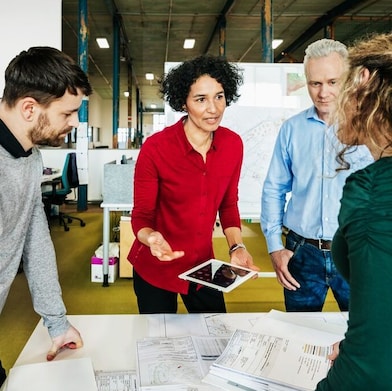
Innovate with Shell
Are you an entrepreneur, a researcher, or a start-up? Do you have a great idea or innovative technology? We look for creative people, companies, and organisations to partner with.
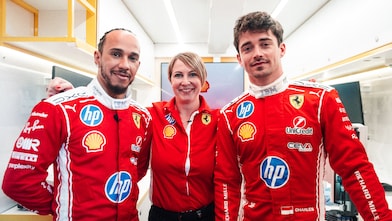
More in Technology and innovation

Shell TechXplorer Digest
Shell TechXplorer Digest is a magazine that showcases the breadth and depth of scientific research and technology applications within Shell.
Legal Disclaimer
Legal Disclaimer
Cautionary Note
The companies in which Shell plc directly and indirectly owns investments are separate legal entities. In this content “Shell”, “Shell Group” and “Group” are sometimes used for convenience to reference Shell plc and its subsidiaries in general. Likewise, the words “we”, “us” and “our” are also used to refer to Shell plc and its subsidiaries in general or to those who work for them. These terms are also used where no useful purpose is served by identifying the particular entity or entities. ‘‘Subsidiaries’’, “Shell subsidiaries” and “Shell companies” as used in this content refer to entities over which Shell plc either directly or indirectly has control. The terms “joint venture”, “joint operations”, “joint arrangements”, and “associates” may also be used to refer to a commercial arrangement in which Shell has a direct or indirect ownership interest with one or more parties. The term “Shell interest” is used for convenience to indicate the direct and/or indirect ownership interest held by Shell in an entity or unincorporated joint arrangement, after exclusion of all third-party interest.
Forward-Looking statements
This content contains forward-looking statements (within the meaning of the U.S. Private Securities Litigation Reform Act of 1995) concerning the financial condition, results of operations and businesses of Shell. All statements other than statements of historical fact are, or may be deemed to be, forward-looking statements. Forward-looking statements are statements of future expectations that are based on management’s current expectations and assumptions and involve known and unknown risks and uncertainties that could cause actual results, performance or events to differ materially from those expressed or implied in these statements. Forward-looking statements include, among other things, statements concerning the potential exposure of Shell to market risks and statements expressing management’s expectations, beliefs, estimates, forecasts, projections and assumptions. These forward-looking statements are identified by their use of terms and phrases such as “aim”; “ambition”; ‘‘anticipate’’; “aspire”, “aspiration”, ‘‘believe’’; “commit”; “commitment”; ‘‘could’’; “desire”; ‘‘estimate’’; ‘‘expect’’; ‘‘goals’’; ‘‘intend’’; ‘‘may’’; “milestones”; ‘‘objectives’’; ‘‘outlook’’; ‘‘plan’’; ‘‘probably’’; ‘‘project’’; ‘‘risks’’; “schedule”; ‘‘seek’’; ‘‘should’’; ‘‘target’’; “vision”; ‘‘will’’; “would” and similar terms and phrases. There are a number of factors that could affect the future operations of Shell and could cause those results to differ materially from those expressed in the forward-looking statements included in this content, including (without limitation): (a) price fluctuations in crude oil and natural gas; (b) changes in demand for Shell’s products; (c) currency fluctuations; (d) drilling and production results; (e) reserves estimates; (f) loss of market share and industry competition; (g) environmental and physical risks, including climate change; (h) risks associated with the identification of suitable potential acquisition properties and targets, and successful negotiation and completion of such transactions; (i) the risk of doing business in developing countries and countries subject to international sanctions; (j) legislative, judicial, fiscal and regulatory developments including tariffs and regulatory measures addressing climate change; (k) economic and financial market conditions in various countries and regions; (l) political risks, including the risks of expropriation and renegotiation of the terms of contracts with governmental entities, delays or advancements in the approval of projects and delays in the reimbursement for shared costs; (m) risks associated with the impact of pandemics, regional conflicts, such as the Russia-Ukraine war and the conflict in the Middle East, and a significant cyber security, data privacy or IT incident; (n) the pace of the energy transition; and (o) changes in trading conditions. No assurance is provided that future dividend payments will match or exceed previous dividend payments. All forward-looking statements contained in this content are expressly qualified in their entirety by the cautionary statements contained or referred to in this section. Readers should not place undue reliance on forward-looking statements. Additional risk factors that may affect future results are contained in Shell plc’s Form 20-F for the year ended December 31, 2025 (available at www.shell.com/investors/news-and-filings/sec-filings.html and www.sec.gov). These risk factors also expressly qualify all forward-looking statements contained in this content and should be considered by the reader. Each forward-looking statement speaks only as of the date of this content. Neither Shell plc nor any of its subsidiaries undertake any obligation to publicly update or revise any forward-looking statement as a result of new information, future events or other information. In light of these risks, results could differ materially from those stated, implied or inferred from the forward-looking statements contained in this content.
Shell’s net carbon intensity
Also, in this content we may refer to Shell’s “net carbon intensity” (NCI), which includes Shell’s carbon emissions from the production of our energy products, our suppliers’ carbon emissions in supplying energy for that production and our customers’ carbon emissions associated with their use of the energy products we sell. Shell’s NCI also includes the emissions associated with the production and use of energy products produced by others which Shell purchases for resale. Shell only controls its own emissions. The use of the terms Shell’s “net carbon intensity” or NCI is for convenience only and not intended to suggest these emissions are those of Shell plc or its subsidiaries.
Shell’s net-zero emissions target
Shell’s operating plan and outlook are forecasted for a three-year period and ten-year period, respectively, and are updated every year. They reflect the current economic environment and what we can reasonably expect to see over the next three and ten years. Accordingly, the outlook reflects our combined Scope 1 and 2 target, NCI target and our oil products ambition over the next ten years. However, Shell’s operating plan and outlook cannot reflect our 2050 net-zero emissions target, as this target is outside our planning period. Such future operating plans and outlooks could include changes to our portfolio, efficiency improvements and the use of carbon capture and storage and carbon credits. In the future, as society moves towards net-zero emissions, we expect Shell’s operating plans and outlooks to reflect this movement. However, if society is not net zero in 2050, as of today, there would be significant risk that Shell may not meet this target.
Forward-Looking non-GAAP measures
This content may contain certain forward-looking non-GAAP measures such as free cash flow and underlying operating expenses. We are unable to provide a reconciliation of these forward-looking non-GAAP measures to the most comparable GAAP financial measures because certain information needed to reconcile those non-GAAP measures to the most comparable GAAP financial measures is dependent on future events some of which are outside the control of Shell, such as oil and gas prices, interest rates and exchange rates. Moreover, estimating such GAAP measures with the required precision necessary to provide a meaningful reconciliation is extremely difficult and could not be accomplished without unreasonable effort. Non-GAAP measures in respect of future periods which cannot be reconciled to the most comparable GAAP financial measure are calculated in a manner which is consistent with the accounting policies applied in Shell plc’s consolidated financial statements.
The contents of websites referred to in this content do not form part of this content.
We may have used certain terms, such as resources, in this content that the United States Securities and Exchange Commission (SEC) strictly prohibits us from including in our filings with the SEC. Investors are urged to consider closely the disclosure in our Form 20-F, File No 1-32575, available on the SEC website www.sec.gov.